

Reading Monetization
Tags
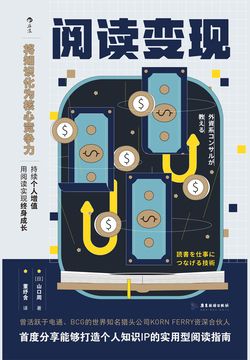
Summary
Editor's review
Who it's for
A good fit for
- Business professionals and managers who want to build a distinctive knowledge advantage and improve decision quality in the workplace
- Learners who feel their reading volume is large but conversion is low and who aspire to build a systematic knowledge system
- Professionals in consulting, planning, research, and other knowledge-output-centered work
- Readers interested in interdisciplinary thinking who hope to broaden their cognitive boundaries and spark innovative inspiration
Not a good fit for
- Readers mainly seeking methods and pleasure for reading literary works such as novels and essays
- Readers expecting “direct monetization” secrets such as getting rich quickly or specific investment techniques
Reading tips
- First read the preface and Chapter 1 to understand the author's core argument about ‘reading as knowledge production,’ then plan subsequent reading
- In light of the book's methods, immediately review your current reading list, try classifying it into ‘business’ and ‘general knowledge,’ and adjust the proportions
- While reading, you can at any time compare the book's strategies with your own work or problems you are currently facing and think about how to apply them to find clues to solutions
About the publisher
Founded in 1981, Guangdong Tourism Publishing House has long taken tourism and cultural tourism content as its main publishing focus, while extending into fields such as architecture, history, foreign literature, biography, and essays. Its books in the database show that it publishes scholarly and historical works such as Liang Sicheng's A History of Chinese Architecture and Chen Yuan's Examples of Taboo Names in History, as well as translations of foreign literature including Mishima Yukio's The Temple of the Golden Pavilion and Spring Snow and Chekhov's collected letters. It also offers biographies such as From Emperor to Citizen (latest complete edition), The Complete Biography of Zuo Zongtang, and Slightly Out of Focus: Robert Capa's World War II Memoir. Its author resources span architectural history, historiography, and literary translation, giving its list a character that balances cultural tourism reading with humanities and social science titles. As public information is limited, this summary is based only on the publishing directions reflected in the books in the database.
Contents
- 版权信息
- 前言
- 第一章 “阅读与工作相联系”的六大原则
- 原则1 为收获成果而必须阅读的“两种书”
- 原则2 一本书,读两成就够了
- 原则3 把读书想象成“投资股票”
- 原则4 阅读,要以“遗忘”为前提
- 原则5 读5本书,不如“一本书读5遍”
- 原则6 减少阅读中的“闲置时间”
- 第二章 商务类书籍×读些什么?
- 01 不懂经营学的企业顾问
- 02 真正必读的71本“商务书籍曼陀罗”
- 03 “解读古经典籍的书籍”无法代替“古经典籍”
- 04 新出版的商务书籍有九成都是“╳╳书”
- 05 不读畅销类书籍
- 第三章 商务类书籍×怎么读?
- 01 不要做摘抄和读书笔记
- 02 读到“不懂之处”就跳过去10页吧
- 03 “商务书籍曼陀罗”应该按照“从中心向外沿”的顺序去阅读
- 04 只读过迈克尔·波特就不要妄言竞争战略理论了
- 05 先读“曼陀罗中心”,为自己描画人生战略
- 06 我决定从电通公司辞职的理由
- 07 30~40岁这一代的人,需要深入到曼陀罗的第二层
- 第四章 通识类书籍×读些什么?
- 01 通识类书籍对工作中的疑难问题很有效
- 02 九成的普通人和一成能得出成果的人之间有什么差别?
- 03 该读些什么?通识类书籍分7类
- 04 首先,从“传统好书”和“有趣的书”开始吧
- 05 检查自己和一本书是否合拍的方法
- 06 输入方式和他人不同,能够促使差异化的产生
- 07 以“短期视角”阅读通识类书籍即可
- 08 “其中都有些什么”,这样的感觉十分重要
- 09 以“做自己的制作人”的态度去决定主题
- 10 阅读帮我们认知自我
- 11 以成为“知识的巨人”为目标,效率是极低的
- 第五章 通识类书籍×怎么读?
- 01 即便是有益的书,只是读过并不能和工作产生关联
- 02 将知识与工作成果相关联的办法
- 03 无法“抽象化”,只是博识而已
- 04 打造一个忘了也没关系的“机制”吧
- 05 把书当成“笔记”尽情书写
- 06 画线的三个工具:红笔、油性彩铅笔、荧光记号笔
- 07 咨询顾问的“三遍”阅读术
- 08 第一遍 画线——将比较在意的文字部分整体画线
- 09 第二遍 选择5个选项——确定画线部分的先后顺序
- 10 第三遍 摘抄——写下关于工作的“提示与启发”
- 11 第三遍 摘抄——用“印象笔记”摘抄是最强选择
- 12 第三遍 摘抄——为“鱼笼”设定一个主题
- 13 重复阅读很多、很多遍
- 第六章 “在书店散步”的技术
- 01 在书店的那些“不认识的书架”附近闲逛
- 02 看看“最喜欢的书目”周围的书架
- 03 不要受“书架分类”的限制
- 04 名人传记和“我的履历书”都是宝藏
- 第七章 通过“书架”连接阅读与工作
- 01 读过的书和读到一半的书“不可混合,十分危险!”
- 02 读到一半的书越积越多,聚沙成塔
- 03 “书塔”→书包→书架/废弃品收纳纸箱
- 04 “空隙”或许会为你带来“命中注定的那一本书”
- 05 别让书架成为“死火山”,要让它做个“休眠火山”
- 06 不要按照开本大小,而是要分门别类去设置你的“书架”
- 07 改变创意从改变书架的排列顺序开始
- 特别附录 只读这些就可以!商务图书曼陀罗
- 出版后记
FAQ
What is this book's Douban rating?
What is special about the author Shu Yamaguchi's background?
What is the main difference between this book and similar books on reading methods?
Related on WeRead



Comments
Find this book
This site is an index: you start “Search all sources” in your browser, and the entries it lists all point to third-party sites; please judge their availability yourself.
About the author
Yamaguchi Shu is an author active in the Japanese writing field, whose book Reading for Transformation (Yuedu Bianxian) is categorized in the Chinese book market as inspirational personal growth. Publicly available information about his nationality, educational background, professional career, dates of birth and death, and honors is limited; only one of his works is currently included in the library, making it difficult to sketch a complete biography. Judging from the title and category of Reading for Transformation, his writing interests center on practical themes such as reading methods, knowledge absorption, and personal growth, aimed at readers who wish to use reading to improve themselves and their work and lives. Such works typically feature plain language and a clear structure, emphasizing the conversion of book knowledge into actionable abilities rather than empty theorizing. Readers may focus on his specific ideas about choosing books, reading, and applying knowledge, and take from them what suits their own needs.
