

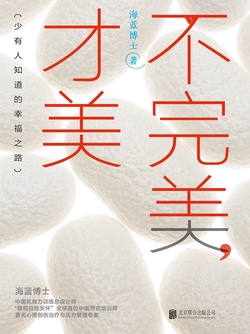
Imperfect, Therefore Beautiful
Tags
Summary
Editor's review
Who it's for
A good fit for
- People under prolonged stress and anxiety who want concrete methods of emotional management
- Perfectionists who are harsh on themselves and prone to self-criticism and self-negation
- Those who wish to improve intimate, parent-child, or workplace relationships and seek wisdom in communication
- Beginners interested in positive psychology and mindfulness meditation who want systematic study and practice
Not a good fit for
- Readers expecting instant, mystical chicken soup for the soul or quick-fix success formulas
- Readers who reject empirically grounded psychological methodology outright and seek only philosophical or spiritual answers
Reading tips
- Use the book as a practice manual rather than a novel—follow its steps and actually do the exercises, especially the "Seven-Step Emotional Sorting Method"
- Pair the reading with the book's guided mindfulness audio (if accompanying resources are available) to experience guided meditation
- Focus on Parts Two and Three, on handling core emotions and building harmonious relationships, and reflect on them in light of your own experience
About the publisher
Beijing United Publishing Co., Ltd. is a publisher known for its literature and history titles, with 2,065 books in the collection. Its publishing covers foreign literature, contemporary Chinese prose and essays, history, folk literature, and cultural books. Its list ranges from Sima Qian's complete edition of the Records of the Grand Historian to foreign classics such as The Book of Disquiet, All Quiet on the Western Front, Snow Country, The Stranger, and Jean-Christophe, as well as modern Chinese works including Teahouse and Dawn Blossoms Plucked at Dusk. Its authors and translators include Yasunari Kawabata, Fernando Pessoa, Erich Maria Remarque, Jin Xinyi, Zhou Miao, and Chen Chao. Public information is limited, but its catalogue reflects a balance between Chinese and foreign literary classics and historical and cultural works.
Contents
- 版权信息
- 海蓝博士简介
- 名人推荐
- 作者序
- 第一章 少有人明白的幸福之道
- 何处是归途
- 你拥有的是哪一种幸福
- 第二章 所有的伤痛都值得欣赏
- 人生皆苦,苦来自何方
- 苦难并不可怕,苦难生成怨恨才可怕
- 与痛苦和平共处
- 人生没有意外
- 一切都可以放下,只要用合适的方法
- 所有的不满后面,都有一个你认为的应该
- 每个坏情绪后面都藏着爱的呼喊
- 第三章 少有人知道的亲密关系真相
- 亲密关系四重奏:朋友、情人、父母、孩子
- 爱有五个密码,别把它弄成乱码
- 爱是生命,关系有四季
- 亲密关系决定生死、健康和幸福
- 许多女性都患有一种病——“灰姑娘综合征”
- 你那么好,为什么没有男朋友
- 女孩跟爸爸相处的模式奠定了跟男性相处的模式
- 如果你不爱自己,拯救过银河系也拯救不了你
- 婚外情是真爱还是自欺欺人
- 性格不合,恰是相濡以沫的开始
- 第四章 要做就做 “不费力也讨好的父母”
- 搞定孩子的爸爸才是成功的爸爸
- 没有任何成功能够抵消教育孩子的失败
- 轻松愉快,才是做父母的正确方式
- 孩子不做作业,是父母的问题
- 不怕孩子早恋,就怕孩子不会恋
- 抗挫折能力是给孩子最好的生命礼物
- 别让孩子觉得你工作只是为了赚钱
- 有一种伤害叫作“看看别人家的孩子”
- 第五章 工作,要有快乐和成就感
- 做不快乐的工作是在谋杀生命
- 学会“管理”你的上级
- 不要为了获得人脉而建立人脉
- 你是人渣、人工、人才、还是人物
- 怀才不遇,是你怀的才还不够
- 什么是真正的公平
- 站着说话不腰疼是因为腰疼过
- 第六章 感恩所有的不完美
- 担心害怕的事,往往不会发生
- 你不需要依靠任何人
- 接纳自己的不完美,那是自己完整的一部分
- 你有多痛苦,就有多向往
- 不再那么努力去“给”,也不再拼命想“要”
- 你来与不来,我都依然绽放
- 名家评论
- 后记
FAQ
How is this book different from ordinary inspirational books?
Can I understand and apply it without a psychology background?
What problems does this book mainly address?
Related on WeRead

Comments
Find this book
This site is an index: you start “Search all sources” in your browser, and the entries it lists all point to third-party sites; please judge their availability yourself.
About the author
Dr. Hai Lan is an author known for writing on applied psychology and inspirational personal growth. Her publicly available personal information is currently limited, with no clear records of her nationality, dates of birth and death, or educational background. The library holds six of her works, including Partial Psychology and the "Imperfect, That's Beautiful" series, which comprises the single volume Imperfect, That's Beautiful, the two-volume collection Imperfect, That's Beautiful Series, Imperfect, That's Beautiful II: Emotions Determine Destiny, Imperfect, That's Beautiful III, and a three-volume set. These works show that her writing centers on themes such as self-acceptance, emotional management, and psychological growth. They are aimed at general readers who wish to improve their mental state and learn to live with their own imperfections, and her style tends toward accessible psychological self-help and life reflection.
