

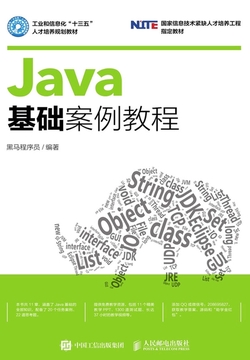
Java Fundamentals Case Tutorial
Tags
Summary
Editor's review
Notably, the cases lean toward common enterprise application scenarios, such as a student management system and a shopping cart simulation, and this training close to real development helps learners build engineering thinking early. The book's operational guidance for Eclipse/IDEA development tools is also beginner-friendly. Objectively, however, as an introductory tutorial, the book covers Java's newer features (such as lambda expressions and modularity) only to a limited depth, and is better suited as the first systematic textbook for solidifying fundamentals.
From a teaching-effect perspective, this case-stacking approach carries the risk of insufficient systematicity in knowledge points; readers are advised to use mind maps to organize the knowledge framework on their own. Overall, the book stands out in operability and immediate feedback, and suits beginners who seek to “learn by doing” rather than to “master the theory.”
Who it's for
A good fit for
- Beginners with zero programming background who want to get started with Java quickly
- Self-learners who need project cases to help understand abstract concepts
- Trainees at vocational training institutions or students in university lab courses
- Career changers who want to consolidate Java fundamentals through practice
Not a good fit for
- Intermediate and advanced developers seeking deep understanding of JVM mechanisms or design patterns
- Readers who need systematic study of new Java features (such as the Stream API)
Reading tips
- Work through each case in chapter order, making sure to debug the code by hand
- After each chapter, try modifying the case's functionality to test your understanding
- Keep an error log recording exceptions encountered during debugging and their solutions
About the publisher
Posts & Telecom Press is known for its strengths in science and technology, computing, and information and communications titles, and has extended its publishing into photography, art, software learning, and inspirational growth, giving it a fairly diverse range. Its catalog includes computing and communications works such as Refactoring and Patterns (Revised Edition) and Huawei Switch Learning Guide (Second Edition), alongside bilingual collector's editions such as The Little Prince (Chinese-English-French illustrated collector's edition), The Great Gatsby, and Three Days to See. Beijing Ten Years: 1980-1990 and Ghost Blade: WLOP Personal Illustration Collection reflect its presence in photography and art. Its authors include Antoine de Saint-Exupéry, Helen Keller, Joshua Kerievsky, Wang Da, Zhang Zhaozeng, and WLOP.
Contents
- 版权信息
- 内容提要
- 序言 PREFACE
- 前言 FOREWORD
- 第1章 Java开发入门
- 1.1 Java概述
- 1.1.1 什么是Java
- 1.1.2 Java语言的特点
- 1.2 JDK的使用
- 1.2.1 什么是JDK
- 1.2.2 安装JDK
- 1.2.3 JDK目录介绍
- 1.3 第一个Java程序
- 1.4 系统环境变量
- 1.4.1 path环境变量
- 1.4.2 classpath环境变量
- 1.5 Java的运行机制
- 1.6 Eclipse开发工具
- 1.6.1 Eclipse概述
- 1.6.2 Eclipse的安装与启动
- 1.6.3 Eclipse进行程序开发
- 1.7 本章小结
- 第2章 Java编程基础
- 2.1 Java的基本语法
- 2.1.1 Java代码的基本格式
- 2.1.2 Java中的注释
- 2.1.3 Java中的标识符
- 2.1.4 Java中的关键字
- 2.1.5 Java中的常量
- 2.2 Java中的变量
- 2.2.1 变量的定义
- 2.2.2 变量的数据类型
- 2.2.3 变量的类型转换
- 2.2.4 变量的作用域
- 2.3 Java中的运算符
- 2.3.1 算术运算符
- 2.3.2 赋值运算符
- 2.3.3 比较运算符
- 2.3.4 逻辑运算符
- 2.3.5 运算符的优先级
- 【任务 2-1】商城库存清单程序设计
- 2.4 选择结构语句
- 2.4.1 if条件语句
- 2.4.2 switch条件语句
- 2.5 循环结构语句
- 2.5.1 while循环语句
- 2.5.2 do…while循环语句
- 2.5.3 for循环语句
- 2.5.4 循环嵌套
- 2.5.5 跳转语句(break、continue)
- 【任务 2-2】猜数字游戏
- 2.6方法
- 2.6.1 什么是方法
- 2.6.2 方法的重载
- 2.7数组
- 2.7.1 数组的定义
- 2.7.2 数组的常见操作
- 2.7.3 多维数组
- 【任务 2-3】随机点名器
- 2.8 本章小结
- 第3章 面向对象(上)
- 3.1 面向对象的概念
- 3.2 类与对象
- 3.2.1 类的定义
- 3.2.2 对象的创建与使用
- 3.2.3 类的设计
- 3.2.4 类的封装
- 【任务 3-1】超市购物程序设计
- 3.3 构造方法
- 3.3.1 构造方法的定义
- 3.3.2 构造方法的重载
- 3.4 this关键字
- 3.5 垃圾回收
- 3.6 static关键字
- 3.6.1 静态变量
- 3.6.2 静态方法
- 3.6.3 静态代码块
- 3.7 成员内部类
- 【任务 3-2】银行新用户现金业务办理
- 3.8 本章小结
- 第4章 面向对象(下)
- 4.1 类的继承
- 4.1.1 继承的概念
- 4.1.2 重写父类方法
- 4.1.3 super关键字
- 4.2 final关键字
- 4.2.1 final关键字修饰类
- 4.2.2 final关键字修饰方法
- 4.2.3 final关键字修饰变量
- 4.3 抽象类和接口
- 4.3.1 抽象类
- 4.3.2 接口
- 【任务 4-1】USB接口程序设计
- 4.4多态
- 4.4.1 多态概述
- 4.4.2 对象的类型转换
- 4.4.3 Object类
- 4.4.4 匿名内部类
- 【任务 4-2】模拟物流快递系统程序设计
- 4.5 异常(Exception)
- 4.5.1 什么是异常
- 4.5.2 try…catch和finally
- 4.5.3 throws关键字
- 4.5.4 运行时异常与编译时异常
- 4.5.5 自定义异常
- 4.6 访问控制
- 4.7 本章小结
- 第5章 Java API
- 5.1 String类和StringBuffer类
- 5.1.1 String类的初始化
- 5.1.2 String类的常见操作
- 5.1.3 StringBuffer类
- 【任务 5-1】记录一个子串在整串中出现的次数
- 5.2 System类与Runtime类
- 5.2.1 System类
- 5.2.2 Runtime类
- 5.3 Math类与Random类
- 5.3.1 Math类
- 5.3.2 Random类
- 5.4 包装类
- 【任务 5-2】字符串排序程序设计
- 5.5 JDK 7.0 新特性——switch语句支持字符串类型
- 5.6 本章小结
- 第6章 集合类
- 6.1 集合概述
- 6.2 Collection接口
- 6.3 List接口
- 6.3.1 List接口简介
- 6.3.2 ArrayList集合
- 6.3.3 LinkedList集合
- 6.3.4 Iterator接口
- 6.3.5 JDK 5.0 新特性——foreach循环
- 【任务 6-1】模拟KTV点歌系统
- 6.4 Set接口
- 6.4.1 Set接口简介
- 6.4.2 HashSet集合
- 【任务 6-2】模拟新浪微博用户注册
- 6.5 Map接口
- 6.5.1 Map接口简介
- 6.5.2 HashMap集合
- 6.5.3 Properties集合
- 【任务 6-3】斗地主小游戏之洗牌发牌
- 6.6 JDK 5.0 新特性——泛型
- 6.7 本章小结
- 第7章 IO(输入输出)
- 7.1 字节流
- 7.1.1 字节流的概念
- 7.1.2 字节流读写文件
- 7.1.3 文件的拷贝
- 7.1.4 字节流的缓冲区
- 7.1.5 字节缓冲流
- 【任务 7-1】保存书店每日交易记录程序设计
- 7.2 字符流
- 7.2.1 字符流定义及基本用法
- 7.2.2 字符流操作文件
- 7.2.3 转换流
- 【任务 7-2】模拟记事本
- 7.3 File类
- 7.3.1 File类的常用方法
- 7.3.2 遍历目录下的文件
- 7.3.3 删除文件及目录
- 【任务 7-3】模拟文件管理器
- 7.4 本章小结
- 第8章 GUI(图形用户界面)
- 8.1 AWT概述
- 8.2 布局管理器
- 8.2.1 FlowLayout
- 8.2.2 BorderLayout
- 8.2.3 GridLayout
- 8.2.4 GridBagLayout
- 8.2.5 CardLayout
- 8.2.6 不使用布局管理器
- 8.3 AWT事件处理
- 8.3.1 事件处理机制
- 8.3.2 事件适配器
- 8.3.3 用匿名内部类实现事件处理
- 8.4 常用事件分类
- 8.4.1 窗体事件
- 8.4.2 鼠标事件
- 8.4.3 键盘事件
- 8.4.4 动作事件
- 8.5 AWT绘图
- 8.6 Swing
- 8.6.1 JFrame
- 8.6.2 JDialog
- 8.6.3 中间容器
- 8.6.4 文本组件
- 8.6.5 按钮组件
- 8.6.6 JComboBox
- 8.6.7 菜单组件
- 8.6.8 JTable
- 【任务 8】水果超市管理系统
- 8.7 本章小结
- 第9章 JDBC
- 9.1 什么是JDBC
- 9.2 JDBC常用API
- 9.2.1 Driver接口
- 9.2.2 DriverManager类
- 9.2.3 Connection接口
- 9.2.4 Statement接口
- 9.2.5 PreparedStatement 接口
- 9.2.6 ResultSet接口
- 9.3 实现第一个JDBC程序
- 9.4 PreparedStatement对象
- 9.5 ResultSet对象
- 【任务 9】使用JDBC实现水果超市管理系统
- 9.6 本章小结
- 第10章 多线程
- 10.1 线程概述
- 10.1.1 进程
- 10.1.2 线程
- 10.2 线程的创建
- 10.2.1 继承Thread类创建多线程
- 10.2.2 实现Runnable接口创建多线程
- 10.2.3 两种实现多线程方式的对比分析
- 10.3 线程的生命周期及状态转换
- 10.4 线程的调度
- 10.4.1 线程的优先级
- 10.4.2 线程休眠
- 10.4.3 线程让步
- 10.4.4 线程插队
- 10.5 多线程同步
- 10.5.1 线程安全问题
- 10.5.2 同步代码块
- 10.5.3 同步方法
- 10.5.4 死锁问题
- 【任务 10】银行存款程序设计
- 10.6 本章小结
- 第11章 网络编程
- 11.1 网络通信协议
- 11.1.1 IP地址和端口号
- 11.1.2 InetAddress
- 11.1.3 UDP与TCP协议
- 11.2 UDP通信
- 11.2.1 DatagramPacket
- 11.2.2 DatagramSocket
- 11.2.3 UDP网络程序
- 【任务 11-1】聊天程序设计
- 11.3 TCP通信
- 11.3.1 ServerSocket
- 11.3.2 Socket
- 11.3.3 简单的TCP网络程序
- 11.3.4 多线程的TCP网络程序
- 【任务 11-2】文件上传
- 11.4 本章小结
FAQ
Can I study this book directly without a programming background?
Is the development environment version used in the book outdated?
What level can I reach after finishing the book?
Related on WeRead
 Java基础案例教程(第2版)
 Java基础案例教程
 Java Web开发基础与案例教程
 Java编程入门Java程序设计零基础学Java自学案例视频教程教材电脑编程计算机书籍
 Java Web程序设计任务教程(第2版)
 Java EE企业级应用开发教程(Spring+Spring MVC+MyBatis)(第2版)
 基于Android Studio的案例教程(第2版)
 辽宁信息技术职业教育集团电子信息技术课程标准II
Comments
Find this book
This site is an index: you start “Search all sources” in your browser, and the entries it lists all point to third-party sites; please judge their availability yourself.
About the author
Heima Programmer is an IT education brand and textbook-writing team under Itcast (Chuanzhi Education), initiated by Zhang Xiaoxiang. It has long focused on developing practical textbooks in areas such as Java, Python, front-end development, and big data, with many of its works published by Posts & Telecom Press. As a collectively credited author, Heima Programmer is not a single individual but a writing team centered on teaching and course development, and its works emphasize hands-on practice and project-driven learning. The library contains 26 of its titles, including representative works such as Software Testing, Modern Methods of Python Programming, Fundamentals of Microservice Architecture (Spring Boot+Spring Cloud+Docker), Java Web Programming Task Tutorial, JavaScript Front-End Development Case Tutorial, Web Design and Production Project Tutorial (HTML+CSS+JavaScript), PHP Basic Case Tutorial, and Java EE Enterprise Application Development Tutorial (Spring+Spring MVC+MyBatis). These works cover categories such as programming design, software learning, computer fundamentals, and examinations. Its writing style relies on cases and task guidance to serve IT learners at both introductory and advanced levels. Public information is limited, so no further biographical details are provided beyond the above.
