

Modern Methods of Python Programming
Tags
Summary
Editor's review
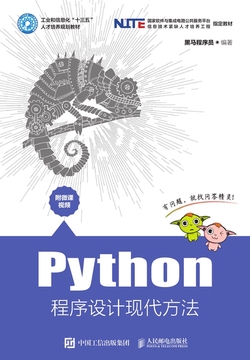
In terms of content structure, the book starts with Python environment setup and basic syntax, gradually progressing to core topics such as functions, object-oriented programming, exception handling, file operations, and commonly used standard libraries, and covers application directions including network programming, database access, Web development, and data analysis, giving it a relatively complete system. Its feature lies in combining knowledge explanation with abundant practical cases and project exercises, and it is accompanied by multimedia teaching resources, meeting the current demand for skill-oriented learning. As a product of a training institution, its content arrangement and narrative style may place more emphasis on practicality and operability, striving to enable readers to get started quickly and see results.
This book is suitable as a supplementary textbook for computer-related majors in higher education, or as a self-study book for career changers and programming enthusiasts. Its advantage lies in a clear path and case-driven approach, which can help readers build a basic framework of Python knowledge and acquire certain practical abilities in a relatively short time. However, note that as an introductory book, its discussion of certain in-depth topics (such as advanced concurrency, metaprogramming, and performance optimization) may be limited. After mastering the content of this book, readers still need to read more specialized books according to their own development direction for further study. Overall, this is a solid and practical modern Python introductory guide that can effectively help beginners cross the threshold from zero to one.
Who it's for
A good fit for
- Absolute beginners planning to systematically learn Python programming
- Working professionals hoping to quickly master Python for data analysis or automated office work
- Students in computer science or related majors in higher education who need an introductory Python textbook
- Job seekers seeking to change careers and enter the IT industry who need to master a practical programming language
Not a good fit for
- Developers who have already mastered Python fundamentals and seek advanced topics or source-code-level in-depth discussion
- Readers expecting extensive theoretical derivation and deep background knowledge in computer science
Reading tips
- It is recommended to study in chapter order and be sure to hands-on complete the examples and exercises in the book; programming skills can only be consolidated through practice.
- You can combine the project cases in the book and try to adapt them into tools that solve problems in your own actual work or life, applying what you learn.
- When encountering abstract concepts during learning, make good use of Internet searches for multi-source verification and extended reading to build a more three-dimensional knowledge network.
About the publisher
Posts & Telecom Press is known for its strengths in science and technology, computing, and information and communications titles, and has extended its publishing into photography, art, software learning, and inspirational growth, giving it a fairly diverse range. Its catalog includes computing and communications works such as Refactoring and Patterns (Revised Edition) and Huawei Switch Learning Guide (Second Edition), alongside bilingual collector's editions such as The Little Prince (Chinese-English-French illustrated collector's edition), The Great Gatsby, and Three Days to See. Beijing Ten Years: 1980-1990 and Ghost Blade: WLOP Personal Illustration Collection reflect its presence in photography and art. Its authors include Antoine de Saint-Exupéry, Helen Keller, Joshua Kerievsky, Wang Da, Zhang Zhaozeng, and WLOP.
Contents
- 版权信息
- 内容提要
- 序言
- 前言
- 第1章 Python概述
- 1.1 计算机与计算机语言
- 1.1.1 计算机的诞生与发展
- 1.1.2 计算机语言概述
- 1.1.3 翻译执行
- 1.2 Python语言概述
- 1.2.1 Python语言发展史
- 1.2.2 Python语言的特点
- 1.2.3 Python的应用领域
- 1.2.4 Python版本的区别
- 1.3 Python环境配置
- 1.3.1 安装Python解释器
- 1.3.2 Python程序的运行方式
- 1.3.3 运行Python程序
- 1.4 集成开发环境
- 1.4.1 PyCharm的下载和安装
- 1.4.2 PyCharm的使用
- 1.5 程序的开发与编写
- 1.5.1 程序开发流程
- 1.5.2 程序编写的基本方法
- 1.6 本章小结
- 1.7 习题
- 第2章 Python实例设计与分析
- 2.1 实例1:货币兑换
- 2.2 代码风格
- 2.2.1 缩进
- 2.2.2 注释
- 2.3 变量
- 2.3.1 标识符和关键字
- 2.3.2 数据类型
- 2.3.3 变量赋值
- 2.3.4 字符串索引和切片
- 2.4 基本输入/输出
- 2.4.1 input()函数
- 2.4.2 eval()函数
- 2.4.3 print()函数
- 2.5 结构控制
- 2.5.1 顺序结构
- 2.5.2 分支结构
- 2.5.3 循环结构
- 2.6 函数式编程
- 2.7 实例2:Turtle Star
- 2.8 模块化编程
- 2.8.1 模块的导入和使用
- 2.8.2 模块的分类
- 2.9 绘图模块——turtle
- 2.10 本章小结
- 2.11 习题
- 第3章 数字类型和字符串
- 3.1 数字类型
- 3.1.1 整型
- 3.1.2 浮点型
- 3.1.3 复数类型
- 3.1.4 布尔类型
- 3.2 数字类型的运算
- 3.2.1 数值运算符
- 3.2.2 运算符优先级
- 3.2.3 数字类型转换
- 3.3 实例3:模拟商家收银抹零行为
- 3.4 数学模块——math
- 3.5 实例4:三天打鱼两天晒网
- 3.6 字符串
- 3.6.1 字符串的定义方式
- 3.6.2 字符串格式化
- 3.6.3 字符串操作符
- 3.6.4 字符串处理函数
- 3.6.5 字符串处理方法
- 3.7 实例5:过滤敏感词
- 3.8 本章小结
- 3.9 习题
- 第4章 流程控制
- 4.1 程序表示方法
- 4.1.1 程序流程图
- 4.1.2 程序的基本结构
- 4.1.3 使用程序流程图描述程序
- 4.2 分支结构
- 4.2.1 判断条件
- 4.2.2 单分支结构:if语句
- 4.2.3 二分支结构:if-else语句
- 4.2.4 多分支结构:if-elif-else语句
- 4.2.5 分支嵌套
- 4.3 循环结构
- 4.3.1 条件循环:while循环
- 4.3.2 遍历循环:for循环
- 4.3.3 循环控制
- 4.4 异常处理
- 4.5 实例6:猜数字
- 4.6 本章小结
- 4.7 习题
- 第5章 函数
- 5.1 函数概述
- 5.2 函数的基础知识
- 5.2.1 函数的定义
- 5.2.2 函数的调用
- 5.3 函数的参数传递
- 5.3.1 参数的位置传递
- 5.3.2 参数的关键字传递
- 5.3.3 参数的默认值传递
- 5.3.4 包裹传递
- 5.3.5 解包裹传递
- 5.3.6 混合传递
- 5.4 函数的返回值
- 5.5 变量作用域
- 5.5.1 局部变量
- 5.5.2 全局变量
- 5.6 函数的特殊形式
- 5.6.1 匿名函数
- 5.6.2 递归函数
- 5.7 时间处理模块——datetime
- 5.8 实例7:模拟钟表
- 5.9 代码抽象与模块化设计
- 5.10 本章小结
- 5.11 习题
- 第6章 组合数据类型
- 6.1 组合数据类型概述
- 6.1.1 序列类型
- 6.1.2 集合类型
- 6.1.3 映射类型
- 6.2 序列类型
- 6.2.1 切片
- 6.2.2 列表
- 6.2.3 元组
- 6.3 实例8:生成验证码
- 6.4 集合类型
- 6.4.1 集合的常见操作
- 6.4.2 集合关系测试
- 6.5 字典
- 6.5.1 字典类型介绍
- 6.5.2 字典的常见操作
- 6.6 中文分词模块——jieba
- 6.7 实例9:《西游记》人物出场统计
- 6.8 本章小结
- 6.9 习题
- 第7章 程序设计之数字推盘
- 7.1 数字推盘游戏简介
- 7.2 游戏模块——pygame
- 7.2.1 pygame的初始化和退出
- 7.2.2 创建游戏窗口
- 7.2.3 游戏循环与游戏时钟
- 7.2.4 图形和文本绘制
- 7.2.5 元素位置控制
- 7.2.6 动态效果
- 7.2.7 事件与事件处理
- 7.3 游戏框架
- 7.4 自顶向下的设计
- 7.4.1 顶层设计
- 7.4.2 子层设计
- 7.4.3 第三层设计
- 7.4.4 模块整合
- 7.5 自底向上的实现
- 7.6 运行数字推盘
- 7.7 本章小结
- 7.8 习题
- 第8章 文件和数据格式化
- 8.1 文件概述
- 8.2 文件的基本操作
- 8.2.1 文件的打开和关闭
- 8.2.2 读文件
- 8.2.3 写文件
- 8.2.4 文件读写位置
- 8.2.5 管理文件与目录
- 8.3 文件迭代
- 8.4 实例10:用户登录
- 8.5 数据维度与数据格式化
- 8.5.1 基于维度的数据分类
- 8.5.2 一二维数据的存储与读写
- 8.5.3 多维数据的格式化
- 8.6 Python中的json模块
- 8.7 本章小结
- 8.8 习题
- 第9章 数据分析与可视化
- 9.1 数据分析概述
- 9.1.1 数据分析的流程
- 9.1.2 数据分析常用工具
- 9.2 科学计算
- 9.2.1 numpy之数组对象ndarray
- 9.2.2 numpy的基本操作
- 9.3 数据可视化
- 9.3.1 数据可视化概述
- 9.3.2 pyplot之绘图区域
- 9.3.3 pyplot之图表与风格控制
- 9.4 实例11:各学科成绩评估分析
- 9.5 数据分析
- 9.5.1 pandas数据结构
- 9.5.2 pandas的基本使用
- 9.6 本章小结
- 9.7 习题
- 第10章 网络爬虫
- 10.1 网络爬虫概述
- 10.2 爬虫爬取网页的流程
- 10.3 抓取网页数据
- 10.3.1 浏览网页过程
- 10.3.2 使用requests模块抓取网页
- 10.4 解析网页数据
- 10.4.1 网页数据结构分析
- 10.4.2 解析网页的过程和技术
- 10.4.3 使用Beautiful Soup 4 解析网页数据
- 10.5 实例12:龙港房地产爬虫
- 10.6 本章小结
- 10.7 习题
FAQ
Does this book require readers to have a programming background?
Are the code examples in this book based on Python 2 or Python 3?
What level can be reached after finishing this book?
Related on WeRead
Comments
Find this book
This site is an index: you start “Search all sources” in your browser, and the entries it lists all point to third-party sites; please judge their availability yourself.
About the author
Heima Programmer is an IT education brand and textbook-writing team under Itcast (Chuanzhi Education), initiated by Zhang Xiaoxiang. It has long focused on developing practical textbooks in areas such as Java, Python, front-end development, and big data, with many of its works published by Posts & Telecom Press. As a collectively credited author, Heima Programmer is not a single individual but a writing team centered on teaching and course development, and its works emphasize hands-on practice and project-driven learning. The library contains 26 of its titles, including representative works such as Software Testing, Modern Methods of Python Programming, Fundamentals of Microservice Architecture (Spring Boot+Spring Cloud+Docker), Java Web Programming Task Tutorial, JavaScript Front-End Development Case Tutorial, Web Design and Production Project Tutorial (HTML+CSS+JavaScript), PHP Basic Case Tutorial, and Java EE Enterprise Application Development Tutorial (Spring+Spring MVC+MyBatis). These works cover categories such as programming design, software learning, computer fundamentals, and examinations. Its writing style relies on cases and task guidance to serve IT learners at both introductory and advanced levels. Public information is limited, so no further biographical details are provided beyond the above.
