

Michelangelo
Tags
Summary
Editor's review
Who it's for
A good fit for
- General readers interested in Renaissance art and Michelangelo's life
- Literature lovers who enjoy Romain Rolland's style of biographical writing
- Art history students who need public-domain English source materials
- Readers who want to reflect on genius and the cost of creativity
Not a good fit for
- Art lovers expecting extensive plates and detailed technical analysis
- Readers who need a Chinese translation and are not comfortable reading English
- Readers looking only for a quick chronological list of biographical facts
Reading tips
- Start by browsing images of Michelangelo's major works, then read the corresponding chapters to set up a visual-textual dialogue.
- Take brief chapter-by-chapter notes, recording the author's judgments about the artist's character and creative motives.
- Read it alongside biographies of other Renaissance artists to observe similarities and differences in their historical contexts.
- If the English is difficult, read the opening and closing paragraphs of each chapter first to grasp the main idea, then go back through the argument in the middle.
About the publisher
Project Gutenberg is a digital publishing project focused on public-domain ebooks. Its publishing direction centers on classic literary works whose copyright has expired, covering genres such as poetry, drama, fiction, and epic. Representative books include Lyrical Ballads by Wordsworth and Coleridge, Proust's Du côté de chez Swann, Shakespeare's Macbeth and The Complete Works of William Shakespeare, Homer's The Iliad, Dante's La Divina Comèdia: Purgatòri, Cervantes's The History of Don Quixote, Volume 2, and Grahame's The Wind in the Willows. Its author resources consist mainly of classic Western writers such as Wordsworth, Proust, Shakespeare, Homer, Dante, Cervantes, Grahame, and Tolstoy. Its publishing feature is the provision of freely accessible ebooks in EPUB and Kindle formats; it is not a traditional publisher, and publicly available information is limited.
Contents
- 1
- 2
- 3
- 4
- 5
- 6
- 7
- 8
- 9
- 10
- 11
- 12
- 13
- 14
- 15
- 16
- 17
- 18
- 19
- 20
- 21
- 22
- 23
- 24
- 25
- 26
FAQ
Is this a complete Chinese translation?
Can I read this without a background in art history?
What is a good way to read the electronic edition?
Related on WeRead
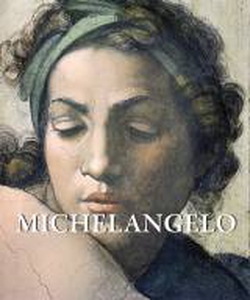 Michelangelo
 Michelangelo: Drawings
 Masters of the Italian Line
 希利尔讲艺术史(英汉双语)
 美国学生艺术史(英汉双语)
 美国学生艺术史(英汉双语版 上下册)
Comments
Find this book
This site is an index: you start “Search all sources” in your browser, and the entries it lists all point to third-party sites; please judge their availability yourself.
About the author
Romain Rolland (1866–1944) was a French writer. The library holds 30 of his works, most notably the various volumes of his novel series Jean-Christophe, including Jean-Christophe I, III, IV, and IX, Jean-Christophe in Paris, and Jean-Christophe: Journey's End. These works follow the life of a musician, depicting his growth, struggles, and spiritual pursuits in a style that combines idealism with realism and carries a strong musical and philosophical quality. Public information is limited, and details of his life, nationality, and exact dates are not clearly recorded in the library, so they are not elaborated here. His writing has had some influence on twentieth-century Chinese readers and is often regarded as a literary expression of the pursuit of spiritual freedom and personal independence.
