

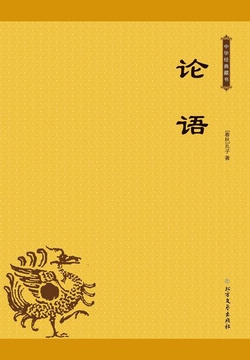
The Analects
Tags
Summary
Editor's review
Who it's for
A good fit for
- Readers seeking a systematic understanding of the origins and core ideas of Confucianism
- Those with an inquiring interest in traditional Chinese culture and classical wisdom
- Learners seeking personal cultivation and practical wisdom for conduct
- Teachers and students engaged in humanities and social science research or education
Not a good fit for
- Readers seeking purely entertaining, plot-driven, and coherent storytelling
- Pragmatists looking for quick-success formulas or concrete methodologies
Reading tips
- Read alongside works on Chinese intellectual history to establish a broader intellectual framework
- Do not feel compelled to read straight through; revisit chapters by theme (e.g., 'ren,' 'learning,' 'the junzi')
- Try to relate what you read to your own life experience, reflecting and taking notes
About the publisher
Zhonghua Book Company is a publisher known for collating ancient texts and academic publishing, with its output centered on Eastern philosophy, culture, classic works, art, and historical reading. Its library contains 532 titles, including Chen Shou's Records of the Three Kingdoms, Guo Qingfan's Collected Commentaries on Zhuangzi, the four-volume Chinese Literature: Four Great Classical Novels, and the two-volume Table of Seal and Clerical Script Forms from Qin, Han, Wei, and Jin. These titles span historical classics, commentaries on the philosophers, classical novels, and philological reference works. Representative authors include Chen Shou, Guo Qingfan, Wu Cheng'en, Shi Nai'an, Cao Xueqin, Luo Guanzhong, Xu Wenwu, and the Hanyu Dazidian character-form group, reflecting a focus on primary sources and scholarly editors. Its publishing character lies in combining authoritative editions and annotated texts with both accessible classics and specialized research. Public information on its fuller catalog is limited; this note describes only the directions evident in the library's holdings.
Contents
- 版权信息
- 前言
- 学而篇第一
- 为政篇第二
- 八佾篇第三
- 里仁篇第四
- 公冶长篇第五
- 雍也篇第六
- 述而篇第七
- 泰伯篇第八
- 子罕篇第九
- 乡党篇第十
- 先进篇第十一
- 颜渊篇第十二
- 子路篇第十三
- 宪问篇第十四
- 卫灵公篇第十五
- 季氏篇第十六
- 阳货篇第十七
- 微子篇第十八
- 子张篇第十九
- 尧曰篇第二十
FAQ
Can I understand it without a foundation in classical Chinese?
How do editions of The Analects differ, and how should I choose?
Does The Analects still have reading value today?
Related on WeRead
Comments
Find this book
This site is an index: you start “Search all sources” in your browser, and the entries it lists all point to third-party sites; please judge their availability yourself.
About the author
Chen Xiaofen: available public information is currently limited, and details of her life, such as nationality, dates of birth and death, and educational background, are not clearly recorded. According to library holdings, only one work by her is preserved, a publication centered on The Analects, commonly classified under Eastern philosophy. This subject indicates that her writing focuses on the study and interpretation of pre-Qin Confucian classics, especially the intellectual content of the recorded sayings of Confucius and his disciples. As a core Confucian text, The Analects has long attracted numerous commentators; the fact that Chen Xiaofen's work has entered circulation and been categorized as Eastern philosophy suggests a certain readability in popularizing the classic or interpreting its meaning. With no further materials available, it is not possible to describe her academic lineage or the full scope of her writing; readers may learn more about her interpretive approach and prose style from the book itself.
