

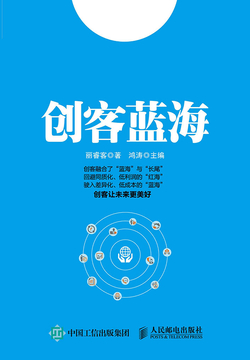
Maker Blue Ocean
Tags
Summary
Editor's review
Particularly commendable is the book's solid discussion of how China's supply chain advantages can be transformed into makers' competitiveness. It does not talk emptily about "internet thinking" but goes deep into workshops, mold factories, and component markets, revealing the crucial "dirty work" and tacit knowledge in hardware entrepreneurship. For innovators who hope to turn imaginative ideas into market-recognized products, this book provides a roadmap for avoiding common traps and identifying the right direction. Its writing is plain and restrained, but its information density is high and its judgments are precise, reflecting the prudence and foresight of an industry insider. Reading it, you can feel a pragmatic optimism: innovation is not an unreachable spark of genius, but a process that can be managed through methodology, ecosystem collaboration, and continuous iteration.
Who it's for
A good fit for
- Entrepreneurs and engineers who have ideas for hardware or physical products and hope to commercialize them
- Industry observers and investors interested in maker culture, open-source hardware, and smart manufacturing trends
- Product managers, designers, and other cross-disciplinary professionals who need to understand the full 0-to-1 process of hardware products
- Students and instructors involved in innovation and entrepreneurship practice at universities who seek guidance on project implementation
Not a good fit for
- Readers seeking only get-rich-quick secrets or overnight startup success stories
- Readers with no interest in technology, manufacturing, or business details who prefer purely philosophical or literary reading
Reading tips
- It is recommended to combine the classic cases mentioned in the book with proactive searches for related project reports or founder interviews to gain a more well-rounded understanding
- When reading, you may focus on chapters related to your own project or interests, but it is also worth reading the whole book to build a systematic framework
- Many methodologies in the book (such as user demand validation and minimum viable product (MVP) testing) need to be tried in actual projects in order to be deeply understood
About the publisher
Posts & Telecom Press is known for its strengths in science and technology, computing, and information and communications titles, and has extended its publishing into photography, art, software learning, and inspirational growth, giving it a fairly diverse range. Its catalog includes computing and communications works such as Refactoring and Patterns (Revised Edition) and Huawei Switch Learning Guide (Second Edition), alongside bilingual collector's editions such as The Little Prince (Chinese-English-French illustrated collector's edition), The Great Gatsby, and Three Days to See. Beijing Ten Years: 1980-1990 and Ghost Blade: WLOP Personal Illustration Collection reflect its presence in photography and art. Its authors include Antoine de Saint-Exupéry, Helen Keller, Joshua Kerievsky, Wang Da, Zhang Zhaozeng, and WLOP.
Contents
- 版权信息
- 编委会
- 推荐序Ⅰ
- 推荐序Ⅱ
- 推荐序Ⅲ
- 第1章 科幻的未来
- 后天更美好
- “互联网+”,世界是平的
- 智能硬件:搞玩意儿还是做生意
- 人工智能:阿尔法狗的胜利
- 3D打印:一切为定制服务
- 虚拟现实技术:让人眼热的万亿级市场
- Luckybook笔记
- 第2章 蓝海创客
- 红海腥风
- 多维场景与用户画像
- 粉丝社群一起嗨
- 对90后、95后、00后新人类,你的营销手段是什么
- 助力创新
- IP为王
- 大健康:永恒的热点
- 金融创新:商业创新的终极
- 游出蓝海
- Luckybook笔记
- 第3章 兴趣创业
- 兴趣滋养创业:Luckybook学社
- 需求:独乐乐,众乐乐
- 引导:用户的需求是创造出来的
- 创意:鬼才总是出人意料又在情理之中
- 实施:DIY对抗工厂
- 营销:把卖点讲得像故事一样精彩
- 产品升级:从S到Plus
- 服务:用户黏性决定衍生价值
- Luckybook笔记
- 第4章 团队为王:从独木舟到航空母舰
- 人数问题
- 数数手里的装备,你们是不是优势互补
- 容忍合伙人的缺点
- 提前谈钱不伤感情
- 信任:基础是抵押和担保
- 一窝蜂思维
- 一切准备就绪,去找VC吧
- Luckybook笔记
- 第5章 加速器+:“金牌”股东,王牌企业
- 加速器与孵化器
- 起步不重要,注重加速度
- 信心支持与信息支持
- 化好妆,再出门
- Road show:做个漂亮的实力派
- 创投大数据之乐创信度
- 职业云图
- Luckybook笔记
FAQ
How is this book different from ordinary startup guidebooks?
Can readers without a technical background understand it?
Are the cases in the book outdated?
Related on WeRead
Comments
Find this book
This site is an index: you start “Search all sources” in your browser, and the entries it lists all point to third-party sites; please judge their availability yourself.
About the author
Li Ruike is an author about whom limited public information is available. Two of the author's works are included in the collection, one concerning management and the other medicine. The representative work Maker Blue Ocean focuses on makers and innovative practice, while Transformation and Innovation of Healthcare Models in the Mobile Internet Era: Tapping into the Trillion-Yuan Healthcare Industry Chain examines how internet technology is reshaping the healthcare sector and the business opportunities that follow. Judging from these works, Li Ruike writes mainly about industrial change, model innovation, and cross-sector integration, combining emerging technologies with specific industries for readers interested in management practice and healthcare. Reliable records of nationality, dates of birth and death, English name, and personal experience are unavailable, so biographical details cannot be added; the choice of subjects nonetheless shows a sustained interest in new business forms and industrial transformation, and the works are notably practice-oriented.
