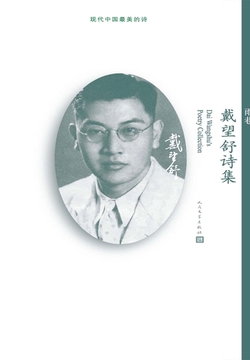
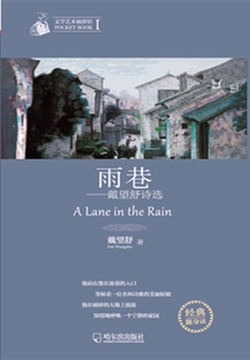
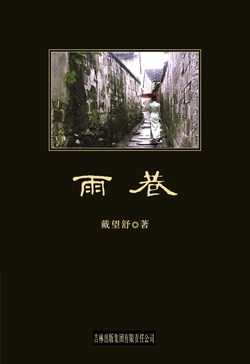
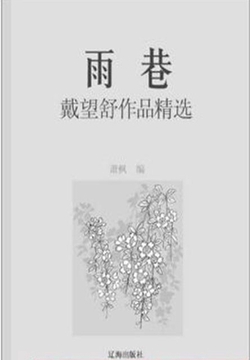
Rainy Alley cover

Rainy Alley

Rating 4.5
Word count
2K words
Chapters
11

Tags

Summary

Dai Wangshu's early poetry dwells largely on private solitude and carries a strong elegiac mood; influenced by the Western Symbolists, its imagery is hazy and suggestive. His later poetry expresses fervent love for the motherland, hatred of the invaders, and a passionate longing for a better future, in a style that turns lucid and deeply earnest.

Editor's review

This selection of Dai Wangshu's Rain Alley presents the poet's early and later work side by side. The early poems, shaped by the Western Symbolists, are hazy and suggestive in imagery, dwell largely on private solitude, and carry a strong elegiac mood; readers will find a fine sense of rhythm and musicality in them. The later style turns lucid and deeply earnest, expressing fervent love for the motherland, hatred of the invaders, and a passionate longing for a better future—an emotional weight that contrasts sharply with the early work. The value of this juxtaposition is that it does not showcase a single famous poem in isolation but lets readers see how a poet adjusted his voice amid the changes of his time. Read slowly, attending to the interplay of image and reality and the recurrence of sound; it is especially suited to quiet, poem-by-poem reading, to trace the feeling as it moves from inward restraint toward openness.

Who it's for

A good fit for

  • Literary readers interested in modern Chinese new poetry and Symbolist technique
  • Students who need to study the shift between Dai Wangshu's early and later styles for coursework
  • Readers who prefer suggestive imagery and musical language and are willing to read slowly
  • Readers hoping to observe changes in the inner life of modern intellectuals through poetry

Not a good fit for

  • Readers of narrative seeking full plots and character stories
  • Readers who prefer brisk, plain expression and have little patience for hazy suggestion

Reading tips

  1. Read the whole book through once, then compare early and later poems, noting differences in imagery and mood
  2. Read each poem aloud once, attending to the rhythm carried by syllables and rhyme
  3. Do not rush to solve hazy images; after finishing, return to them and write down your own understanding

Contents

  1. 版权信息
  2. 静夜
  3. 山行
  4. 残花的泪
  5. 十四行
  6. 不要这样盈盈地相看
  7. 回了心儿吧
  8. Spleen
  9. 残叶之歌
  10. Mandoline
  11. 雨巷

FAQ

Is this book suitable for readers with no experience of reading new poetry?
Yes, but it takes some patience. Dai Wangshu's early poems are hazy and suggestive, and their specific meaning may not be easy to grasp on a first reading; begin with the sound and mood rather than solving every line. After a few poems, return and understanding will gradually clarify. The later work is relatively clearer in imagery and can serve as an entry point.
How do Dai Wangshu's early and later styles differ?
The early work is more deeply influenced by the Western Symbolists, dwells largely on private solitude with a strong elegiac mood, and is hazy and suggestive in imagery; the later work expresses fervent love for the motherland, hatred of the invaders, and longing for a better future, in a style that turns lucid and deeply earnest. This change relates to the times and his personal experience, and reading the two together makes the adjustment of the poet's voice clearer.
Do I need to know about Symbolism to read this book?
Not strictly, but a little knowledge helps. Symbolism favors suggestion and association over direct statement, so the imagery in the early poems often does not point to a single meaning. Readers can enter first through feel for language and mood, then use notes or related materials to understand Symbolist technique, rather than getting caught in line-by-line investigation from the start.

Related on WeRead

Comments

Find this book

This site is an index: you start “Search all sources” in your browser, and the entries it lists all point to third-party sites; please judge their availability yourself.

About the author

Dai Wangshu Author · China · 1905–1950

Dai Wangshu (1905–1950) was a Chinese symbolist poet of the modern school and a translator, born in Hangzhou, Zhejiang. His signature poem "Rain Alley" earned him the title of "Rain Alley Poet"; his work is known for its hazy imagery and musicality and has had a lasting influence on modern Chinese poetry. He studied in France and Spain, and during the War of Resistance against Japan he engaged in anti-Japanese literary activities in Hong Kong before being arrested and imprisoned by the Japanese army, writing poems such as "Inscribed on the Prison Wall" and "I Use My Maimed Hand." His writings span modern poetry, essays, and translations of foreign literature, including a translation of Lorca's poetry. He died in Beijing in 1950 at the age of forty-five, leaving works such as Wangshu's Grass, My Memory, and Years of Disaster that are still read today.

More by the same author

Top rated in the same category