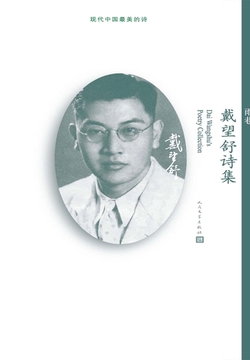
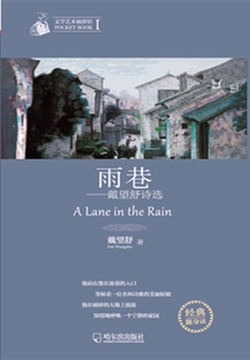
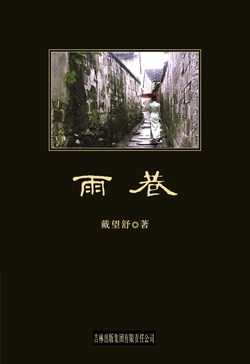
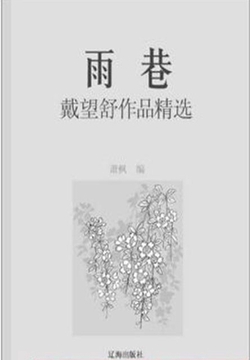
Rainy Alley cover

Rainy Alley

Rating 4.5
Word count
126K words
Chapters
10
ISBN
9787546322407

Tags

Summary

Among modern Chinese poets, Dai Wangshu was an exceptionally exacting one. He wrote just over a hundred poems in all, a great synthesis of Chinese modernist new poetry, blending Eastern restraint with Western symbolism, refining a long, lonely rain-soaked lane...

Editor's review

Dai Wangshu's life's work amounts to just over a hundred poems, and this restraint is itself a precious sample of modern Chinese-language poetry. This book gathers his representative works, revealing both the Eastern restraint and attention to syllable craft of the "Rain Lane" mode, and the penetration of imagery, suggestion, and mood from the Western Symbolist school, as Eastern and Western poetics fold into each other within short pieces. For general readers, it offers a low-threshold entry into modernist new poetry: short in length, clear in imagery, strong in musicality, suited to slow reading in quiet moments. For writers and literary enthusiasts, note the sense of measure in his word choices and his emotional restraint, and appreciate the disciplined craft behind "writing less." One caveat: Dai Wangshu's poems mostly concern personal moods and urban impressions, with little narrative; readers expecting stories or grand themes should adjust their expectations.

Who it's for

A good fit for

  • Readers who want a systematic understanding of Chinese modernist new poetry
  • Literature lovers who enjoy short poems rich in imagery and musicality
  • Students at middle-school level and above who need material for appreciating modern poetry
  • Aspiring writers who want to learn verbal restraint and emotional control

Not a good fit for

  • Readers who prefer strong narrative and plot momentum
  • Those who only want accessible prose or light essays
  • Readers expecting grand social themes and fervent lyricism

Reading tips

  1. First read straight through to feel the syllables and mood, then choose three or five poems to read aloud repeatedly, paying attention to pauses and rhyme.
  2. Trace the two threads of Eastern restraint and Western symbolism, mark suggestive images in the poems, and write down your own associations.
  3. After finishing, try writing an imitation short poem, keeping only the most necessary words, and experience how difficult deletion is.

Contents

  1. 第一章
  2. 第二章
  3. 第三章
  4. 第四章
  5. 第五章
  6. 第六章
  7. 第七章
  8. 第八章
  9. 第九章
  10. 第十章

FAQ

Can I understand it without a poetry background?
Yes. Dai Wangshu's poems are short with concentrated imagery, and the language is not obscure. It is suggested that you first read aloud without checking notes, relying on your feel for the language to grasp the overall mood; then go back line by line to see how the images connect. When you encounter an allusion or symbol you are unsure of, you can turn to notes or the introduction; there is no need to get everything at once.
Is this book suitable for classroom use?
It is suitable as supplementary material for appreciating modern poetry. The poems are short, convenient for classroom reading aloud and discussion of imagery, rhythm, and mood. Teachers can select works related to textbook selections for comparative reading and guide students to compare different poets' language styles, but should supplement background materials to help students understand modernist poetics.
Why is Dai Wangshu said to have written little yet be important?
His life's poems amount to just over a hundred, but he continually polished language and form, forming a distinctive personal style within modernist new poetry. The limited quantity and concentrated quality make it easy for readers to grasp his artistic profile as a whole, and provide a clear sample for understanding how modern Chinese-language poetry absorbed Western symbolic techniques.

Related on WeRead

Comments

Find this book

This site is an index: you start “Search all sources” in your browser, and the entries it lists all point to third-party sites; please judge their availability yourself.

About the author

Dai Wangshu Author · China · 1905–1950

Dai Wangshu (1905–1950) was a Chinese symbolist poet of the modern school and a translator, born in Hangzhou, Zhejiang. His signature poem "Rain Alley" earned him the title of "Rain Alley Poet"; his work is known for its hazy imagery and musicality and has had a lasting influence on modern Chinese poetry. He studied in France and Spain, and during the War of Resistance against Japan he engaged in anti-Japanese literary activities in Hong Kong before being arrested and imprisoned by the Japanese army, writing poems such as "Inscribed on the Prison Wall" and "I Use My Maimed Hand." His writings span modern poetry, essays, and translations of foreign literature, including a translation of Lorca's poetry. He died in Beijing in 1950 at the age of forty-five, leaving works such as Wangshu's Grass, My Memory, and Years of Disaster that are still read today.

More by the same author

Top rated in the same category