

Tags
Summary
Editor's review
Who it's for
A good fit for
- Readers interested in pre-Qin thought, especially differences within Confucianism
- Social science enthusiasts concerned with social governance, institutional design, and human nature
- Readers hoping to draw on classical wisdom to sharpen their reasoning and argumentation
- Students and scholars studying ancient Chinese political philosophy and ethics
Not a good fit for
- Readers expecting simple, inspirational life guidance
- Readers interested only in strongly narrative or plot-driven history
Reading tips
- Begin by reading "Encouraging Learning" closely to grasp Xunzi's core view of learning as accumulation and acquired effort
- Read "Human Nature Is Evil" alongside Mencius's relevant discussions to appreciate the key divergence within Confucianism
- When reading chapters such as "Discourse on Ritual" and "The Regulations of the King," consider their practical orientation in light of the social and historical context of the late Warring States period
About the publisher
Founded in 1989, Qunyan Publishing House has long been committed to publishing academic and educational books for mid- and high-level readers, and has built up a certain presence in Eastern philosophy, classical literature, and classic works. Representative titles available in the database include Records of the Grand Historian, Dream of the Red Chamber, Selections of Refined Literature, Complete Song Ci, Strange Tales from a Chinese Studio, Record of Daily Knowledge, Taiping Huimin Hejiju Fang, and The Collected Works of Wang Yangming, covering common categories such as ancient poetry, medicine, and examinations. Its author resources include Sima Qian, Cao Xueqin, Xiao Tong, Li Shan, Pu Songling, and Gu Yanwu. The press also offers distinctive series such as the Biographical Series of the China Democratic League and the Historical Documents Series of the China Democratic League, and publishes research on historical documents, biographies, memoirs, and textbooks and academic works by League members. Public information is limited, and its overall publishing scale and complete catalogue require further verification.
Contents
- 版权信息
- 劝学第一
- 修身第二
- 不苟第三
- 荣辱第四
- 非相第五
- 非十二子第六
- 仲尼第七
- 儒效第八
- 王制第九
- 富国第十
- 王霸第十一
- 君道第十二
- 臣道第十三
- 致士第十四
- 议兵第十五
- 强国第十六
- 天论第十七
- 正论第十八
- 礼论第十九
- 乐论第二十
- 解蔽第二十一
- 正名第二十二
- 性恶第二十三
- 君子第二十四
- 成相第二十五
- 赋第二十六
- 大略第二十七
- 宥坐第二十八
- 子道第二十九
- 法行第三十
- 哀公第三十一
- 尧问第三十二
FAQ
Does Xunzi's doctrine that human nature is evil mean he is deeply pessimistic?
What are the main differences between Xunzi, the Analects, and Mencius?
Is this edition suitable for readers new to Xunzi?
Related on WeRead

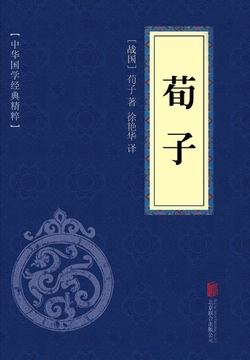
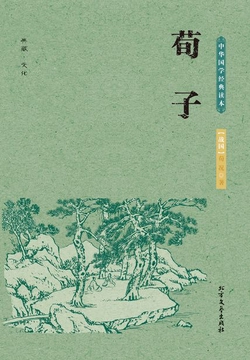

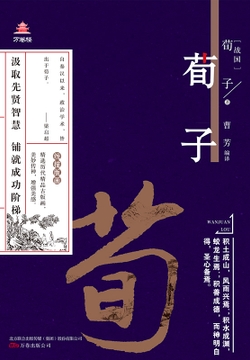
Comments
Find this book
This site is an index: you start “Search all sources” in your browser, and the entries it lists all point to third-party sites; please judge their availability yourself.
About the author
Xunzi is one of the representative figures of pre-Qin Confucianism and is generally known by the honorific name "Xunzi"; reliable public information about his real name, native place, and dates of birth and death is limited, making them difficult to verify. The library holds 24 of his works, with representative titles including Xunzi, Fei Shi Er Zi (Against the Twelve Masters), Quan Xue (Encouraging Learning), Fu Guo (Enriching the State), Li Lun (A Discussion of Rites), Xunzi (Fine Public Domain Edition), Jie Bi (Dispelling Blindness), and Tian Lun (A Discussion of Heaven). In terms of subject matter, these pieces span philosophical argument, discussion of ritual institutions, and prose miscellanies. They offer systematic reflection on human nature, Heaven and the Way, and problems of knowledge, while also displaying a rhetorical style that advances step by step and persuasively employs analogies, often using everyday examples to illuminate abstract ideas. His works circulate widely in the categories of Eastern philosophy and philosophical reading, and have had a lasting influence on later Confucian thought and argumentative prose writing.
