

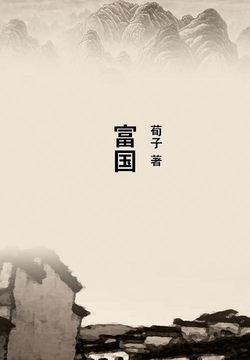
Enriching the State
Tags
Summary
Editor's review
Who it's for
A good fit for
- Literature and history students studying pre-Qin philosophers who need focused reading of a single Xunzi chapter
- Social science researchers interested in ancient Chinese economic thought and governance ideas
- General readers hoping to understand Confucian governance from the angle of distribution and ritual propriety
- Reading group members preparing to discuss the relationship between "enriching the state" and "enriching the people"
Not a good fit for
- Readers expecting modern economic models or data analysis
- Beginners who want only vernacular stories and lack patience for classical argumentative prose
- Readers needing a complete annotated Xunzi rather than a single chapter
Reading tips
- First read the original through, mark key terms such as "frugality and enriching the people," "strengthening the fundamental and restraining the secondary," and "clarifying roles so as to organize the group," then outline the argument paragraph by paragraph.
- Read cross-referentially with relevant passages in "Royal Regulations" and "Discourse on Ritual" to understand the ritual and status framework behind the economic proposals.
- After reading, write a summary in your own words of "how Xunzi resolves the relationship between state and people's wealth" to test your understanding.
- If in a reading group, design a discussion question around "does enriching the state equal raising taxes?" and find evidence in the text.
About the publisher
Jinzhang Book Company (Jinzhang Shuju) was a private publishing and distribution house in Shanghai during the late Qing and early Republican periods, issuing traditional works by lithographic printing. Judging from the 1,194 titles in the collection, its publishing focused on classical poetry, Eastern philosophy, historical reading, traditional Chinese medical texts, and canonical works, along with books on literary appreciation. Representative titles include the poetry and prose collections of Du Fu and Ouyang Xiu; historical works such as the Book of Han and Zizhi Tongjian; classical texts such as the Book of Documents and Mencius; and specialized and literary classics such as Treatise on Cold Damage and Li Sao. Its author resources cover major figures across the ages, including Du Fu, Ban Gu, Sima Guang, Zhang Zhongjing, Qu Yuan, Ouyang Xiu, and Tang Shenwei, reflecting the house's characteristic reliance on traditional scholarship and medical literature while serving general readers. Public information on its early history and operational details is limited, so no conjecture is offered here.
Contents
- 版权信息
- 富国第十
FAQ
What core question does "Enriching the State" mainly discuss?
Do I need to read other chapters of the Xunzi before "Enriching the State"?
Is this single-chapter edition suitable for scholarly citation?
What contemporary relevance does "Enriching the State" have for modern readers?
Related on WeRead


Comments
Find this book
This site is an index: you start “Search all sources” in your browser, and the entries it lists all point to third-party sites; please judge their availability yourself.
About the author
Xunzi is one of the representative figures of pre-Qin Confucianism and is generally known by the honorific name "Xunzi"; reliable public information about his real name, native place, and dates of birth and death is limited, making them difficult to verify. The library holds 24 of his works, with representative titles including Xunzi, Fei Shi Er Zi (Against the Twelve Masters), Quan Xue (Encouraging Learning), Fu Guo (Enriching the State), Li Lun (A Discussion of Rites), Xunzi (Fine Public Domain Edition), Jie Bi (Dispelling Blindness), and Tian Lun (A Discussion of Heaven). In terms of subject matter, these pieces span philosophical argument, discussion of ritual institutions, and prose miscellanies. They offer systematic reflection on human nature, Heaven and the Way, and problems of knowledge, while also displaying a rhetorical style that advances step by step and persuasively employs analogies, often using everyday examples to illuminate abstract ideas. His works circulate widely in the categories of Eastern philosophy and philosophical reading, and have had a lasting influence on later Confucian thought and argumentative prose writing.
