

Back View
Tags
Summary
Editor's review
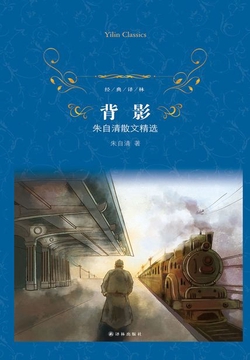
From a literary standpoint, the success of Back View lies in its narrative art of "deep feeling within plainness." With meticulous observation and restrained strokes, Mr. Zhu Ziqing blends the estrangement, understanding, and guilt between father and son into everyday scenes. That silhouette—"waddling to the edge of the railway tracks, slowly leaning down"—is not merely a concrete image but has become a classic symbol of paternal love in Chinese culture. The emotional shift in the "I" of the essay, from initially feeling that his father "does not speak elegantly" to finally "tears streaming down quickly," shows the universal journey of children from distance to understanding regarding a father's love.
As an editor, I believe the value of reading this essay lies not only in literary appreciation but even more in emotional resonance. In contemporary society, where expressions of family affection grow increasingly direct, rereading Back View lets us reconsider the distinctive ways Chinese families express emotion. That mode of expression—hesitant to speak, actions over words—is precisely a true portrait of many Chinese family relationships. I suggest readers attend not only to the words themselves but also to the emotional tension between the lines, where "silence speaks louder than words."
It should be noted that this essay, written in 1925, carries a specific historical background; the railway station scenes and family circumstances it describes differ from those of today. Yet it is precisely this distance in time and space that allows us to examine the essence of kinship more objectively. As you read, consider: in an age of more varied forms of expression, do we truly understand the silent care of our elders?
Who it's for
A good fit for
- Middle school and university students currently studying modern prose
- Readers who wish to reflect on father-son relationships and family affection
- Literature lovers who enjoy delicate emotional writing and a plain style
- Cultural researchers seeking to understand the characteristics of Chinese-style expressions of kinship
Not a good fit for
- Readers seeking fast-paced, plot-driven entertainment
- Readers expecting systematic theoretical analysis rather than emotional experience
Reading tips
- Read the full text first, then focus on the "buying oranges" passage, noting the details of the action descriptions
- As you read, compare it with your own experiences with your father or elders
- Understanding 1920s Chinese society helps in grasping the description of the family's circumstances
About the publisher
Zhejiang People's Publishing House is a comprehensive publisher known for its social science, history and foreign literature titles, covering philosophy, politics, law, economics, culture and history. Among the books in the library catalogue, its foreign literature list includes Yasunari Kawabata's Snow Country and The Old Capital in well-known translations, as well as Wuthering Heights; its history list is represented by Dangnian Mingyue's Ming Dynasty series, and its politics list by Zhejiang New Discourse. Authors represented include Yasunari Kawabata, Ye Weiqu, Tang Yuemei, Dangnian Mingyue, Emily Brontë and René Wellek, with Wellek's Theory of Literature (newly revised edition) among its titles in literary theory. Beyond these areas, the press also publishes works on literary appreciation and social culture, giving it a profile that combines classic translations, popular history and academic works. As publicly available information is limited, other details are not covered here.
Contents
- 版权信息
- 壹 想念是一种淡淡的哀愁
- 背影
- 匆匆
- 给亡妇
- 儿女
- 阿河
- 看花
- 白采
- 冬天
- 飘零
- 贰 闪烁的水光是梦的眼睛
- 春
- 荷塘月色
- 扬州的夏日
- 桨声灯影里的秦淮河
- 白马湖
- 温州的踪迹
- 蒙自杂记
- 重庆行记
- 潭柘寺 戒坛寺
- 叁 世界是那么辽远与多姿
- 罗马
- 巴黎
- 威尼斯
- 莱茵河
- 瑞士
- 荷兰
- 吃的
- 圣诞节
- 乞丐
- 文人宅
- 肆 时间是片飘零的枯叶
- 女人
- 憎
- 沉默
- 论无话可说
- 论诚意
- 论做作
- 论自己
- 论气节
- 论百读不厌
- 低级趣味
- 航船中的文明
FAQ
Why does the father figure in Back View move people so deeply?
What special place does this essay hold in literary history?
How should we understand the change in the narrator's feelings toward his father?
Related on WeRead
Comments
Find this book
This site is an index: you start “Search all sources” in your browser, and the entries it lists all point to third-party sites; please judge their availability yourself.
About the author
Zhu Ziqing (1898–1948), originally named Zihua and styled Peixian, was a modern Chinese essayist, poet and scholar. His ancestral home was Shaoxing, Zhejiang, and he was born in Donghai, Jiangsu. He taught for many years at Tsinghua University, where he served as professor and chair of the Department of Chinese. His essays often draw on everyday observations and personal experience; written in clear, refined language with sincere and restrained feeling, they convey deep reflection through plain narration. Pieces such as "Back View," "Moonlight over the Lotus Pond" and "Hurry" are widely read. Beyond creative writing, he devoted himself to the study and popularization of classical literature, notably in Common Talks on Classics, which surveys traditional texts in an accessible style. This collection holds more than 219 of his works, covering essays, literary appreciation and classic works. He died in Beiping in 1948.
