

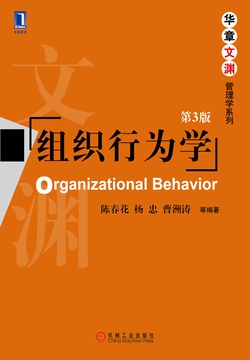
Organizational Behavior (3rd Edition)
Tags
Summary
Editor's review
Who it's for
A good fit for
- Undergraduate and graduate students in management, human resources, and related fields, as a core textbook or important reference.
- Managers and practitioners engaged in human resource management, team management, or organizational development in enterprises.
- Professionals and psychology enthusiasts with a strong interest in organizational mechanisms, teamwork, leadership, and related topics.
- Readers preparing for advanced study or graduate entrance examinations in organizational behavior, management, and related fields.
Not a good fit for
- Readers seeking quick-success techniques or simple management secrets; the book emphasizes systematic theory and in-depth analysis.
- Casual readers more interested in pure business stories or personal biographical narratives than in structured theoretical learning.
Reading tips
- It is recommended to first read the table of contents to grasp the book's three-level logical framework—individual, group, and organization—and establish an overall conceptual framework.
- While reading, actively connect the theoretical knowledge in the book with organizational phenomena observed in one's own work, study, or life to deepen understanding.
- The review questions or case analyses at the end of each chapter are important for testing and consolidating learning outcomes; readers are advised to take them seriously and attempt independent answers.
About the publisher
Chongqing University Press is a comprehensive university press whose publishing areas span social and cultural studies, industrial technology, finance and economics, medicine, social psychology, and theory. Judging from its catalog, the press publishes both academic works and popular science titles. Representative books include E. H. Gombrich's Shadows: The Depiction of Cast Shadows in Western Art, Magnesium-Based Hydrogen Storage Materials by Pan Fusheng et al., Research on China's Regional Spatial Development Models by Sun Jiuwen, and titles from the Gynecologic Oncology Committee of the Chinese Anti-Cancer Association, such as the Guidelines for Diagnosis and Treatment of Common Gynecologic Malignancies in China (2019) and Bipolar Disorder: What You and Your Family Need to Know. Its authors work in art history, materials science, regional economics, clinical medicine, and social research methods. Public information is limited, but its publishing profile combines academic translation, industrial technology, and practical medical guides.
Contents
- 版权信息
- 内容简介
- 第3版前言
- 第2版前言
- 第1版前言
- 第1章 导 论
- 1.1 管理思想发展的里程碑
- 1.1.1 科学管理阶段(19世纪末—20世纪30年代)
- 1.1.2 行为科学阶段(20世纪30—50年代)
- 1.1.3 系统科学阶段(20世纪60年代至今)
- 1.2 组织行为学的产生和研究对象
- 1.2.1 组织行为学的产生和发展
- 1.2.2 组织行为学的研究对象
- 1.3 组织行为学的研究方法
- 1.3.1 研究方法的主要特征
- 1.3.2 研究方法的系统过程
- 1.3.3 研究方法的分类
- 1.3.4 研究的具体方法
- 1.4 人性研究与假设
- 1.4.1 国外的人性研究与假设
- 1.4.2 马克思主义的人性论
- 1.4.3 中国现阶段的人性分析
- 本章小结
- 复习思考题
- 第2章 个体行为与管理
- 2.1 知觉与行为
- 2.1.1 感觉与知觉
- 2.1.2 社会知觉的内容
- 2.1.3 影响知觉准确性的因素
- 2.1.4 归因理论
- 2.2 态度与行为
- 2.2.1 态度的内涵
- 2.2.2 态度的测量
- 2.2.3 态度对行为的影响
- 2.3 需要、动机与行为
- 2.3.1 需要与行为
- 2.3.2 动机与行为的关系
- 2.4 价值观与行为
- 2.4.1 价值观的内涵
- 2.4.2 价值观的分类
- 2.4.3 价值观对人的行为的影响
- 2.5 个性与行为
- 2.5.1 个性的内涵
- 2.5.2 气质与行为
- 2.5.3 性格与行为
- 2.5.4 能力与行为
- 2.6 工作压力与挫折
- 2.6.1 压力的概念
- 2.6.2 压力的潜在来源
- 2.6.3 压力的后果
- 2.6.4 压力应对策略
- 2.6.5 挫折的概念
- 2.6.6 挫折的起因
- 2.6.7 挫折的行为表现
- 2.6.8 应付挫折的办法
- 本章小结
- 复习思考题
- 第3章 激励理论与应用
- 3.1 马斯洛的需要层次理论
- 3.1.1 五大需要层次
- 3.1.2 需要层次理论小结
- 3.1.3 需要层次理论对管理的意义
- 3.2 成就需要理论
- 3.2.1 三种基本的激励需要
- 3.2.2 高成就者的特点
- 3.2.3 成就需要理论对管理的意义
- 3.3 赫茨伯格的双因素理论
- 3.3.1 激励因素和保健因素
- 3.3.2 对双因素理论的争论
- 3.3.3 双因素理论在中国的发展
- 3.3.4 双因素理论对管理的意义
- 3.4 弗隆姆的期望理论
- 3.4.1 期望理论的主要内容
- 3.4.2 期望理论对管理的意义
- 3.5 亚当斯的公平理论
- 3.5.1 横向公平与纵向公平
- 3.5.2 不公平的行为表现
- 3.5.3 公平理论对管理者的启示
- 3.6 波特和劳勒的综合激励模型
- 3.6.1 波特—劳勒综合激励模型
- 3.6.2 波特—劳勒综合激励模型对管理者的启示
- 3.7 激励理论的发展
- 3.7.1 目标设置理论
- 3.7.2 自我效能理论
- 3.7.3 强化理论
- 3.7.4 组织公平理论
- 本章小结
- 复习思考题
- 第4章 群体行为与管理
- 4.1 群体的定义与分类
- 4.1.1 群体的定义及其特征
- 4.1.2 群体分类
- 4.2 群体的作用和凝聚力
- 4.2.1 群体的作用
- 4.2.2 群体凝聚力
- 4.3 群体的沟通
- 4.3.1 沟通的概念
- 4.3.2 沟通的分类
- 4.3.3 沟通网络
- 4.3.4 影响沟通的主要因素
- 4.4 群体行为与团队发展
- 4.4.1 群体行为的概念
- 4.4.2 群体冲突
- 4.4.3 群体竞争
- 4.4.4 群体合作
- 4.4.5 团队
- 4.5 群体中的人际关系
- 4.5.1 人际关系的概念
- 4.5.2 人际交往的种类
- 4.5.3 影响人际关系的因素
- 4.5.4 人际关系对行为的影响
- 4.5.5 人际关系的平衡与改变
- 4.6 非正式群体行为研究
- 4.6.1 非正式群体的概念及其特征
- 4.6.2 非正式群体形成的原因
- 4.6.3 非正式群体的类型
- 4.6.4 非正式群体的作用
- 4.6.5 非正式群体的管理
- 本章小结
- 复习思考题
- 第5章 领导行为与管理
- 5.1 领导概述
- 5.1.1 领导的定义
- 5.1.2 领导的特征
- 5.1.3 领导的作用
- 5.1.4 领导与管理的区别
- 5.2 领导的权威观
- 5.2.1 领导的权力
- 5.2.2 领导的威望
- 5.2.3 权力与威望的相互作用
- 5.3 领导的相关理论
- 5.3.1 领导的特性理论
- 5.3.2 领导的行为理论
- 5.3.3 领导的权变理论
- 5.3.4 领导理论的新发展
- 5.4 领导艺术
- 5.4.1 领导的用人艺术
- 5.4.2 领导的时间艺术
- 5.4.3 领导的决策艺术
- 5.5 领导执行力
- 5.5.1 执行力及其构成要素
- 5.5.2 领导执行力概述
- 5.5.3 领导执行力缺失
- 5.5.4 领导执行力的提高
- 本章小结
- 复习思考题
- 第6章 组织行为与管理
- 6.1 组织概述
- 6.1.1 组织的定义
- 6.1.2 组织的分类
- 6.1.3 组织的功能
- 6.2 组织文化
- 6.2.1 组织文化的内涵
- 6.2.2 组织文化的内容、结构与类型
- 6.2.3 组织文化的特征和功能
- 6.2.4 组织文化建设
- 6.3 组织设计
- 6.3.1 组织设计的目的
- 6.3.2 组织结构设计的程序
- 6.3.3 组织结构设计的原则
- 6.3.4 组织结构的基本类型
- 6.4 组织变革与发展
- 6.4.1 组织变革的原因
- 6.4.2 组织变革的方式
- 6.4.3 组织变革的阻力及排除
- 6.4.4 组织的发展
- 本章小结
- 复习思考题
- 第7章 组织行为的调查与量度
- 7.1 个体行为的调查与量度
- 7.1.1 外向情感作用的测量个性诊断调查与量度
- 7.1.2 消极情感作用的测量
- 7.1.3 个性诊断调查与量度
- 7.1.4 矛盾处理能力自鉴
- 7.1.5 责任意识的度量
- 7.1.6 需求调查
- 7.1.7 创造才能测试
- 7.2 群体行为的调查与量度
- 7.2.1 对自己所在工作群体状况的诊断
- 7.2.2 基本人际关系倾向测定法问卷
- 7.2.3 你善于编织社会关系吗
- 7.2.4 压力调查
- 7.2.5 正式与非正式组织
- 7.2.6 群体凝聚力测度
- 7.2.7 沟通有效性测度
- 7.2.8 团队效能测度
- 7.3 领导、组织行为的调查与量度
- 7.3.1 领导者类型测试量表
- 7.3.2 领导作风测试表
- 7.3.3 领导风格量表
- 7.3.4 领导风格的诊断
- 7.3.5 领导的有效性和适应性测试
- 7.3.6 你是一位好领导吗
- 7.3.7 组织机构的特征调查
- 7.3.8 组织文化诊断
- 7.3.9 改革的心理承受力测验
- 7.3.10 对组织变革的态度测量
- 7.3.11 对组织强文化的测量
- 7.4 激励水平的量度
- 复习思考题
- 附录 组织行为学专业术语对照表
- 参考文献
FAQ
What are the main updates in the third edition compared with previous editions?
Can I read this book without a background in management?
Is this book suitable for team reading or training materials in enterprises?
Related on WeRead



Comments
Find this book
This site is an index: you start “Search all sources” in your browser, and the entries it lists all point to third-party sites; please judge their availability yourself.
About the author
Duan Wanchun is an author about whom limited public information is available; what can be confirmed is that he is the author of Organizational Behavior (3rd Edition). The book falls under the category of management studies and addresses basic topics such as individual behavior, group dynamics, and organizational systems in organizational settings, making it a textbook-style work commonly used in university management courses. Judging from the title and classification, the writing emphasizes clear presentation of conceptual frameworks and a step-by-step knowledge structure, helping readers gain a systematic understanding of the fundamental scope and analytical approaches of organizational behavior. Since only one work by this author is included in the database, information such as nationality, dates of birth and death, educational background, institutional affiliation, and research interests cannot be verified, and this profile makes no speculation on those points. Overall, Duan Wanchun's writing is currently represented by this single textbook, and its influence lies mainly in foundational management teaching and introductory reading, suitable for readers new to organizational behavior.
