

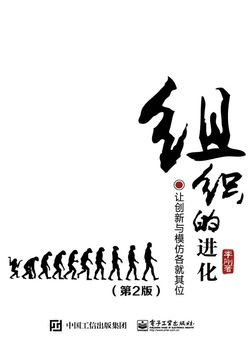
The Evolution of Organizations (2nd Edition)
Tags
Summary
Editor's review
The value of this book lies in its balance between theoretical depth and practical orientation. Li Gang does not stop at piling up abstract concepts; through numerous real cases from technology, manufacturing, services, and other industries, he reveals the dynamic relationships among organizational design, cultural shaping, leadership development, and strategy execution. For managers in the midst of change, the discussions of "platform organizations," "networked collaboration," and "self-organizing teams" are especially illuminating, offering tools for thinking beyond the framework of traditional bureaucracy.
This is not, however, a light read. It requires readers to have some grounding in management and to be willing to invest effort in following the author's systematic reasoning. That is precisely its appeal: it does not offer quick-fix "management secrets" but guides readers to understand the deeper patterns of organizational evolution so that they can make wiser decisions in their own environments. It is a reference work that can grow with managers and reward repeated reading.
Who it's for
A good fit for
- Mid- and senior-level managers seeking a systematic understanding of the evolution and frontier practice of organizational management theory
- Professionals and researchers in human resource management and organizational development
- Business school students and advanced learners with a strong interest in management
- Team leaders currently guiding digital transformation or organizational change
Not a good fit for
- Readers seeking simple management tips or fast-food success literature
- Beginners with no foundation in management who seek only a superficial understanding
Reading tips
- Start by reading the table of contents to grasp the book's framework of evolution from history to the future, then delve into relevant chapters according to your interests or work needs
- As you read, compare the ideas with the actual situation of your own organization and try using the book's theoretical models to analyze real problems
- For more theoretical chapters, do not insist on understanding everything at once; treat the book as a reference and return to it when you encounter relevant management challenges
About the publisher
The Publishing House of Electronics Industry is a comprehensive publisher distinguished by its focus on electronic information and related fields. Judging from the more than 3,000 titles in its catalogue, its publishing covers programming and design, artificial intelligence, computer science, finance and economics, photography, and social sciences, attending both to cutting-edge technology and to general readers. Representative titles include Factor Investing: Methods and Practice, x86 Assembly Language: From Real Mode to Protected Mode, The RISC-V Reader, Artificial Intelligence: Speech Recognition, Understanding and Practice, Phased Array Radar Technology, Radar Target Characteristics, and 100 Go Mistakes and How to Avoid Them, most of which centre on technical methods and engineering practice. Its authors include Shi Chuan, Li Zhong, Wang Xiaobo, David Patterson, Andrew Waterman, and Yu Zihao, among others from China and abroad. Owing to limited public information, no further publishing features are elaborated here.
Contents
- 版权信息
- 内容简介
- 再版前言
- 前言
- 第一章 组织的创新性与模仿性
- 从个人能力说起
- 创新性工作与模仿性工作
- 创新性管理与模仿性管理
- 创新与模仿,循环罔替
- 更上一层楼
- 第二章 组织结构的进化
- “基因纯正”的组织“细胞”
- 岗位裂变与组织进化
- 组织结构类型的新解
- 团队制组织结构
- 首席制组织结构
- 集体制组织结构
- 诸侯制组织结构
- 组织的基因
- 第三章 人才机制的设计
- 人与类型与人岗匹配
- 另眼看组织:人的组合
- 人才机制与组织结构的因果关系
- 模仿性人才的招聘机制
- 模仿性晋升通道
- 创新性培训与模仿性培训
- 技能等级晋升通道的应用
- 创新性人才的招聘机制
- 创新性晋升通道
- 第四章 促进组织进化的绩效制度
- 绩效管理的理论与实践回顾
- 绩效目标分解的基本原则
- 创新性目标与模仿性目标
- 团队制的绩效制度
- 首席制的绩效制度
- 集体制的绩效制度
- 诸侯制的绩效制度
- 第五章 促进组织进化的报酬制度
- 新说报酬的基本类型
- 报酬类型的组合与演化
- 团队制的报酬制度
- 首席制的报酬制度
- 集体制的报酬制度
- 诸侯制的报酬制度
- 第六章 思想的管理
- 思维的程序
- 创新性思维程序与模仿性思维程序
- 两类思维程序的安装原则
- 模仿性思维程序的作用与中国的兴衰
- 统一思想的方式
- 团队精神
- 首席制文化
- 集体主义
- 诸侯制文化
- 内圣外王
- 实战演练
- 反侵权盗版声明
FAQ
What are the main differences between this book and the first edition?
How difficult is this book to read?
Are the book's views more academic or more practical?
Related on WeRead
Comments
Find this book
This site is an index: you start “Search all sources” in your browser, and the entries it lists all point to third-party sites; please judge their availability yourself.
About the author
Li Gang: publicly available information is limited, and no confirmed details about his education, positions, or life experience can be verified. Judging from the 19 works held in the library, his writing and editorial work center on the operation and management of dental institutions, covering specific areas such as infection control, medical safety, equipment management, human resources, patient management, practice opening preparation, and market development, while also extending to clinical teaching content such as infectious diseases. The works are commonly classified under medicine, management, documentary literature, and industrial technology. His books emphasize practical operations and procedural standards and are aimed at dental clinic practitioners and managers, addressing key points in daily operations topic by topic in separate volumes. They are highly practical and instructive, forming a fairly systematic series of titles within dental practice management literature.
