

Chronicle of the Red Flag
Tags
Summary
In 1901, the peasant Zhu Laogong rose up to fight Feng Lanchi in defense of 48 mu of communal land and an ancient bell, but was defeated due to the disparity of strength and died for the cause. Twenty-five years later, Zhu Laogong's son Zhu Laozhong, who had wandered for many years, returns to his hometown, hoping to avenge his father soon. While rebuilding his home and starting a new life, Zhu Laozhong's family still suffers Feng Lanchi's oppression. In his anguish, Zhu Laozhong meets the Communist Party member Jia Xiangnong; under his education and inspiration, Zhu Laozhong embarks on the revolutionary path and mobilizes peasants across the county to achieve final victory in the struggle against the "head tax."
Editor's review
Who it's for
A good fit for
- Readers interested in CPC history, national history, and political symbols who seek systematic introductory knowledge
- Teachers, and staff of Party and government agencies or enterprises and institutions engaged in publicity and education who need reference materials
- Young students, especially those wishing to learn about the history of flags relevant to themselves, such as the Young Pioneers and Youth League flags
- Enthusiasts who collect or study flags and wish to learn about the standard specifications and historical evolution of major Chinese flags
Not a good fit for
- Research-oriented readers seeking in-depth historical analysis, academic critique, or non-official historical interpretations
- Literary readers expecting strongly literary or personalized narrative stories
Reading tips
- Readers are advised to treat the book as a knowledge framework and extend their reading with more comprehensive works on Party and national history to deepen understanding
- Pay attention to the details and background explanations of flag evolution in different historical periods to appreciate the marks of their times
- The images in the book are of significant value; reading text alongside images is recommended to intuitively experience the changes and continuity in flag design
About the publisher
China Democracy and Legal System Publishing House focuses on professional legal publishing. Its output covers working materials for state organs of power, compilations of laws and regulations, legal popularization readers for the public, law textbooks and documentation on people's congress work, with law, politics and social sciences as common categories. Representative titles in the catalog include the Civil Code of the People's Republic of China, the Constitution of the People's Republic of China and the Ecological Environment Code of the People's Republic of China, alongside practice- and research-oriented works such as Legislators Explaining the Law: Li Yuan's Reports on Legal Interpretation and On Record Review and Constitutional Review. Its authors include Li Yuan, Qin Qianhong, the General Office of the Standing Committee of the National People's Congress and editorial teams. The press emphasizes accuracy in legal texts and the organization of practical people's congress materials, while also serving public legal education.
Contents
- 版权信息
- 编委会
- 剧情说明
- 演职员表
- 正文一
- 正文二
- 正文三
- 正文四
- 正文五
FAQ
Does this book have a high Douban rating? Is its content authoritative?
Is this book the same as the novel Red Flag Spectrum by Liang Bin?
Is this book suitable for children to read?
Related on WeRead
 红旗谱(全3册)
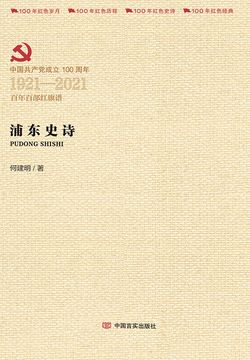 浦东史诗(百年百部红旗谱)
 重读20世纪中国小说
 大师文学课(套装共10册)
 启幕:中国当代文学与文人
 汉语动趋式的认知语义研究
 张健《新中国文学史》配套题库【名校考研真题+课后习题+章节题库+模拟试题】
Comments
Find this book
This site is an index: you start “Search all sources” in your browser, and the entries it lists all point to third-party sites; please judge their availability yourself.
About the author
Yan Kai was born in Beijing in November 1982. He holds a master's degree and the rank of lieutenant colonel in the Armed Police. In 2007 he graduated from the School of Journalism and Communication at Renmin University of China with a specialization in communication studies, and subsequently joined the military. He formerly served as head of the organization and education section of the political department of the Haidian District Public Security Fire Brigade in Beijing. Long engaged in political and ideological work, he has served as chief editor of more than a hundred titles, including illustrated adaptations of classic red films, patriotic education series, therapeutic-diet cookbooks, and folk-culture readers. His representative works include Red Banner Spectrum, Wild Fire and Spring Wind Fighting the Ancient City, Haixia, Fighting North and South, Red Sun, The Visitor on the Iceberg, Grassland, and By the Jinsha River. Most of these are based on revolutionary history and adaptations of red classics, giving him a broad readership in social-science publications.
