

Tags
Summary
Editor's review
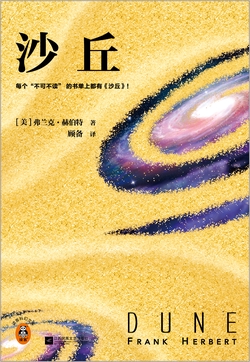
From an editor's perspective, the book's value far exceeds entertainment. Its political intrigue is as finely drawn as A Game of Thrones, its philosophical speculation comparable in depth to the Foundation series, and its attention to ecosystems seems strikingly prescient today. Herbert's prose is dense and information-rich; it may feel slow at first, but once immersed, readers encounter a magnificent world and exquisite detail. This Jiangsu Phoenix Literature and Art Publishing edition balances fluency and literary quality well, suiting Chinese readers who wish to appreciate the original's power. For readers who seek intellectual depth and narrative substance, Dune is a treasure worth mining again and again.
Who it's for
A good fit for
- Hardcore science fiction readers who love grand world-building and philosophical speculation
- Those interested in political intrigue, ecological allegory, and social structures
- Readers seeking classics with lasting literary value that transcend their era
- Immersive readers who accept slow buildup and enjoy layered detail and complex relationships
Not a good fit for
- Entertainment-oriented readers who want fast pacing, strong action, and simple linear narrative
- Readers impatient with dense invented terminology, complex family ties, and political background
Reading tips
- Keep a family tree and a planetary map at hand to follow the complex character network and geopolitical geography
- Pay attention to core concepts such as spice, ecological transformation, and Mentats—they are keys to the story's logic
- The first part starts slowly; give it at least 100 pages, and the world's appeal will gradually emerge and grip you
About the publisher
Jiangsu Phoenix Literature and Art Publishing House focuses on literary publishing while also covering the humanities, social sciences, and books on art and daily life. Its approximately 1,535 titles in the database span social novels, world history, design, science fiction, classic works, and film and television: they include modern Chinese literary classics by Lu Xun such as A Madman's Diary: The Complete Short Stories of Lu Xun, Call to Arms, Four Generations Under One Roof, and Teahouse, as well as foreign literary memoirs like Stefan Zweig's The World of Yesterday. In science fiction it offers Asimov's Galactic Empire series, while in architecture and art it publishes Liu Dunzhen's Classical Gardens of Suzhou and design titles from Phoenix Space. Its authors are concentrated among classic writers such as Lu Xun, Zweig, and Asimov, with translators including Liang Xijiang, Zhong Haonan, and Ye Lihua. Its overall character is built on classic works while embracing genre fiction and visual culture. Public information is limited, and this introduction is based on the titles in the database.
Contents
- 版权信息
- 第一卷 沙丘
- 01
- 02
- 03
- 04
- 05
- 06
- 07
- 08
- 09
- 10
- 11
- 12
- 13
- 14
- 15
- 16
- 17
- 18
- 19
- 20
- 21
- 22
- 第二卷 穆阿迪布
- 23
- 24
- 25
- 26
- 27
- 28
- 29
- 30
- 31
- 32
- 33
- 34
- 35
- 36
- 第三卷 先知
- 37
- 38
- 39
- 40
- 41
- 42
- 43
- 44
- 45
- 46
- 47
- 后记
- 沙丘档案
- 沙丘星的生态
- 沙丘星的宗教
- 有关贝尼·杰瑟里特的动机和使命的报告
- 人物表(摘自《贵族谱系表》)
- 帝国术语库
- 地图附注
FAQ
Will I have trouble reading the book without having seen the film?
How difficult is this book?
Is this edition one of the complete six-book series?
Related on WeRead


Comments
Find this book
This site is an index: you start “Search all sources” in your browser, and the entries it lists all point to third-party sites; please judge their availability yourself.
About the author
Frank Herbert is a name that cannot be overlooked in the history of science fiction, and the Dune series stands as the most representative achievement of his career. Seven of his works are included in the collection, among them Dune, Dune Messiah, Children of Dune, God Emperor of Dune, Heretics of Dune, Chapterhouse: Dune, and the boxed set known as the Dune Hexalogy, which shows the lasting influence of this series among Chinese readers. Because public information is limited, his early life and full biography are difficult to describe in detail, yet his writing orientation remains clear from the works themselves: he builds a grand framework of cosmic politics and interweaves ecology, religion, power, and human destiny, with a steady and reflective narrative that creates the highly symbolic desert planet Arrakis. Herbert's works are often classified as premium fiction and science fiction; his style has influenced many later science fiction creators and has made Dune a classic read across generations.
Pan Zhenhua is a Chinese translator of foreign literature active in Chinese publishing, with a focus on American science fiction. Among the nine titles recorded in the database, his best-known translations are Dan Simmons's Hyperion series, including Hyperion, The Fall of Hyperion, and the two Endymion volumes, Endymion and The Rise of Endymion. He has also translated Frank Herbert's science-fiction classic Dune and its series. These translations have been published by Jilin Publishing Group, Wenhui Press, and Jiangsu Phoenix Literature and Art Publishing House, and are classified under premium fiction, foreign literature, and science fiction. Public information about the translator's life, education, and career remains limited. Judging from the existing titles, his choices center on long science-fiction works with grand world-building and intellectual depth, and his translations serve as a bridge for bringing American science-fiction classics to Chinese readers.
