

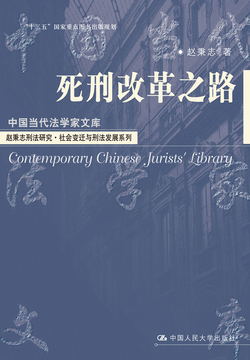
The Death Penalty Report
Tags
Summary
Editor's review
Who it's for
A good fit for
- Literary readers interested in judicial themes and social issues
- Those concerned with public issues such as the death penalty, rule of law, and human rights
- Readers of serious literature who appreciate rigorous narrative and deep characterization
- Law and sociology students or practitioners seeking a literary perspective on their field
Not a good fit for
- Readers of genre fiction seeking light entertainment or pure sensory thrills
- Pragmatists expecting definitive legal conclusions or a case-handling guide
Reading tips
- Read it as a social allegory, attending to the interplay between character fates and institutional context rather than simply chasing the solution to the case.
- While reading, you may wish to reflect on the background of China's judicial reform, but need not rush toward black-and-white answers.
- Savor the author's literary craftsmanship in the details—such as the subtle echoes between environmental description and character psychology—which often carry important thematic signals.
About the publisher
Founded in 1984, Anhui Literature and Art Publishing House is a professional literary and art publisher. Its collection of 389 titles spans classic works, essays and miscellaneous writings, Eastern philosophy, folk literature, classical literature and design. Representative books include Lao She's Camel Xiangzi, Laozi's Dao De Jing, Luo Guanzhong's Romance of the Three Kingdoms, and the Shakespeare drama collection featuring Hamlet, King Lear, Macbeth and Othello, with Zhu Shenghao's translations adding luster to the series. Its author resources range from classic Chinese and foreign writers such as Lao She, Laozi, Luo Guanzhong and William Shakespeare to translators and authors including Zhu Shenghao, Li Chensen and Liang Sicheng. The publisher is characterized by its balance of Chinese and foreign literary classics with traditional culture titles, combining scholarly value with popular reading. Public information is limited, and the above is based mainly on the books in the collection.
Contents
- 版权信息
- 一
- 二
- 三
- 四
- 五
- 六
- 七
- 八
- 九
- 十
- 十一
- 十二
- 十三
- 十四
- 十五
- 十六
- 十七
- 十八
- 十九
- 二十
- 二十一
- 二十二
- 二十三
- 二十四
- 二十五
- 二十六
- 二十七
- 二十八
- 二十九
- 三十
- 附录一 《死刑报告》初版后记
- 附录二 关于《死刑报告》——答《北京晚报》记者问
FAQ
Is this book based on a true case?
Do I need legal expertise to read this book?
Is the book's tone too heavy and oppressive?
Related on WeRead
Comments
Find this book
This site is an index: you start “Search all sources” in your browser, and the entries it lists all point to third-party sites; please judge their availability yourself.
About the author
Pan Jun is an author about whom limited public information is available. Nine of the author's works are held in the collection, spanning social fiction, management communication and medicine, which suggests a fairly broad range of interests. The fiction is represented by works such as The Death Penalty Report, Monologue and Gesture: Red, Monologue and Gesture: Blue, Monologue and Gesture: White, Wind, Double Pupil and Haikou Diary. These works tend to focus on real social issues and individual circumstances, with a reflective and introspective quality; the Monologue and Gesture volumes, divided by colour, show a serial and somewhat experimental structure. Excellent Management Communication addresses management practice, indicating that the author's writing is not confined to fiction. As details of the author's life, nationality and dates remain unknown, this introduction is based solely on the works in the collection and makes no biographical inferences.
