

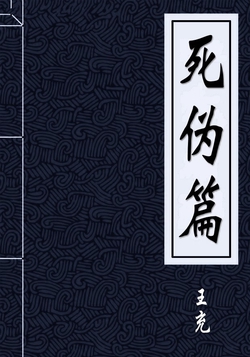
On Death and Falsehood
Tags
Summary
Editor's review
Who it's for
A good fit for
- Readers interested in ancient atheist thought and criticism of ghost beliefs
- Intellectual-history enthusiasts who want to understand Wang Chong's refutation methods in Balanced Discourses
- Students who need training in analyzing ancient argumentative texts
- Traditional-culture readers concerned with the relationship between folk beliefs and rational scrutiny
Not a good fit for
- Casual readers hoping for ghost stories or tales of the strange
- Readers seeking systematic philosophical monographs and averse to piecemeal argumentation
- Readers impatient with classical Chinese argumentative prose who need strong plot
Reading tips
- Read "On Death" first, then this chapter, to grasp how Wang Chong's view that "the dead do not become ghosts" connects across the two.
- Sort out the typical claims refuted in this chapter and compare each with its factual analogies and physiological-common-sense arguments.
- While reading, distinguish Wang Chong's conclusions from his argumentative process and consider which arguments remain instructive today.
- Read alongside background materials on Han-era folk beliefs to avoid judging the ancients out of context.
About the publisher
Bashu Publishing House is a publisher centered on collating and publishing classical Chinese cultural texts, with its main publishing areas covering classical literature, Eastern philosophy, ancient poetry, and educational classics. Its library currently holds 1,075 titles, including representative works such as Dream of the Red Chamber, the Preface to the Orchid Pavilion Gathering, Renjian Cihua, and Out to the Frontier, involving authors such as Cao Xueqin, Wang Xizhi, Wang Guowei, Wang Changling, Liu Xie, and Yan Yu. These reflect the publisher's focus on literary classics, poetry criticism, and philosophical readings. Its publishing character lies in working around ancient texts and canonical works, with attention to textual collation and presentation. Public information on its more detailed publishing background and series plans is limited; this introduction is based only on the library's book information.
Contents
- 版权信息
- 正文一
- 正文二
- 正文三
- 正文四
FAQ
What views does "Death-False" mainly refute?
What methods does Wang Chong mainly use in his refutation?
Do I need to know all of Balanced Discourses before reading this chapter?
What reading value does this chapter have for modern readers?
Related on WeRead


Comments
Find this book
This site is an index: you start “Search all sources” in your browser, and the entries it lists all point to third-party sites; please judge their availability yourself.
About the author
Wang Chong (27–c. 97), courtesy name Zhongren, was a native of Shangyu in Kuaiji (present-day Shaoxing, Zhejiang). A thinker, literary critic, and atheist of the Eastern Han, he entered the Imperial Academy in Luoyang in his youth and studied under Ban Biao; later he left office, stayed at home, and devoted himself to writing. His representative work, the eighty-five-chapter Lunheng (Balanced Inquiries), criticizes Chenwei superstition and the theory of interactions between Heaven and humanity, advocates a naturalist theory of qi, and stands as an important representative of Han-dynasty materialist thought. Wang Chong valued evidence and analysis in his writing, often developing arguments through questions and debates in a plain but sharp style. The collection holds sixty-nine of his works, including such pieces as Shizhi pian, Wenkong pian, Ziran pian, Daoxu pian, Duizuo pian, and Hanwen pian, covering philosophy, social criticism, and literary appreciation. He championed independent thinking and opposed blind submission to authority, exerting a lasting influence on later thought and literary criticism.
