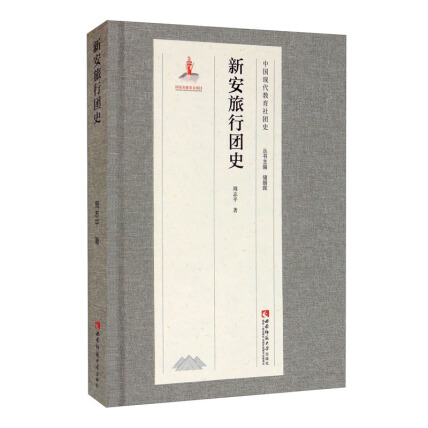
The Xin'an Traveling Troupe cover

The Xin'an Traveling Troupe

Rating 3.3
Word count
122K words
Chapters
44
ISBN
9787214271563

Tags

Summary

This is a work of documentary literature about the New-An Traveling Troupe. On October 10, 1935, at a moment of national peril, Wang Dazhi, the second principal of Xin'an Primary School in Huai'an, Jiangsu, decided to take the children and form the "New-An Traveling Troupe." Using the arts as their weapon, the troupe members mobilized the public through film screenings, patriotic lectures, teaching and singing resistance songs, street song-and-dance dramas, editing and publishing periodicals, writing slogans and painting murals, comforting and supporting frontline troops, and conducting cave education. They called on all sectors of society to "give money if you have money, and give strength if you have strength," striving to contribute to the victory of the War of Resistance and the liberation of the whole country. The famous writer Bing Xin praised them as "little buglers of national liberation." From a documentary perspective, this book leads readers back to those years of beacon fire.

Editor's review

This book uses documentary literary techniques to reconstruct the journey of the Xin'an Traveling Troupe from its departure in 1935 to its participation in the War of Resistance and the cause of liberation, grounding the grand narrative of national crisis in the daily actions of young troupe members: screening films, singing salvation songs, performing street theater, publishing periodicals, writing slogans, supporting the front lines, and conducting cave education. These concrete, small-scale practices show readers how propaganda and mobilization were transformed into enduring social force, and how education was completed on the move. Author Li Chunlei organizes historical materials from a documentary perspective, with restrained narration that focuses on scenes and characters' actions, making the book suitable as an introductory read for understanding youth and children's groups and popular salvation movements during the War of Resistance. For young readers, the choices and perseverance of peers in the book have direct inspirational power; for historians and educators, it provides a vivid sample for observing wartime educational practice and popular mobilization. When reading, one may combine it with the background of War of Resistance history, noting how troupe members flexibly adjusted their working methods amid scarce resources and the concrete actions behind the评价 of 'little buglers of national liberation.' It is suitable for thematic reading, class and team activities, or family reading, and can be followed by discussion on 'how young people can participate in public affairs.'

Who it's for

A good fit for

  • Primary and secondary school students and teachers for thematic reading on War of Resistance history and patriotism
  • Readers interested in modern educational practice and youth and children's movements
  • Lovers of documentary literature who enjoy narratives based on historical sources
  • Family reading scenarios needing discussable topics of growth and responsibility

Not a good fit for

  • Readers who prefer theoretical analysis or academic textual research; this book is mainly documentary narrative
  • Very young children; some wartime background and long-distance trekking plots require adult guidance
  • Readers expecting fictional plots and strong dramatic conflict

Reading tips

  1. Read the preface and timeline first to establish the historical coordinates around 1935, then move into specific chapters.
  2. Mark the propaganda forms used by troupe members while reading, and summarize their mobilization effects and limitations afterward.
  3. When reading with children, choose one scene each time to discuss 'what would you do if you were there?'
  4. Use a map to trace the troupe's route and understand the spatial relationship between travel and propaganda.

Contents

  1. 版权信息
  2. 引子:十七年,五万里
  3. 第一章 古镇新光
  4. 1 萧湖之畔
  5. 2 “捧着一颗心来”
  6. 3 七个小光棍
  7. 第二章 在江淮大地上
  8. 4 崭新的诞生
  9. 5 火花与嬗变
  10. 6 皖南世相
  11. 7 熔炉·港湾
  12. 第三章 不教胡马度阴山
  13. 8 大青山下
  14. 9 有鹿的地方
  15. 10 乌拉特草原的记忆
  16. 11 黄河激流
  17. 第四章 西风烈
  18. 12 黄羊和牛车
  19. 13 “宁夏王”
  20. 14 泪水·火种
  21. 15 波涛激荡
  22. 16 益希卓玛
  23. 第五章 保卫大武汉
  24. 17 献金台前
  25. 18 激情澎湃的日夜
  26. 19 骑到真理的背上去
  27. 第六章 桂林风云
  28. 20 岩洞里的学校
  29. 21 伤兵之友
  30. 22 火线上的孩子们
  31. 23 引路人
  32. 第七章 苏北战歌
  33. 24 血染北秦庄
  34. 25 以文艺为武器
  35. 26 “我们的小报出版了!”
  36. 27 十万儿童十万兵
  37. 第八章 向着最后胜利
  38. 28 永远的“汪爸爸”
  39. 29 “毛主席来信啦!”
  40. 30 最威风的“武器”
  41. 31 腰鼓声震黄浦江
  42. 尾章 生活之树常青
  43. 主要参考书目
  44. 后记

FAQ

What did the Xin'an Traveling Troupe mainly do?
According to the book, the troupe members used literature and art as weapons. They mobilized the public by screening films, preaching patriotic ideas, teaching salvation songs, performing street song-and-dance dramas, editing and publishing periodicals, writing slogans and painting murals, comforting and supporting the front lines, and conducting cave education. They called on all sectors to 'give money if you have money, give strength if you have strength,' contributing to the victory of the War of Resistance and national liberation.
Is this book suitable for primary school students to read independently?
Upper-grade primary school students can read it with teacher or parent guidance. The book involves backgrounds such as national crisis and wartime long-distance trekking, which younger readers may not fully understand. Adults are advised to provide background first and discuss key scenes.
Why did Bing Xin praise them as 'little buglers of national liberation'?
According to the materials, this praise points to the Xin'an Traveling Troupe's actual actions in mobilizing the public through literary and artistic propaganda and calling for national liberation. The book presents through concrete activities how they conveyed salvation ideas through songs, drama, periodicals, and other means; readers can understand this evaluation in light of these scenes.
What historical background should I know before reading this book?
It is advisable to first understand the national crisis around 1935, the overall course of the War of Resistance Against Japan, and the basic methods of wartime popular mobilization. With this background, it is easier to understand the reasons for the troupe's departure and the significance of its various propaganda activities.

Related on WeRead

Comments

Find this book

This site is an index: you start “Search all sources” in your browser, and the entries it lists all point to third-party sites; please judge their availability yourself.

About the author

Li Chunlei Author · Chinese · 1968

Li Chunlei, born in February 1968 in Cheng'an, Hebei, is a Chinese reportage writer and a first-class literary creator. He formerly served as vice chairman of the Hebei Writers Association and vice president of the Chinese Reportage Society. His work centers on reportage and documentary writing, with forays into prose and literary appreciation, addressing real-life figures, local change, and social development. Representative works include Steel Is Tempered This Way, Baoshan, Rolling to Peking University in a Wheelchair, A Night at Penghua Village, and The County Party Secretary. He has twice won the Lu Xun Literary Prize and won the Xu Chi Reportage Prize three consecutive times, exerting considerable influence in short-form reportage and being hailed as "the king of Chinese short reportage." Seven of his works are held in the collection, including Shadows of China, Deep into Spring, and Xiuer: Huang Wenxiu, "Model of the Times."

More by the same author

Top rated in the same category