

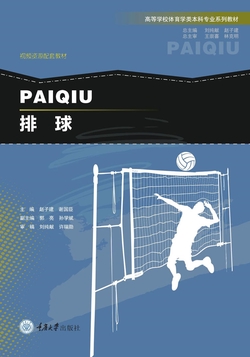
Volleyball
Tags
Summary
Editor's review
Who it's for
A good fit for
- Students and teachers specializing in volleyball at sports colleges and universities
- Primary and secondary school PE teachers engaged in volleyball teaching or extracurricular training
- Enthusiasts with some volleyball foundation who wish to systematically improve their theoretical and training knowledge
- Readers preparing for PE teacher qualification exams or related professional examinations
Not a good fit for
- Ordinary fans seeking only light, entertaining reading about player anecdotes or viewing guides
- Beginners hoping to quickly master 'secret techniques' for rapid short-term improvement in skills
Reading tips
- It is recommended to read chapters in order, first building an overall theoretical understanding of volleyball before delving into technical details.
- When reading the technical chapters, it is best to combine them with hands-on practice or watching professional match footage to deepen understanding.
- The teaching and training methods in the book can be used as templates, flexibly adjusted and applied according to actual teaching or training subjects.
About the publisher
Chongqing University Press is a comprehensive university press whose publishing areas span social and cultural studies, industrial technology, finance and economics, medicine, social psychology, and theory. Judging from its catalog, the press publishes both academic works and popular science titles. Representative books include E. H. Gombrich's Shadows: The Depiction of Cast Shadows in Western Art, Magnesium-Based Hydrogen Storage Materials by Pan Fusheng et al., Research on China's Regional Spatial Development Models by Sun Jiuwen, and titles from the Gynecologic Oncology Committee of the Chinese Anti-Cancer Association, such as the Guidelines for Diagnosis and Treatment of Common Gynecologic Malignancies in China (2019) and Bipolar Disorder: What You and Your Family Need to Know. Its authors work in art history, materials science, regional economics, clinical medicine, and social research methods. Public information is limited, but its publishing profile combines academic translation, industrial technology, and practical medical guides.
Contents
- 版权信息
- 高等学校体育学类 本科专业系列教材编委会
- 高等学校体育学类 本科专业系列教材审稿委员会
- 本书编委会
- 总序
- 序言
- 第一篇 排球运动导论
- 第一章 排球运动的演变史
- 第一节 排球运动的起源
- 第二节 排球运动的传播
- 第三节 排球运动的现代属性
- 第二章 排球运动发展简史
- 第一节 世界排球运动发展简史
- 第二节 中国排球运动发展简史
- 第三节 现代排球运动发展趋势
- 第三章 排球运动的衍生类型
- 第一节 沙滩排球
- 第二节 气排球
- 第三节 4 人制排球
- 第四节 9 人制排球
- 第二篇 排球运动技术论
- 第四章 排球运动技术的基本理论
- 第一节 排球运动技术的本质原理
- 第二节 排球运动技术的力学原理
- 第五章 准备姿势与移动技术
- 第一节 准备姿势动作技术分析
- 第二节 移动动作技术分析
- 第六章 传球技术
- 第一节 传球技术的概念与分类
- 第二节 传球技术的动作分析
- 第三节 传球技术的实践运用
- 第七章 垫球技术
- 第一节 垫球技术的概念与类型
- 第二节 垫球技术的动作分析
- 第三节 垫球技术的实践运用
- 第八章 发球技术
- 第一节 发球技术的概念与类型
- 第二节 发球技术的动作分析
- 第三节 发球技术的实践运用
- 第九章 扣球技术
- 第一节 扣球技术的概念与类型
- 第二节 扣球技术动作分析
- 第三节 扣球技术的实践运用
- 第十章 拦网技术
- 第一节 拦网技术的概念与类型
- 第二节 拦网技术动作
- 第三节 拦网技术的实践运用
- 第三篇 排球运动战术论
- 第十一章 排球运动战术的基本理论
- 第一节 排球运动战术的概念与类型及发展
- 第二节 排球运动战术间的辩证关系
- 第三节 阵容配备、位置交换、信号联系及“自由人”
- 第十二章 排球运动战术的实战应用
- 第一节 个人战术的实战应用
- 第二节 集体战术的实战应用
- 第四篇 排球运动实践论
- 第十三章 排球运动技战术教学与训练
- 第一节 排球运动技战术教学的基本理论
- 第二节 排球运动技战术训练的基本理论
- 第三节 排球运动技术教学与与训练
- 第四节 排球运动战术教学与训练
- 第节 五 排球运动技战术教学与训练技法
- 第十四章 排球运动员体能训练理论与方法
- 第一节 排球运动员体能训练的基本理论
- 第二节 排球运动员专项身体素质训练方法
- 第三节 排球运动员体能训练与测试方法
- 第十五章 排球运动员心理训练理论与方法
- 第一节 排球运动员心理技能训练概述
- 第二节 排球运动员一般心理训练方法
- 第三节 排球运动员比赛心理训练方法
- 第五篇 排球运动竞赛论
- 第十六章 排球运动竞赛组织与编排工作
- 第一节 排球运动竞赛的组织工作
- 第二节 排球运动竞赛的编排工作
- 第十七章 排球运动竞赛规则与裁判工作
- 第一节 排球运动竞赛规则的作用与裁判工作职责
- 第二节 排球运动竞赛规则与裁判方法
- 附录
FAQ
What is this book's Douban rating?
Is this book suitable for self-study by someone with no volleyball background at all?
Is the content outdated?
Related on WeRead



Comments
Find this book
This site is an index: you start “Search all sources” in your browser, and the entries it lists all point to third-party sites; please judge their availability yourself.
About the author
Zhao Zijian: currently, limited public information is available. Neither his dates of birth and death, his nationality, nor his educational background has been clearly recorded. Only one work of his is held in the collection, namely Volleyball. Judging from the available information, the book is classified under examinations, which suggests that it is more likely intended for exam preparation or teaching scenarios rather than being a general popular reader on the sport of volleyball. Owing to the limited material, a full picture of his writing style cannot be determined. However, from the positioning of the work, it may be inferred that the author paid attention to clarity and practicality in organizing the knowledge points, striving to help readers grasp the basic content related to volleyball within a limited space and to serve the needs of examinations or course study. As this is the only work under the author's name, his overall creative profile and influence are difficult to assess fully. Readers should therefore judge the book in light of its specific content and purpose, and it is hoped that more materials will emerge in the future to help reconstruct a more complete picture of this author's writing.
Xie Guochen: currently, publicly available information is limited, and his nationality, dates of birth and death, and detailed biography cannot be confirmed. According to the existing bibliographic records, the library holds one work by him, Volleyball, commonly classified under examinations. It may have been compiled for volleyball-related examinations, teaching, or training needs, serving readers preparing for exams or as a reference for physical education instruction. Because information about the author's background is lacking, it is difficult at present to make a complete judgment about his writing style or overall body of work. As for this single work, its content centers on volleyball and represents a practical sports-related writing direction, reflecting a positioning linked to examinations and teaching contexts. Readers seeking to learn more about the author may refer to the book's own editorial notes and publication information; if further materials become available, this author profile can be improved accordingly.
Guo Liang is an author whose works span a notably wide range of subjects, though limited public information leaves his background and professional identity unclear. Judging from the six titles held in the collection, his writing crosses art, technology and practical methods: Vermeer's Mirror of the Mind engages with Vermeer and seventeenth-century painting, while Data Center Hot Technology Analysis and New Infrastructure: The Road to Data Center Innovation address information technology and industrial infrastructure. Font Story: Six Type Design Principles and Practical Applications reflects an interest in design, and Study Master's Speed-Reading Memory Method and Volleyball touch on learning techniques and sports. Covering theory, computing, design, examinations and inspirational growth, these works show an author skilled at turning specialized knowledge into clear, accessible writing for general readers.
Sun Xuebin is a Chinese author about whom limited public information is available. The only work currently confirmed is Volleyball, a single title classified under exam preparation, which suggests that its content is mainly designed for relevant examinations or assessment contexts and serves the practical needs of candidates. In terms of subject matter, the book centers on volleyball, likely covering the sport's basic knowledge, key rules and training methods, and is organized in the form of exam-oriented guidance. Since no reliable records of the author's life, educational background or writing career have been found, it is not possible to determine his professional identity or creative trajectory, nor to assess the book's distribution or public reception. Overall, Sun Xuebin is currently an author known to readers through a single exam-oriented work, and his profile awaits further disclosure.
