

The Defender
Tags
Summary
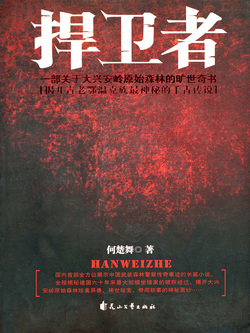
A squadron of the Armed Forest Police bears responsibility for guarding Qihan National Forest Park; they know every deer herd and every beast in the forest as well as the lines of their own palms.
Seasons turn, the mountains stand vast, and the greedy eyes of poachers ignite the fire of desire again and again. The forest's guardians blend into the boundless green. They say: hardship is temporary, because we hold on!
Editor's review
In literary terms, the book's highlight lies in its exploration of the complexity of human nature in wartime. The author does not divide characters into simple binary oppositions but shows individuals' contradictions, struggles, and growth under extreme pressure. This approach transcends mere historical record and lends the work deeper literary reflectiveness. The detail work is especially praiseworthy: from tactical movements to environmental atmosphere, it reflects the author's solid research and expressive command of language.
In terms of reading experience, the pacing is well controlled, with tense combat scenes alternating with quieter emotional passages, creating a rhythm that is both taut and relaxed. Note, however, that because of the subject's specialized nature, some military terminology and tactical descriptions may require background knowledge for full comprehension. Overall, this is a work that strikes a good balance between historical authenticity and literary artistry, suited to readers with a deep interest in military history.
Who it's for
A good fit for
- Readers with a strong interest in modern military history
- Literary enthusiasts who enjoy deep character portrayal and explorations of human nature
- Researchers concerned with social change in specific historical periods
- Readers seeking narrative works that combine tense plotting with emotional writing
Not a good fit for
- Readers who prefer light, entertaining reading experiences
- Readers with low tolerance for military terminology and strategic descriptions
Reading tips
- Some familiarity with the relevant historical background before reading will help in understanding characters' motivations
- Reading in chapter order is recommended, with attention to the gradual unfolding of character relationships
- Maps and notes in the book can be used together to understand tactical layouts and geographic settings
About the publisher
Huashan Literature and Art Publishing House is a local literature and art publisher whose main publishing focus is literary and artistic works, covering categories such as classic works, philosophical readings, social sciences, foreign literature, Eastern philosophy, and applied psychology. Judging from the books in the database, the house publishes modern literary classics such as Xiao Hong's The Story of Hulan River, as well as Aisin Gioro Yu Yun's "Yu Laoshi Speaks" series and titles from the "People and Classics" series, including The Great Learning and The Commentary on the Xici of the I Ching, with an emphasis on interpreting traditional classics. In foreign literature, it offers Michael Cunningham's The Hours, Hemingway's The Snows of Kilimanjaro, and Dave Pilkey's Dog Man series. Its authors include Xiao Hong, Aisin Gioro Yu Yun, Chen Jiong, Dave Pilkey, Michael Cunningham, and Wang Jiaxiang. Its publishing character lies in balancing literary classics, interpretations of traditional culture, and translations of foreign literature, forming a diverse reading structure for general readers. Public information is limited, and the above focuses on the publishing directions reflected by the books in the database.
Contents
- 版权信息
- 第一部:冬之篇
- 第一章 三千年轮回
- 第二章 北上兴安岭
- 第三章 零下45度
- 第四章 放牧森林的军人
- 第五章 傻狍子
- 第六章 暗香,幻境
- 第七章 牙签罐的秘密
- 第八章 黄祸来了
- 第九章 老兵的心愿
- 第十章 首长,请上车
- 第十一章 优昙幽香
- 第十二章 双层门
- 第十三章 探秘大地洞
- 第十四章 飞龙传说
- 第十五章 报纸包
- 第十六章 好消息和坏消息
- 第十七章 暴风雪之年
- 第十八章 一口辛辣
- 第二部:春之篇
- 第一章 致命铁镊克
- 第二章 银香洞口
- 第三章 红雪幽谷
- 第四章 远古的雇佣兵
- 第五章 我们是铁,我们是钢
- 第六章 崴子货
- 第七章 花池鱼林
- 第八章 失踪的摄影家
- 第九章 血痕十五里
- 第十章 温差五百度
- 第十一章 打鹿茸的季节
- 第十二章 与兽同穴
- 第十三章 火线奇迹
- 第十四章 最后的搏斗
- 附录
FAQ
Which period is the book's historical background based on?
What are the hallmarks of He Chuwu's writing?
Is this book suitable for military enthusiasts?
Related on WeRead
Comments
Find this book
This site is an index: you start “Search all sources” in your browser, and the entries it lists all point to third-party sites; please judge their availability yourself.
About the author
He Chuwu is an author about whom little public information is available, whose work spans several genres; eleven of his titles are held in this collection. In historical writing he focuses on modern and contemporary China and the memory of war, with works such as Manchukuo: Japan's New Attempt at Colonizing China (2 volumes), Shangganling, My War to Resist US Aggression and Aid Korea, and The Defenders, which treat colonial experience and battlefield experience in a documentary manner. In military and popular narrative he has written Wild Gun (2 volumes), Wild Gun Season 1: Bent Spear and The Hometown of Stray Bullets, with tight plotting and an emphasis on action and ensemble casts. He has also worked in social fiction, modern romance and science fiction, as in First Love Angel. His writing moves between serious history and genre fiction, covering a wide range of subjects and showing a sustained interest in war, memory and the fate of ordinary people.
