

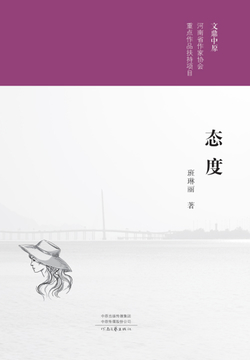
Attitude
Tags
Summary
Editor's review
Who it's for
A good fit for
- Readers interested in reflecting on contemporary cultural phenomena and social change
- Literature lovers who enjoy reflective essays and intellectual writing
- Thinkers hoping to understand China's real-world issues from a humanistic perspective
- Existing readers of Han Shaogong's works who wish to learn about his recent intellectual developments
Not a good fit for
- Readers seeking fiction with strong plotting and dramatic stories
- Pragmatists expecting concrete methodologies or practical guides
Reading tips
- Readers may begin with the author's preface or afterword to grasp the book's overall tone and core concerns
- There is no need to read straight through in order; readers can start with chapters related to topics that interest them
- While reading, it may help to slow down and leave room for thought and aftertaste
About the publisher
Sichuan People's Publishing House is a comprehensive publisher whose list spans social fiction, art, foreign literature, finance and biography; the 358 titles in the database show a catalogue balancing classics with general reading. Representative books include Lu Xun's A Madman's Diary, Feng Zikai's Paintings for the Protection of Life, works associated with Li Shutong, and foreign-literature translations such as André Gide's Strait Is the Gate and Yasunari Kawabata's Snow Country and The Dancing Girl: Classic Works of Yasunari Kawabata. In finance there is Security Analysis, and in biography the New Biography of Su Dongpo. Authors represented include Lu Xun, Feng Zikai, Li Shutong, Li Yumin, Zhu Zuci and Ye Zongmin. The publishing profile emphasizes literary classics alongside art books, and uses thematic series such as the "banned books" collection to address intellectual and scientific themes. Public information is limited, so this introduction focuses on the directions reflected in the database.
Contents
- 版权信息
- 序
- 第一辑 理趣
- 渡口以及波希米亚
- 守住秘密的舞蹈
- 第二辑 智识
- “阶级”长成了啥模样
- 当机器人成立作家协会
- 重说道德
- 民主:抒情诗与施工图
- 人情超级大国
- 熟悉的陌生人
- 遥远的自然
- 佛魔一念间
- 性而上的迷失
- 第三辑 重述
- 观察中国乡村的两个坐标
- 文学经典的形成与阅读
- 文理互盲,还是文理互补——在北大网文论坛的讲话
- 文学与记忆
- 附录
- 落花时节读旧笺
- 隔壁村的韩少功
- 直面人类精神的难题——答《文学报》记者王雪瑛
FAQ
How is this book different from Han Shaogong's novels?
Is the content too academic or difficult?
Is this book suitable for young readers?
Related on WeRead
Comments
Find this book
This site is an index: you start “Search all sources” in your browser, and the entries it lists all point to third-party sites; please judge their availability yourself.
About the author
Han Shaogong, born in Changsha, Hunan, in 1953 with ancestral roots in Li County, is a contemporary writer and one of the principal advocates of the "root-seeking literature" movement of the 1980s. His work spans fiction and essays, with representative titles including Dad, Dad, A Dictionary of Maqiao, South of the Mountains, North of the Water, and The Book of Day and Night. He has received the Lu Xun Literary Prize and the Newman Prize for Chinese Literature, and his works have been translated into multiple languages. His fiction often takes local language, folk memory, and rural experience as points of entry and is notable for formal experimentation, while his essays attend to social reality and cultural conditions in a calm, reflective tone. This collection holds 21 of his works, including selected writings, essay collections, and a revised edition of A Dictionary of Maqiao, reflecting his continuing exploration between fiction and nonfiction.
