

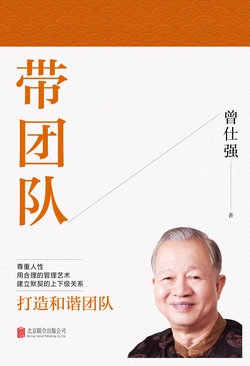
Leading a Team
Tags
Summary
Editor's review
Who it's for
A good fit for
- New or experienced middle managers seeking leadership methods suited to the Chinese cultural context
- Learners interested in business management and organizational behavior who wish to draw wisdom from Eastern philosophy
- Team leaders facing practical challenges in team building, such as interpersonal communication and building cohesion
- Readers with a strong interest in Professor Zeng Shiqiang's management views and the concept of Chinese-style management
Not a good fit for
- Readers expecting concrete, standardized management tools and quantified operational steps
- Those who wholly endorse modern Western management systems and are skeptical of combining traditional culture with management
Reading tips
- It is suggested to read the whole book first to grasp the core framework of "cultivating oneself to bring peace to others," then reflect on it in light of one's own management practice.
- Many views in the book derive from traditional classics; readers may slow their pace appropriately to understand how the philosophical foundations connect with management applications.
- Readers can compare the book's views with familiar Western management theories and explore an integrated management approach suited to their own circumstances.
About the publisher
Beijing United Publishing Co., Ltd. is a publisher known for its literature and history titles, with 2,065 books in the collection. Its publishing covers foreign literature, contemporary Chinese prose and essays, history, folk literature, and cultural books. Its list ranges from Sima Qian's complete edition of the Records of the Grand Historian to foreign classics such as The Book of Disquiet, All Quiet on the Western Front, Snow Country, The Stranger, and Jean-Christophe, as well as modern Chinese works including Teahouse and Dawn Blossoms Plucked at Dusk. Its authors and translators include Yasunari Kawabata, Fernando Pessoa, Erich Maria Remarque, Jin Xinyi, Zhou Miao, and Chen Chao. Public information is limited, but its catalogue reflects a balance between Chinese and foreign literary classics and historical and cultural works.
Contents
- 版权信息
- 引言
- 第一章 以人为本带团队
- 以人为本的理念永不变
- 组织成员的地位需调整
- 团队管理的重点在于心
- 合适的管理才是最好的
- 第二章 领导是团队的核心
- 领导是团队的向心力
- 整合团队要从观念入手
- 认清人的本性才是关键
- 领导者应有的管理艺术
- 第三章 干部是团队的支柱
- 充实自己是成功之本
- 相敬如宾是相处之道
- 半推半就是受权之术
- 皆大欢喜是沟通之妙
- 第四章 员工是团队的基石
- 成为最受欢迎的员工
- 基层主管要善待员工
- 团队领导要尊重员工
- 如何挑选合适的员工
- 如何培养优秀的员工
- 第五章 团队内部要高度和谐
- 用企业文化代替制度
- 打造协同一致的团队
- 实现协同一致的条件
- 从依附感产生归属感
- 构建蜘蛛网状的组织
- 发挥树状的领导精神
- 采取有效的激励方式
- 第六章 团队外部要互利互惠
- 提高自身核心竞争力
- 达成共识建立密切关系
- 要形成分中有合的观念
- 建立重义气的人际网络
FAQ
What are the main differences between this book and common Western management books?
Can I understand this book without a background in management?
Do the book's views still apply in today's rapidly changing business environment?
Related on WeRead


Comments
Find this book
This site is an index: you start “Search all sources” in your browser, and the entries it lists all point to third-party sites; please judge their availability yourself.
About the author
Zeng Shiqiang (1934–2018) was born in Zhangzhou, Fujian, and grew up in Taiwan. He held a PhD in management philosophy from the University of Leicester in the UK and was a professor at Taiwan Chiao Tung University. In 1979 he put forward the idea of "Chinese-style management," and he is known as the "father of Chinese-style management," an influential scholar and author in the Chinese-speaking management world. The library holds 75 of his works, covering management, motivational growth, social culture, and social science. Representative titles include Chinese-Style Management (Complete Edition), The Management Wisdom of the Chinese: Three Volumes, Flexible Interpersonal Relationships, The Great Way of Management, and The Square and Circle of Leadership (Updated Edition). He also appeared on CCTV's Lecture Room, presenting The Mystery of the I Ching and The Inspiration of Hu Xueyan, bringing traditional wisdom to modern management and life topics. His books combine scholarship with accessible writing and are widely read among Chinese readers.
