

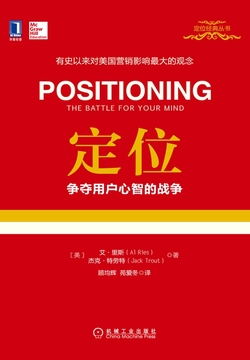
Positioning
Tags
Summary
This goal should be specific and measurable so that it can be continuously evaluated and adjusted in the pursuit. A clear position is crucial to personal success in doing tasks, working, or starting a business. It not only helps define goals and focus energy but also helps people plan a path of action, strengthen self-confidence, and enhance competitiveness. Therefore, everyone should seriously consider their own position and continuously adjust and optimize it in practice.
This book helps readers build their own advantages and improve their competitiveness in the industry from three major aspects: employees' self-positioning, positioning of action, and entrepreneurs' self-positioning.
Editor's review
Who it's for
A good fit for
- Newcomers just entering the workplace who want to clarify their development direction as soon as possible
- Professionals who have worked for years but feel their goals are vague and their energy scattered
- Entrepreneurs preparing to start a business or who have just launched a project and need to sort out their ideas
- Managers who need to lead teams and help members clarify responsibilities
Not a good fit for
- People expecting specific operational templates and one-step solutions
- Readers who only want a quick read and are unwilling to engage in self-reflection
Reading tips
- Read the table of contents first and mark the chapters most relevant to your situation to read first.
- After each chapter, write down in one sentence your current positioning and your next action.
- Apply the goal-measurement methods mentioned in the book to one specific current task.
Contents
- 版权信息
- 员工的自我定位
- 明确为了什么而工作
- 工作当成人生的乐趣
- 把工作看成事业
- 主人翁精神
- 坚持自己的要求
- 做事要有热忱
- 内核坚强乐观
- 工作要有激情
- 人生总会有跳槽
- 工作中自动自发
- 行动的定位
- 机会是主动争取的
- 必须要有责任心
- 脚踏实地永远重要
- 拥有自制力
- 拥有创造力
- 要有团队合作精神
- “每天多做一点”
- 做最好的员工
- 不要做自己不擅长的事
- 争取第一次就把事情做对
- 懂得如何与老板、同事交谈
- 谨防办公室陷阱
- 遵守办公室礼仪
- 养成良好的工作习惯
- 充分展现自己
- 创业者的自我定位
- 创业要有坚定不移的信念
- 永不退缩
- 乐观尝试,不惧困难
- 不留退路,破釜沉舟
- 逆境要乐观积极
- 困境要绝地反击
- 不要失去目标
- 失败是积累经验
- 无限风光在险峰
- 大胆尝试
FAQ
Is this book suitable for recent graduates who still have no direction?
Can the positioning methods in the book be directly used for entrepreneurship?
Can I find a clear position just by reading it?
Related on WeRead




Comments
Find this book
This site is an index: you start “Search all sources” in your browser, and the entries it lists all point to third-party sites; please judge their availability yourself.
About the author
Zhao Fan currently has only one known work in Chinese book records, Positioning, and publicly available information about the author is very limited: nationality, dates of birth and death, and educational background are not reliably documented. According to the library classification, the book falls under inspirational growth, suggesting that the author writes on personal development and focuses on readers' self-understanding and choice of direction in real-life circumstances. The title Positioning itself points to the book's central concern: how to understand one's own conditions, clarify goals, and make judgments suited to oneself. Because there is no reference to the author's life, statements on writing, or other works, it is difficult to summarize a consistent writing style or a complete line of thought, and impossible to assess the book's specific influence among similar titles. The available information shows only that Zhao Fan has entered readers' view with a single inspirational work; other details await further public sources for supplementation and verification.
