

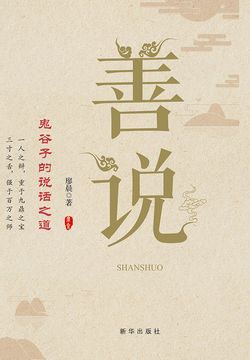
Good Persuasion
Tags
Summary
Editor's review
Who it's for
A good fit for
- Workplace newcomers who hope to improve everyday communication and tend to lose the proper measure when speaking
- Practitioners in sales, customer service, mediation, and other fields requiring frequent dealings with people
- General readers interested in popular Republican-era books on getting along in the world
Not a good fit for
- Readers expecting systematic communication theory or an academic research framework
- Those looking only for ready-made script templates and instant application
Reading tips
- Read through once to grasp the overall thread, then select and read closely the chapters relevant to the communication situations you commonly encounter.
- After each section, recall a recent occasion when you spoke poorly and try reorganizing your words using the book's approach.
- Do not pause over unfamiliar Republican-era wording; grasp the general meaning first and compare it afterward.
- Consider reading together with others and exchanging practical insights once a week; this is easier to put into practice than reading alone.
About the publisher
"Republic-era Commercial Press Original Editions" refers to original books printed by The Commercial Press during the Republican period, not a separate publishing house. Judging from the 300 titles held in the collection, its publishing focus centers on classical poetry and lyrics, literary appreciation, classic works, military texts, prose and miscellaneous writings, and Eastern philosophy. Representative titles include Wang Guowei's Renjian Cihua, Zhong Rong's Shipin, the lyric collections of Xin Qiji and Liu Yong, Sun Wu's The Art of War, and Lü Buwei's Xianshi Lan. Its author resources are mainly classical writers, together with modern scholars such as Li Jingbang and Guo Huaruo, whose collations and annotations are also represented, giving the list a character centered on original texts while attending to annotation and appreciation. Public information on the precise Republican-era catalog and printings is limited; this overview is based only on the titles held in the collection.
Contents
- 版权信息
- 正文一
- 正文二
- 正文三
- 正文四
- 正文五
FAQ
Does this book teach conversational tactics or principles of conduct?
Is the original Republican-era text difficult to read now?
Is it suitable for reading straight through in one sitting?
Related on WeRead



Comments
Find this book
This site is an index: you start “Search all sources” in your browser, and the entries it lists all point to third-party sites; please judge their availability yourself.
About the author
Anonymous is not a real personal name but a general Chinese designation for authors whose names are unknown, lost, or unsigned. Neither nationality nor dates of birth and death can be verified, and available public information is limited, so the works attributed to this name are the only basis for description. The collection holds 2,078 works under Anonymous, spanning medicine, classics, historical readings, ancient poetry, classical literature, and philosophy. Representative works include The Yellow Emperor's Inner Canon: Lingshu, Mencius, The Book of Documents, Nineteen Old Poems, Complete Song Ci, and The Peacock Flies Southeast. Most of these works took shape through long transmission and editing, emerging either from collective folk creation or from authors whose names were lost over time. In ancient China, the Book of Songs, the Great Learning, and many popular storybooks and plays were signed Anonymous because their authors could not be traced. Anonymous works cross the classics, histories, philosophical writings, medical texts, and poetry; their subjects are broad, and their styles vary from archaic simplicity to clear naturalness, making them important and influential sources for understanding ancient Chinese thought, medicine, and literature.
