

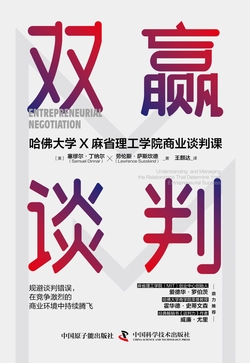
Win-Win Negotiation
Tags
Summary
Editor's review
The book is clearly structured, forming a complete loop from psychological preparation and information gathering before negotiation, through opening, bargaining, and breaking deadlocks, to finally reaching agreement and consolidating the relationship. Its cases are close to business and life realities, avoiding empty over-theorizing. Particularly commendable is the author's analysis of "power"—how, even from a seemingly weak position, one can build one's negotiating leverage through information, alternatives, expertise, and legitimacy. This offers practical, actionable ideas for many readers who believe they "have no chips."
For Chinese readers, this book was introduced by a brand under CITIC Publishing Group, and the translation is of high quality, ensuring accurate transmission of the core ideas. It does not promise that you will "win" over the other side, but guides you to "win" better results together with them. This shift in thinking paradigm may well be the book's greatest value for readers.
Who it's for
A good fit for
- Professionals who frequently need to conduct business negotiations with clients, suppliers, or partners
- Project leaders or team managers who need to coordinate internal and external resources and interests
- Learners with a strong interest in interpersonal relationships and the art of communication who wish to improve their conflict-resolution abilities
- Readers who feel they are often passive in negotiations and hope to systematically build negotiating thinking and skills
Not a good fit for
- Readers seeking one-stroke winning negotiation tricks or manipulation tactics
- Scholars expecting a large number of profound and complex theoretical models for purely academic research
Reading tips
- It is recommended to start with Chapters 1 and 2 on the nature of negotiation and preparation, and be sure to establish the core understanding of "creating value"
- While reading, you can review or rehearse using the book's framework with a negotiation scenario you have recently experienced or are about to face
- Focus on the chapters on "questioning techniques" and "the art of listening," which are the easiest to put into practice and show noticeable results
About the publisher
China Friendship Publishing Company is a comprehensive publisher known for its literary titles, covering classical Chinese literature, foreign literature, folk literature and cultural appreciation. According to the books in the database, its classical list includes celebrated dramas and novels such as The Peony Pavilion, The Romance of the Western Chamber and Strange Tales from a Chinese Studio, as well as note-style classics like Hong Mai's Rongzhai Suibi. In foreign literature it offers translations of Dostoevsky's Crime and Punishment, Kawabata Yasunari's Snow Country and Anne Frank's The Diary of a Young Girl, involving translators such as Zeng Siyi. It also publishes The Complete Literary Works of Lu Xun and titles associated with the "Xue'er Shuguan" editorial group, balancing the collation and popularization of classic texts. Public information on its publishing features and plans is limited; the above is summarized only from the books in the database.
Contents
- 版权信息
- 前言
- 第一章 谈判准备
- 什么是谈判
- 为什么要谈判
- 谈判过程
- 谈判环境
- 制定议程
- 是否带上团队
- 不只是跟一个人谈判
- 双赢谈判者备忘录
- 第二章 双赢思维
- 为什么要成为双赢谈判者
- 谈判的4种结果
- 谈判的5种风格
- 各种谈判风格的适用情境
- 分配式谈判与整合式谈判
- 何时应该妥协
- 思考问题背后的框架
- 让对方更容易说“是”
- 态度与信心
- 深度思考并说明理由
- 双赢的关键
- 第三章 双赢策略
- 立场与利益
- 明确利益
- 确定利益的优先次序
- 分享利益信息
- 筹码
- 谈判炼金术:巧用筹码
- 提供更多选项
- 我们最喜欢的3种选项
- 从筹码中创造选项
- 同时提供多个等价条件(MESOs)
- 第四章 谈判力与B计划
- 正当权力
- 专业知识
- 信息
- 奖惩
- 竞争
- 理由
- 先例
- 承诺
- 投资
- 坚持
- 说服力
- 人际关系技巧
- 杠杆
- 制订和使用B计划
- 总有B计划在侧
- B计划的强大力量
- 底线的危险
- 最佳替代方案
- 对方的B计划是什么
- 让对方的B计划不可行
- 退出
- 与垄断者谈判
- 第五章 高效沟通与关系维护
- 维护关系的重要性
- 机会之窗
- 光环效应
- 精准表达
- 表示尊重
- 建立融洽关系
- 提问
- 倾听
- 共情
- 复述
- 被共情
- 失败是成功之母
- 实质性问题和个性化问题
- 建立信任
- 非语言沟通
- 文化差异
- 电话或邮件谈判
- 第六章 心理弱点:情绪和偏见
- 情感在谈判中的作用
- 情绪语言
- 谈判中的常见情绪
- 人身攻击
- 评论苛刻、态度傲慢
- 努力达到预期:包人满意
- 偏见
- 第七章 谈判战术的运用
- 为什么需要战术
- 初始报价与还价
- 谁来开价?
- 锚点
- 让步
- 以退为进
- 假意为难
- 掌控时间
- 引入竞争
- 限制权力
- 沉默
- 捆绑策略
- 如何应对强硬的谈判者
- 第八章 谈判的收尾与后续事务
- 最后通牒
- 处理僵局
- 备忘录和协议草案
- 执行协议
- 蚕食
- 结算后协议
- 当局面恶化时:诉讼、调解和仲裁
- 后记 谈判的未来
- 双赢谈判者备忘录
FAQ
Is this book's negotiation philosophy applicable to relationship-oriented social interactions in a Chinese cultural context?
As a negotiation beginner, will I find this book too difficult?
How is this book different from classics such as Getting to Yes and Advantage Negotiating?
Related on WeRead



Comments
Find this book
This site is an index: you start “Search all sources” in your browser, and the entries it lists all point to third-party sites; please judge their availability yourself.
About the author
David Godovich is represented in the Chinese book database by a single work, Win-Win Negotiation, which is classified under management. Basic information such as his English name, nationality, and dates of birth and death is limited in publicly available sources and cannot be confirmed, so this page makes no speculation about them. Judging from the existing catalog record, his writing centers on the practical management field of negotiation, focusing on how both parties can seek common interests amid disagreement and reach mutually acceptable solutions. The title Win-Win Negotiation itself reveals this orientation: it does not treat negotiation as a zero-sum game but emphasizes cooperation and mutual benefit. For readers who wish to understand negotiation strategies and improve their communication and bargaining skills, this book can serve as an introductory reference. Since only one work is held in the database, his overall writing style and intellectual development await further material.
Zhang Tong, about whom limited public information is available, has written and edited works spanning medicine, artificial intelligence, popular science, and management, with four titles held in the collection. The Guidelines for Rehabilitation of Cerebrovascular Disease shows an involvement in clinical rehabilitation medicine, focusing on rehabilitation pathways and practical guidance for cerebrovascular disease. The two pocket-sized artificial intelligence books, Artificial Intelligence in Your Pocket: A Thousand Methods and a Hundred Wisdoms and Artificial Intelligence in Your Pocket: AIGC Writing with Ease, address general readers, explaining the principles of AI and the applications of generative AI in an accessible, readable style tied to everyday scenarios. Win-Win Negotiation deals with communication and negotiation strategies, reflecting an interest in management practice. Overall, Zhang Tong's works bridge professional medicine and popular science, balancing knowledge transfer with practical application for readers of different backgrounds.
