

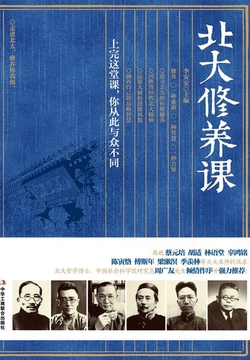
Self-Cultivation Lessons from Peking University
Tags
Summary
Editor's review
Who it's for
A good fit for
- Beginning readers interested in traditional Chinese culture and personal cultivation
- People seeking inner stability and self-improvement in a fast-paced life
- Readers who enjoy drawing life wisdom from stories and maxims of notable figures
- Readers who need gentle guidance to improve interpersonal relationships and their attitude toward dealing with the world
Not a good fit for
- Researchers seeking rigorous academic scholarship or an original philosophical system
- Readers expecting an in-depth understanding of Peking University's history or official course content
Reading tips
- Read with a relaxed attitude; there is no need to finish it in one sitting—read a chapter or two each day and reflect on it in light of your own experience
- Keep a notebook while reading, record ideas that resonate with you, and try putting them into simple practice in daily life
- Read it alongside other classic works on cultivation, Chinese and Western (such as Meditations and Caigentan), to broaden your perspective
About the publisher
China Industry and Commerce Associated Press is a publisher whose main directions include economic management, social sciences and humanities, lifestyle and inspiration, and education and training, with about 680 titles in the library. Representative books include Cornelius Ryan's World War II Epic Trilogy, Rockefeller's 38 Letters from Rockefeller to His Son, Stefan Zweig's Three Masters, Edwin Lefèvre's Reminiscences of a Stock Operator, and Dale Carnegie's The Art of Communication and Wisdom of Dealing with People (new edition). Common categories cover world history, inspirational growth, general biography, personal finance, applied psychology, and management, while its author resources include translators and authors such as Huang Wenfan, Zhang Zhanlei, and Li Liang. Its publishing profile combines classic imports with popular reading, spanning historical documentary, personal growth, and business practice. Public information is limited, and the above is summarized mainly from the books in the library.
Contents
- 版权信息
- 序言
- 第一课 修德先正心——做好自己乃为人之本
- 赤子本色最真诚
- 心有敬畏,谦卑为人
- 孝顺是做人之本
- 恪守道义,活出高境界
- 心怀仁爱,助人为乐
- 气节体现出真品质
- 胸怀体现出最大的修养
- “慎独”修行,勇于改过
- 你有自己做人的风格吗
- 第二课 修才唯好学——读书涵养人生智慧
- 敏而好学,终身学习
- 选择适合自己性情的书
- 读一点没用的书
- 永远保持独立思考
- 不做被书捆住的书呆子
- 学问深时意气平
- 第三课 修业以立世——让生命在能量释放中飞扬
- 自强不息,精进不止
- 勤奋耕耘,不问收获
- 做自己喜欢并擅长的事
- 器藏于身,待时而动
- 在苦难中磨砺意志品质
- 有担当,勇挑责任
- 在创造中体现价值
- 不因名利放弃职业操守
- “为”与“不为”
- 第四课 处世有智慧——人情世故真学问
- 解人情世故,谨言慎行
- 能正视过错,敢接受批评
- 择善而从,与人为善
- 受滴水之恩,当涌泉相报
- 少说话,人前莫道人非
- “中庸”做人,难得糊涂
- 树立一种自在的“权威”
- 第五课 幸福在爱中——爱是人生最大的动力
- 问世间情为何物
- 人生最难是忘情
- 有情又岂在朝朝暮暮
- 执子之手,与子偕老
- 琴瑟和鸣,和谐婚姻
- 第六课 交友靠信义——朋友是人生最大的财富
- 不弃贫,不攀贵
- 朋友贵在善始善终
- 感谢生命中的诤友
- 良师益友诚可贵
- 人生得一知己足矣
- 第七课 修养好心性——寡欲淡泊中提升生命的力量
- 无欲自刚强,无求品自高
- 从容面对宠辱毁誉
- 视名利富贵如浮云
- 舍得,放下
- 忙里偷闲,忙里取静
- 怀份平常心,简单生活
- 第八课 艺术地生活——让艺术弥补人生的缺陷
- 当下才是生活
- 有趣味的人生才少烦恼
- 慢些走,欣赏啊!
- 艺术是生活的源头活水
- 尊重自我,本色生活
- 法天效地,与万物同乐
- 第九课 奉献的价值——舍我其谁的社会参与精神
- “天下兴亡,匹夫有责”
- “中国脊梁”的精神
- 真正的大师
- 奉献的人生最有价值
- “先天下之忧而忧”
- 舍生取义的勇气
- “容忍比自由更重要”
- 第十课 回望人生路——生活沉淀出的人生感悟
- 上下求索,怀一份“宁信其有”的执着
- 人生的唯一依靠是自己
- 人生无常:一生都在祸福中
- 没有必然,人生总有憾
- 乐天无忧,知足常乐
- “物来则应,过去不留”
- 修养是一生的功课
- 日日新,人生永远是春天
FAQ
Is this book an official textbook or a transcript of courses at Peking University?
Is the content too theoretical and difficult to apply?
Is this book suitable for young readers?
Related on WeRead

Comments
Find this book
This site is an index: you start “Search all sources” in your browser, and the entries it lists all point to third-party sites; please judge their availability yourself.
About the author
Li An'an is an author about whom limited public information is available. To date, three works are known under this name, spanning biography and inspirational personal growth. Representative works include Women of the Republic of China: The Beauty and Sorrow of Remarkable Women, which portrays women of the Republican era and interweaves their personal fates with the atmosphere of the times, as well as Peking University Cultivation Lessons and The Peking University Course on the Unity of Knowledge and Action (3 volumes), which focus on personal cultivation and the growth theme of uniting knowledge with action. Judging from these works, Li An'an's writing centers on human stories and self-improvement, balancing readability with inspiration, and is suited to readers interested in Republican-era figures and inspirational personal-growth books.
