

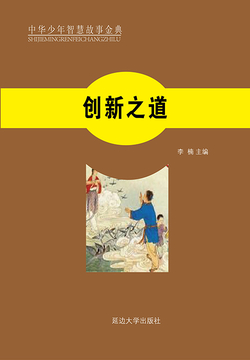
The Way of Innovation
Tags
Summary
Editor's review
Compared with similar books, its standout feature is its pragmatic orientation. Professor Li Nan proposes an operational "innovation diagnostic framework" to help organizations assess their innovation health and bottlenecks. The chapters on "cultivating an innovation culture" and "designing fault-tolerant mechanisms" address the deep organizational dilemmas many Chinese companies face in pursuing innovation, offering solutions that are both thoughtful and practical.
For readers, the value of reading this book lies not only in acquiring knowledge but in stimulating structured innovative thinking. It avoids empty slogans and, with rigorous logic and empirical cases, makes "innovation"—an often generalized concept—manageable and executable. Although some theoretical models may be somewhat complex for beginners, the rich case narratives provide a good balance. This is a pragmatic guide that can truly accompany managers and entrepreneurs through the fog of innovation.
Who it's for
A good fit for
- Corporate managers and entrepreneurs, especially decision-makers seeking to break through growth bottlenecks or build innovation systems
- Business school students and researchers interested in innovation management
- Mid-level key staff in tech companies or R&D departments responsible for product and technological innovation projects
- Readers and observers interested in exploring the path of "Chinese-style innovation"
Not a good fit for
- Readers expecting a light reading experience or seeking quick-fix innovation tips
- Readers interested only in pure theory or philosophical speculation on innovation
Reading tips
- It is recommended to read the first two chapters through to build a theoretical framework, then selectively read the case chapters closely according to your interests or field of work
- While reading, try using the book's "diagnostic framework" to conduct a preliminary analysis of your own organization or a company you know well
- Each chapter ends with discussion questions; discussing them with team members or peers can greatly deepen understanding and benefit
About the publisher
Yanbian University Press is a publishing house based in Jilin Province, China, and is affiliated with Yanbian University. Its publishing covers history, culture and folklore, inspirational growth, popular science, theoretical works, and biography, with some titles published in both Chinese and Korean. Books in the collection, such as The Five Thousand Years of China and A Complete Guide to Folk Etiquette and Customs, reflect its strengths in history and folklore, while titles like Cultivating an Interest in Astronomy, Cultivating an Interest in Collecting, and Unsolved Mysteries of Humanity show its focus on science popularization and interest development. Sherlock Holmes, The Old Almanac, and the newly compiled Wan Shi Bu Qiu Ren also serve general reading and practical reference. Representative authors include Li Dandan, Ouyang Shanren, Hu Yuanbin, Huang Yong, Jin Changhai, Cui Jinshu, and editorial committees. Public information on its specific publishing features and academic positioning is limited; the above is based only on the books in the collection.
Contents
- 版权信息
- 《中华少年智慧故事金典》编委会
- 前言
- 一 推陈出新
- 侯德榜开创祖国制碱工业
- 吴蕴初创制国产味精
- 电脑王国的巨人王安
- 陈中伟首创断肢再植
- 杂交水稻之父袁隆平
- 郝建秀创造先进工作法
- 张济生开创竹材工业化利用
- 戴淑清发明自动织袜机
- 周文波发明“中国深蓝”
- 朱美芳发明“蒙泰丝”
- 高国强革新洋装置
- 蔡友铭创立花卉培育新体系
- 徐培成开创成人矫牙新技术
- 二 精益求精
- 茅以升立志为国造桥
- 严济慈轰动法国科学界
- 华罗庚挑战权威
- 张佐周勇担重任
- 钱学森攻坚不畏难
- 钱三强创新核科学
- 赵向欣两次大创新
- 陈景润勇摘皇冠明珠
- 王永志大胆逆向思维
- 王林鹤创制高压电桥
- 陈竺勇攀世界医学高峰
- 单旭沂扎根第一线
- 任国强誉满“腈纶少帅”
- 张菁创新技艺夺金牌
- 徐琛发明防触电插座
- 邬咲博发明汽车刹车装置
- 三 无中生有
- 华罗庚巧解剩余定理
- 苏步青“偷读”成才
- 柳大华练就“东方电脑”
- 乒乓小精灵邓亚萍
- 杨振宁打破宇称守恒定律
- 丁肇中发现新粒子
- “抓斗大王”包起帆
- 龚剑创造建筑施工奇迹
- 庄少勤指挥建设远东大道
- 孔利明的一项发明
- 李斌的创新故事
- 四 创智之道
- 心理分析法
- 巧用数字法
- 攻其弱点法
- 迂回致胜法
- 排查取点法
- 欲擒故纵法
- 以假取胜法
- 运用地利法
- 利用天时法
- 巧借外物法
- 利用动物法
- 将错就错法
- 系统递进法
- 疑点追踪法
- 察颜观色法
- 巧用日记法
- 左右为难法
- 奇用标点法
- 妙用文字法
- 效应轰动法
- 借鸡打狗法
- 以毒攻毒法
- 张冠李戴法
- 五 创新有方
- 整体思考法
- 综合归纳法
- 善于借鉴法
- 以小见大法
- 细节观察法
- 想像遐思法
- 本质思考法
- 形象思维法
- 步步推导法
- 经验总结法
- 幻想训练法
- 善于发挥法
- 一分为二法
- 比较取优法
- 逆向正反法
- 剖析矛盾法
- 调查取证法
- 后记
FAQ
How deep is the book's theory, and is it suitable for readers without a management background?
Are the cases in the book outdated?
How does this book differ from classic foreign works on innovation (such as The Innovator's Dilemma)?
Related on WeRead



Comments
Find this book
This site is an index: you start “Search all sources” in your browser, and the entries it lists all point to third-party sites; please judge their availability yourself.
About the author
Li Nan graduated from the Department of Chinese at Anhui Normal University in 1998 and has long worked in book editing, planning, and writing. He has taken part in compiling large reference series such as the Encyclopedia of Chinese History, the Encyclopedia of World History, and the Encyclopedia of Chinese Calligraphy, and is the author of popular works including A Complete Guide to the Poetry of Dream of the Red Chamber, A Complete Guide to the Classic of Filial Piety, and the "Dynastic Storms" series, amounting to over a hundred titles spanning history, literature, economics, management, and social sciences. The library holds 78 of his works, covering categories from history and culture to military affairs, finance, politics, and medicine. These range from traditional文史 compilations such as Pre-Qin History (classical-modern bilingual edition) and Zengguang Xianwen to discussions of contemporary issues like The Global Layout of Made in China, as well as specialized works such as War Stories 032 and Research and Application of Aconite. His writing emphasizes clear organization of knowledge and readability for general readers; the breadth and volume of his output make his books accessible introductions to their respective fields. Due to limited public information, details such as his birth and death years remain unknown.
