

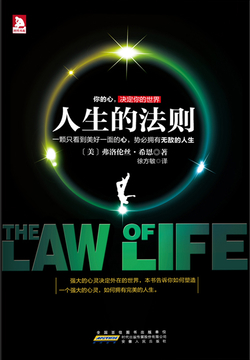
The Rules of Life
Tags
Summary
Editor's review
From a professional editor's perspective, the book's value lies in its concise and systematic exposition of laws. Shinn translates abstract spiritual principles into operable daily practices—the law of visualization, the law of forgiveness, the law of gratitude, and others—each illustrated with vivid life examples and suggested exercises. This structure makes profound metaphysical concepts approachable and suits modern readers' fragmented reading and gradual practice.
It should be noted that the book was written in the first half of the twentieth century, and its language and examples bear the marks of their time, though the universal applicability of its core laws remains striking. Contemporary readers may find some religious phrasing requires cross-cultural understanding, but the book's psychological insights into positive thinking, emotional management, and goal setting resonate remarkably with modern theories such as mindfulness psychology and positive psychology.
The book's value lies not only in personal-growth guidance but in the holistic worldview it offers—seeing life as an ongoing dialogue between inner and outer. This perspective is especially precious in a materialistic age, reminding us to attend to the invisible forces that genuinely shape our lives.
Who it's for
A good fit for
- Readers interested in spiritual growth and inner exploration
- People who wish to build positive thinking patterns and improve their quality of life
- Beginners looking for simple, practical spiritual practices
- Explorers interested in the New Thought movement and metaphysical philosophy
Not a good fit for
- Readers expecting rigorous academic argument or empirical research support
- Pure rationalists who reject any religious or spiritual language
Reading tips
- Read only one or two laws a day and try the simple exercises in the book.
- Keep an open mind; you need not agree with everything—focus on what the ideas inspire.
- Read alongside modern psychology books, such as works on positive psychology, to deepen understanding.
About the publisher
Anhui People's Publishing House is a comprehensive social science publisher. Judging from the books in the database, its publishing scope covers Eastern philosophy, history and culture, biography, mystery and detective fiction, literature, and personal finance. Representative titles include traditional wisdom works such as The Art of War Through the Ages and The Way Is Everywhere: The Wisdom of Laozi; biographies such as Napoleon and The Autobiography of Rockefeller; literary works such as The Sherlock Holmes Collection, Volume 2: The Final Problem, If Life Deceives You, and Fallen Peanuts; and, in the finance category, The High-Probability Stock Chart Patterns Illustrated Handbook. Its authors include Sun Tzu, Emil Ludwig, Arthur Conan Doyle, Alexander Pushkin, John D. Rockefeller, Xu Dishan, Thomas Bulkowski, and Zhang Huisheng, among Chinese and foreign writers. As public information is limited, the specific series system and publishing features remain to be further verified.
Contents
- 版权信息
- 前 言
- 第一章 一生的效果,由心发出
- 思想的法则
- 实现愿景的法则
- 如何能有好运气?
- 无攻击之心的人亦无敌
- 用宽恕打破命运的诅咒
- 将心转向信仰
- 用爱战胜恐惧
- 跟着你的直觉走
- 克服恐惧,拥有完美表达力
- 活着,就是为了实现更美的未来
- 第二章 唤醒你的心
- 打破耶利哥城墙
- 突围绝境
- 为心灵之灯备好油
- 期待美好事物,准备迎接惊喜
- 去除消极思维模式
- 做选择的时候,请跟随你的心
- 为信仰插上双翅
- 独眼:只看到美善
- 美好的祈愿总能赢得一切
- 成功、幸福、富足,你值得拥有
- 善于发现奇迹
- 沉睡的人呐,请你警醒
- 释放内心的力量
- 跟从拯救你的王子
- 第三章 只达美好之地
- 神的设计
- 唯一的敌人,就是你自己
- 穿越邪恶,只达美好
- 平和与兴旺,恐惧与贫困
- 做一个给别人祝福的人
- 担心不如祈祷,抱怨不若感恩
- 内心的平和,是最大的修养
- 谨慎选择你的语言
- 第四章 养心,养心,养好心
- 语言的力量
- 关于成功的祈祷词
- 关于财富的祈祷词
- 关于幸福的祈祷词
- 关于爱的祈祷词
- 关于幸福婚姻的祈祷词
- 增加信念的祈祷词
- 获得希望的祈祷词
- 拥有健康的祈祷词
- 豁达和平的祈祷词
FAQ
Is this a religious book?
Can the laws in this book really change your life?
Is it suitable for readers with no spiritual background?
Related on WeRead



Comments
Find this book
This site is an index: you start “Search all sources” in your browser, and the entries it lists all point to third-party sites; please judge their availability yourself.
About the author
Florence Scovel Shinn is an author about whom limited public information is available; details such as her nationality, dates of birth and death, and educational background are not clearly documented, and only one of her works is held in our catalog. Based on the available material, her representative work is The Game of Life and How to Play It, which is classified under inspirational and personal growth writing and addresses inner cultivation and reflection on life. Works of this kind generally explore the relationship between mindset, belief, and everyday life, conveying a positive attitude in plain language and emphasizing the influence of inner strength on one's circumstances. Because verifiable information remains quite limited, readers' understanding of her rests mainly on this work itself, whose style is straightforward and accessible, suited to general readers seeking inspiration in daily life and personal growth.
