

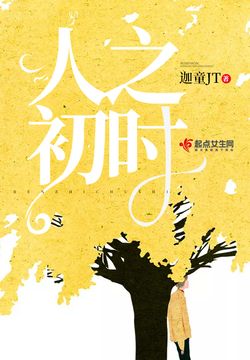
The Beginning of Man
Tags
Summary
Editor's review
From an editorial perspective, the book's literary value lies in the purity of its language and the precision of its emotion. Liu Jian's writing avoids the excesses of sentimentality and nostalgia, replacing them with a quiet gaze. He writes of hunger—not merely the physical sensation, but the dignity conferred by the solemn anticipation of a single piece of candy in an era of scarcity. He writes of parting—without heightening the sorrow, yet letting the empty platform and the receding whistle bear the full weight. This command of "measure" gives the text the quality of classical prose: spare yet rich in implication.
For contemporary readers, in an age of information overload, increasingly blunt emotional expression, and fast consumption, Ren Zhi Chu offers a precious "slow-down" reading experience. It offers no answers or conclusions; rather, it invites you to return to the source of feeling and to re-experience and recognize the first lights and sounds that make us who we are. It is more like a clear lake, reflecting the face and origins of each person who bends to look into it.
Who it's for
A good fit for
- Readers seeking inner calm and fond of revisiting personal memory and nostalgia
- Literary enthusiasts who prefer plain, restrained, evocative Chinese prose
- Thinkers who wish to perceive the depth of life and feeling through everyday details
- Those who long for a moment of quiet and solace through reading amid a fast-paced life
Not a good fit for
- Readers seeking strong plot, fast pace, and dramatic conflict
- Readers expecting practical methodology or clear knowledge gains
Reading tips
- It is best read slowly in a quiet, solitary setting; a cup of tea may help, letting your thoughts flow naturally with the text.
- There is no need to finish it in one sitting; browse any chapter as the mood takes you—each is an independent and complete world.
- While reading, occasionally close the book and reflect, connecting your own similar experiences and feelings in dialogue with the text.
About the publisher
China Culture and History Press has long devoted itself to modern and contemporary literature and culture-and-history reading matter, with publishing directions centered on classic works, social novels, prose and miscellaneous writings, and Eastern philosophy, alongside culture-and-history periodicals such as Zongheng. Among the more than 1,500 titles in the collection, representative books include Zhang Henshui's Ti Xiao Yin Yuan, Lu Xun's Complete Classic Works (10 volumes) and Wild Grass, and Lao She's Four Generations Under One Roof series and the boxed set of Lao She's Classic Works (10 volumes), while its author resources are concentrated on figures such as Zhang Henshui, Lu Xun, Lao She and Sima Qian. Its publishing character lies in solid editorial work on culture-and-history source texts and in issuing famous authors' works in sets, balancing the readability of individual texts with the systematic presentation of complete collections for focused reading and collecting. Beyond these directions, public information on the press's contemporary original publishing is limited, so it is not elaborated here.
Contents
- 版权信息
- 致谢
- 序章
- 第一部 风起(2010—2012 年)
- 吴襄整理的采访笔录(一)
- 第一章 再度相逢
- 吴襄整理的采访笔录(二)
- 第二章 进击的巨人
- 吴襄整理的采访笔录(三)
- 第三章 风起于浮萍之末
- 吴襄整理的采访笔录(四)
- 第四章 破茧
- 第二部 潮涌(2016—2019年)
- 吴襄整理的采访笔录(五)
- 第一章 麻辣婆媳
- 第二章 公道人心
- 第三章 孙子兵法
- 第三部 再生(2019—2022年)
- 第一章 流水无意
- 第二章 神仙归位
- 第三章 杯弓蛇影
- 吴襄的最后一次采访笔录(2022 年)
- 终章(2023年)
FAQ
Is this book a novel or a collection of essays? What is its main content?
What is author Liu Jian's writing background?
Is the tone of the book sad and nostalgic?
Related on WeRead



Comments
Find this book
This site is an index: you start “Search all sources” in your browser, and the entries it lists all point to third-party sites; please judge their availability yourself.
About the author
Publicly available personal information about Liu Jian is relatively limited, and what is known comes mainly from works published under this name. The collection includes twelve of his titles, spanning foreign literature, biography, film and television theory, documentary writing, and history. In literature, he has taken part in translating modern and contemporary Japanese works such as The Story of Shunkin, Dogura Magura, The Wind Rises and Naoko, and Kokoro, which touch on themes of love, psychology, and growth. His original writing appears in titles on social welfare and national development, stage life, craftsmanship, and historical observation, focusing respectively on social and cultural questions, the performing arts, artisanship, and history. Overall, his work combines translation with original writing, covers a wide range of subjects, and emphasizes the connection between people and their times, with a documentary and informative narrative style.
