

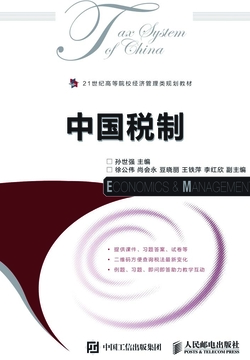
China's Tax System
Tags
Summary
Editor's review
From a professional perspective, the book's logic conforms to sound teaching practice: each chapter includes learning objectives, a chapter summary, and review questions, making it suitable for progressive study. The author explains the principles of the tax system in an accessible yet substantive way, helping readers grasp the basic framework and design philosophy of China's tax system. It should be noted, however, that because tax policies change frequently, readers still need to consult the latest official documents for updated information.
As a commonly used textbook for economics and management majors in higher education institutions, its academic value lies in providing a complete body of knowledge. For non-specialist readers it may seem somewhat demanding, but its analysis of the relationship between tax structure and the economy and society can still offer valuable reference for readers concerned with China's fiscal system. Overall, this is a rigorous and systematic professional work, suitable as both an introduction to and a deeper study of China's tax system.
Who it's for
A good fit for
- Students majoring in public finance, taxation, accounting, and related fields in higher education institutions
- Practitioners engaged in tax and finance-related work
- Those preparing for professional qualification examinations such as the Certified Tax Agent and Certified Public Accountant exams
- Policy researchers seeking a systematic understanding of the framework of China's tax system
Not a good fit for
- Casual readers with only a superficial interest in a single tax category
- Practitioners seeking the latest tax planning cases and up-to-the-minute policy interpretation
Reading tips
- Read in the order in which the textbook is organized, building an overall framework before going into detail
- Consult the latest policy documents on the official website of the national tax authority alongside the book
- For key chapters such as value-added tax and corporate income tax, use exercises to deepen understanding
About the publisher
Jinan University Press is a comprehensive university press known for publishing in language and writing, history and culture, and medicine. Judging from the 2,481 titles in the database, its publishing focuses on language and writing research, the compilation of unearthed documents, Chinese culture and Eastern philosophy, traditional Chinese medicine, and grassroots medical standards. Representative books include the Chinese Dictionary (Second Edition), the series on the collected interpretation and modern translation of Warring States documents from the Language Services Series and the series on the language of unearthed documents, Chinese Cultural Psychology (6th Edition), Illustrated Compendium of Traditional Chinese Medicine Processing Techniques, and Construction and Technical Standards for Standardized Bronchoscopy Rooms in Primary-Level Pediatrics. In terms of authors, scholars such as Zhu Cheng, Zhang Yujin, Wang Fengyan, Zheng Hong, Cao Hui and Ma Zhiguo form its author base in language and documents, cultural psychology, and traditional Chinese medicine. In terms of publishing characteristics, the press emphasizes the collected interpretation and modern translation of unearthed documents and language service research, while also systematically organizing cultural psychology and medical techniques. Public information on specific matters such as overseas Chinese-language education is limited and is therefore not elaborated here.
Contents
- 版权信息
- 暨南大学成人教育会计本科系列教材编委会
- 总序
- 前言
- 第一章 税收制度总论
- 第一节 税收制度的概念
- 第二节 税收制度的构成要素
- 第三节 税制原则理论
- 第四节 我国现行税收制度
- 第五节 我国税收制度的变革历程
- 第二章 增值税
- 第一节 增值税概述
- 第二节 增值税的征税范围及纳税义务人
- 第三节 增值税税率与征收率
- 第四节 一般纳税人增值税的计算
- 第五节 小规模纳税人应纳税额的计算
- 第六节 进口货物应纳增值税的计算
- 第七节 出口货物退(免)税
- 第八节 增值税税收优惠
- 第九节 增值税征收管理
- 第三章 消费税
- 第一节 消费税概述
- 第二节 消费税的纳税义务人和征税范围
- 第三节 消费税的税目和税率
- 第四节 消费税应纳税额的计算
- 第五节 消费税的征收管理
- 第四章 营业税
- 第一节 营业税概述
- 第二节 营业税的征税对象和纳税义务人
- 第三节 营业税的税目与税率
- 第四节 营业税的计算
- 第五节 营业税的税收优惠
- 第六节 营业税的征收管理
- 第五章 城市维护建设税与教育费附加
- 第一节 城市维护建设税概述
- 第二节 城市维护建设税的纳税义务人与征税范围
- 第三节 城市维护建设税的计税依据与税率
- 第四节 应纳税额的计算与减免
- 第五节 城市维护建设税的征收管理
- 第六节 教育费附加
- 第六章 关税
- 第一节 关税概述
- 第二节 关税制度基本要素
- 第三节 关税完税价格与应纳税额的计算
- 第四节 关税的减免
- 第七章 资源税
- 第一节 资源税概述
- 第二节 资源税的纳税义务人与税目、税率
- 第三节 资源税的计税依据与应纳税额的计算
- 第四节 资源税的税收优惠和征收管理
- 第八章 土地增值税
- 第一节 土地增值税概述
- 第二节 土地增值税的纳税义务人与征税范围
- 第三节 土地增值税税率和税收优惠
- 第四节 增值额的确定与应纳税额的计算
- 第五节 土地增值税的征收管理
- 第九章 房产税、车辆购置税和车船税
- 第一节 房产税
- 第二节 车辆购置税
- 第三节 车船税
- 第十章 城镇土地使用税和耕地占用税
- 第一节 城镇土地使用税
- 第二节 耕地占用税
- 第十一章 印花税和契税
- 第一节 印花税
- 第二节 契税
- 第十二章 企业所得税
- 第一节 企业所得税概述
- 第二节 企业所得税的纳税义务人、征税对象与税率
- 第三节 应纳税所得额的确定
- 第四节 资产的税务处理
- 第五节 企业所得税的税收优惠
- 第六节 企业所得税应纳税额的计算
- 第七节 特别纳税调整
- 第八节 企业所得税的征收管理
- 第十三章 个人所得税
- 第一节 个人所得税概述
- 第二节 个人所得税的纳税义务人与征税对象
- 第三节 个人所得税税率与应纳税所得额的确定
- 第四节 个人所得税应纳税额的计算
- 第五节 个人所得税特殊情况的计税方法
- 第六节 个人所得税税收优惠
- 第七节 个人所得税的征收管理
- 参考文献
FAQ
Is the content of this book outdated?
Can I understand this book without a background in finance and taxation?
How does this book differ from textbooks on tax law?
Related on WeRead



Comments
Find this book
This site is an index: you start “Search all sources” in your browser, and the entries it lists all point to third-party sites; please judge their availability yourself.
About the author
Zhang Shan is an author for whom public information is currently very limited, and it is not possible to confirm nationality, dates of birth and death, or a complete career record. One work by this author is held in the collection, China's Tax System, which is classified under finance and economics. Based on the available information, Zhang Shan's writing centers on the professional field of taxation, and the book likely addresses the structure, rules, and operating mechanisms of China's tax system, serving as a textbook or informative work for study and practical reference in finance and economics. Because verifiable details such as the author's biography, educational background, and professional experience are lacking, no speculation is offered here, and no identity or achievements are invented. Readers who wish to understand Zhang Shan's scholarly context and writing characteristics may refer to the specific chapters of China's Tax System. Overall, Zhang Shan comes to readers' attention through one clearly specialized work in finance and economics, and further public materials are needed to supplement information about subsequent writings and research directions.
