

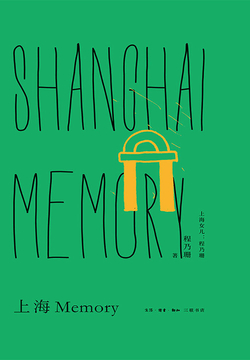
Shanghai Memory
Tags
Summary
Editor's review
Who it's for
A good fit for
- Readers with a strong interest in Shanghai-style culture and the city's history
- Literature lovers seeking to understand great historical change through personal and family memory
- Readers who appreciate delicate, restrained, richly textured depictions of everyday life
- Observers of the formation of modern Chinese urban spirit and the history of civic life
Not a good fit for
- Readers of popular fiction seeking suspenseful plots or intense dramatic conflict
- Readers expecting a systematic, academic study of Shanghai history
Reading tips
- Approach it as a literary archive of urban memory, attending to the emotional warmth and historical detail suffusing the prose rather than looking for a conventional storyline
- Read it alongside Ceng Naishan's earlier novels The Blue House and The Book of Daughters to understand her creative trajectory from fiction to nonfiction
- Pay attention to the depictions of everyday objects, spaces, and customs, which are often the keys to decoding the city's cultural codes
About the publisher
SDX Joint Publishing Company is a publisher known for its humanities and social science titles, covering classics, culture, history, social fiction and politics. Its catalogue of 826 books includes Chinese and foreign literary classics such as The Scholars, Camel Xiangzi and Selected Short Stories of Chekhov, scholarly works such as Studies of Chinese Cave Temples, A Study of the Tuoba History (Revised Edition) and The Nine-Rank System: A Prehistory of the Imperial Examination, and translations such as Red Star Over China and Notes from the House of the Dead. Its authors include renowned Chinese and foreign writers such as Wu Jingzi, Lao She, Su Bai and Chekhov, as well as scholars and translators such as Chen Xiaoming, Wang Benhua, Guo Changbao and Zhu Xiansheng. Its publishing character lies in balancing the popularisation of classics with academic depth, with attention to textual quality and the transmission of knowledge.
Contents
- 版权信息
- 总序 她多么爱生活,爱得太多太多
- 老辰光
- 肖照
- 搓麻将
- 雪花膏忆旧
- 压岁钿
- 涮马桶
- 永别了,上海下只角
- 屋里厢
- 弄堂
- 后门
- 亭子间
- 后巷
- 逝去的上海老虎灶
- 烟纸店和士多铺
- 好人家
- 阿拉上海人
- 圆台面
- 过年全匣
- 毛脚
- 上海人家
- 侬好呀
- 白相
- 黄鱼不是鱼
- 上海闲话里的“小”
- 上海俚语与吃食
- 口头动漫
- 时尚洋泾浜
- 双城之恋
- 小毛师傅和上海旗袍
- 洋盘上海开洋荤
- 冬至夜的团圆
- 外国阿妈
- 罗宋人
- 从外国人到老外
- 代跋
FAQ
How does this book differ from Chen Danyan's Shanghai Memorabilia?
Can readers without experience of life in Shanghai understand this book?
What is the writing style of this book?
Related on WeRead


Comments
Find this book
This site is an index: you start “Search all sources” in your browser, and the entries it lists all point to third-party sites; please judge their availability yourself.
About the author
Cheng Naishan is a Chinese-language author known for writing about Shanghai's urban memory and everyday culture, with four of her works included in this collection. Her writing centers mainly on essays and social-science subjects, and her representative works include Shanghai Lady, Shanghai Color, Shanghai Memory, and the series collectively known as Cheng Naishan's Shanghai Story Trilogy. These titles suggest that her writing revolves around the city of Shanghai, focusing on urban life, its people, and the everyday details of changing times, with a strong sense of regional culture and nostalgia. Her prose tends toward the plain and delicate, often beginning from concrete scenes of daily life to sketch Shanghai's distinctive urban character, giving her a recognizable voice among readers of similar writing. Public information about her personal life—such as her birth year, native place, and education—is limited, so her works themselves remain the main way to understand her writing.
