

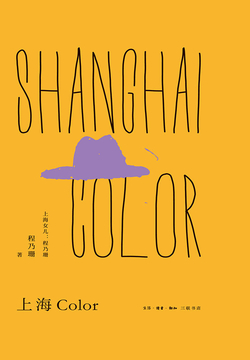
Shanghai Color
Tags
Summary
Editor's review
As an editor, I believe the book's core value lies in its "literary texture of nonfiction." Cheng Naishan's writing remains as vivid and steeped in everyday street life as ever, but here her brush leans more toward cultural archaeology and aesthetic analysis. She does not merely describe colors but traces their origins (such as imported pigments versus local dyeing and weaving), their social metaphors (such as the civic-class aesthetic embodied by the "blue cloth qipao"), and their evolution through changing times. This makes Shanghai Color more than a nostalgic essay collection: it is an exquisite reader for understanding Shanghai's urban character and civic aesthetics. For readers, it is like a key toothed with colors, seeking to open a side door into the city's spiritual core.
One caveat, however: the book's narrative tone carries a strong personal memory and classical sensibility, a fond backward glance at modern Shanghai (especially the 1930s to 1960s). What it offers is a highly stylized "Shanghai color spectrum" filtered through literature, not an objective academic study of urban color. Its pleasure lies in following the author's keen perception and rich associations on a city ramble full of sentiment and insight.
Who it's for
A good fit for
- Those interested in Shanghai School culture, Shanghai's urban history, and civic life
- Literature and art lovers, especially readers who enjoy cultural analysis through details such as color and objects
- Loyal readers of Cheng Naishan hoping to feel her late style and thinking in this posthumous work
- Those in design, visual art, or urban studies seeking humanistic inspiration
Not a good fit for
- Readers seeking rigorous academic research or comprehensive urban history materials
- Readers expecting Cheng Naishan's classic family-narrative novels
- Those with little basic knowledge of or cultural resonance with Shanghai, who may find the content too fragmented and local
Reading tips
- Read it as a "slow-reading" essay collection, going chapter by chapter or picking color themes that interest you; there is no need to rush
- Pair the reading with old photographs, paintings (such as calendar poster advertisements), or related film clips to greatly enhance the experience and understanding
- Read it alongside other nonfiction about Shanghai (such as Chen Danyan's Shanghai's Wind, Flowers, Snow, and Moon) to appreciate the differences in perspective between authors
About the publisher
SDX Joint Publishing Company is a publisher known for its humanities and social science titles, covering classics, culture, history, social fiction and politics. Its catalogue of 826 books includes Chinese and foreign literary classics such as The Scholars, Camel Xiangzi and Selected Short Stories of Chekhov, scholarly works such as Studies of Chinese Cave Temples, A Study of the Tuoba History (Revised Edition) and The Nine-Rank System: A Prehistory of the Imperial Examination, and translations such as Red Star Over China and Notes from the House of the Dead. Its authors include renowned Chinese and foreign writers such as Wu Jingzi, Lao She, Su Bai and Chekhov, as well as scholars and translators such as Chen Xiaoming, Wang Benhua, Guo Changbao and Zhu Xiansheng. Its publishing character lies in balancing the popularisation of classics with academic depth, with attention to textual quality and the transmission of knowledge.
Contents
- 版权信息
- 总序 她多么爱生活,爱得太多太多
- 坐标系
- 绿屋情缘
- 记忆里的老上海豪宅
- 南京西路:静安区的母亲河
- 南京西路花园公寓
- 外滩:新人类的伊甸园
- 老唱片
- 我与上海滩
- 当我们年轻的时候
- 平·克劳斯贝在我家
- 好先生
- 上海先生
- 小开
- 大都会的小男人
- Arrow先生
- 雅皮先生
- 海派先生曹可凡
- 上海滩上老克勒
- 老克勒未老
- 与女共舞
- 风向标
- 调沙拉酱和捣糨糊
- 贵族之血
- 从长衫到牛仔
- 斗篷和风衣
- 包中乾坤
- “阿飞”正传
- 代跋
FAQ
How is this book rated on Douban, and what are the main reviews?
What kind of writer was Cheng Naishan, and how does her writing background connect to this book?
Is this book suitable as an introductory guide to Shanghai?
Related on WeRead
Comments
Find this book
This site is an index: you start “Search all sources” in your browser, and the entries it lists all point to third-party sites; please judge their availability yourself.
About the author
Cheng Naishan is a Chinese-language author known for writing about Shanghai's urban memory and everyday culture, with four of her works included in this collection. Her writing centers mainly on essays and social-science subjects, and her representative works include Shanghai Lady, Shanghai Color, Shanghai Memory, and the series collectively known as Cheng Naishan's Shanghai Story Trilogy. These titles suggest that her writing revolves around the city of Shanghai, focusing on urban life, its people, and the everyday details of changing times, with a strong sense of regional culture and nostalgia. Her prose tends toward the plain and delicate, often beginning from concrete scenes of daily life to sketch Shanghai's distinctive urban character, giving her a recognizable voice among readers of similar writing. Public information about her personal life—such as her birth year, native place, and education—is limited, so her works themselves remain the main way to understand her writing.
