

Python Programming
Tags
Summary
Editor's review
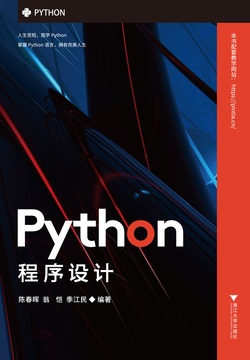
As an editor, I believe the value of this book lies in its teaching-oriented organization. The author, Wang Xuejun, has extensive teaching experience; the content progresses step by step, and each chapter includes exercises and practical cases to help readers consolidate what they have learned. Compared with similar books, this one focuses more on cultivating programming thinking rather than merely listing syntax. For example, when explaining loops and conditional statements, it guides readers to consider the pros and cons of different implementations, a design that helps beginners develop good programming habits.
It should be noted, however, that the book primarily targets Python 3.x, and some content may not apply to older versions. In addition, although it includes brief introductions to application areas such as Web development and data analysis, the depth is limited, making it suitable as an overview before choosing a specialization after the introductory stage. Overall, this is a solid introductory tutorial that lays a firm foundation for further in-depth study.
Who it's for
A good fit for
- Beginners with no programming experience who want to learn Python systematically
- Data analysts or researchers who need Python as a second language
- University students in computer-related majors using it alongside coursework
- Junior developers who want to consolidate Python fundamentals and fill knowledge gaps
Not a good fit for
- Readers seeking in-depth coverage of advanced topics such as machine learning frameworks
- Users who need a quick-reference syntax manual for emergencies
Reading tips
- It is recommended to study the chapters in order and complete the exercises for each chapter
- Use an online programming environment to practice the code examples in the book immediately
- When a concept is unclear, reread the relevant chapter and try modifying the example code
About the publisher
Posts & Telecom Press is known for its strengths in science and technology, computing, and information and communications titles, and has extended its publishing into photography, art, software learning, and inspirational growth, giving it a fairly diverse range. Its catalog includes computing and communications works such as Refactoring and Patterns (Revised Edition) and Huawei Switch Learning Guide (Second Edition), alongside bilingual collector's editions such as The Little Prince (Chinese-English-French illustrated collector's edition), The Great Gatsby, and Three Days to See. Beijing Ten Years: 1980-1990 and Ghost Blade: WLOP Personal Illustration Collection reflect its presence in photography and art. Its authors include Antoine de Saint-Exupéry, Helen Keller, Joshua Kerievsky, Wang Da, Zhang Zhaozeng, and WLOP.
Contents
- 版权信息
- 内容提要
- 前言
- 第1章 Python概述
- 1.1 Python语言
- 1.2 Python开发环境及工具
- 1.3 习题
- 第2章 Python语言基础
- 2.1 Python语言基础概述
- 2.2 Python数据类型
- 2.3 运算符和表达式
- 2.4 Python数据结构
- 2.5 程序控制结构
- 2.6 编程实践
- 2.7 习题
- 第3章 Python函数及模块
- 3.1 案例引入及分析
- 3.2 函数
- 3.3 变量的作用域
- 3.4 模块
- 3.5 编程实践
- 3.6 习题
- 第4章 面向对象编程
- 4.1 面向对象基础
- 4.2 类的定义和使用
- 4.3 类的属性和方法
- 4.4 类的继承
- 4.5 类的重载
- 4.6 编程实践
- 4.7 习题
- 第5章 Python GUI编程
- 5.1 PyQt GUI工具包概述
- 5.2 PyQt GUI编程
- 5.3 编程实践
- 5.4 习题
- 第6章 Python数据库及文件系统
- 6.1 数据库技术基础
- 6.2 MySQL数据库
- 6.3 Python中访问MySQL语句
- 6.4 Python文件系统
- 6.5 编程实践
- 6.6 习题
- 第7章 Python网络编程
- 7.1 网络模型介绍
- 7.2 Socket编程
- 7.3 urllib包与httplib包使用
- 7.4 使用ftplib访问FTP服务
- 7.5 电子邮件
- 7.6 编程实践
- 7.7 习题
- 第8章 Python网站开发
- 8.1 常见的Web开发框架
- 8.2 MVC模式
- 8.3 Django开发环境的搭建
- 8.4 Django框架的应用
- 8.5 Django框架的高级应用
- 8.6 编程实践
- 8.7 习题
- 第9章 Python数字图像处理
- 9.1 基本图像操作和处理
- 9.2 Python图像处理类库PIL
- 9.3 Python中使用OpenCV
- 9.4 Matplotlib绘图库
- 9.5 编程实践
- 9.6 习题
- 第10章 Python科学计算
- 10.1 NumPy库
- 10.2 SciPy数值计算库
- 10.3 编程实践
- 10.4 习题
- 参考文献
FAQ
Is this book suitable for someone who has never programmed before?
Which version of Python are the code examples based on?
What level can I reach after finishing this book?
Related on WeRead

Comments
Find this book
This site is an index: you start “Search all sources” in your browser, and the entries it lists all point to third-party sites; please judge their availability yourself.
About the author
Public information about Wang Xuejun is limited, and his identity and specific background cannot be confirmed from the available sources. Judging from the seven works held in the collection, his writing spans two broad fields: computer education and medicine and health. In computing, he has compiled textbooks and laboratory guides for university computer fundamentals courses and has also written on Python programming, with content geared toward classroom teaching and hands-on practice and an orientation toward beginners. In medicine and health, he focuses on making home medical devices accessible to general readers, using an illustrated format to explain devices for respiratory care, testing and diagnosis, and epidemic prevention, and he has also edited a selection of clinical case records. Overall, his works are practical in nature, serving both teaching needs and public health education, and are suitable for students, teachers, and general readers.
Hu Changxia is an author with fairly limited publicly available information. Her currently traceable identity is primarily as the author of Python Programming, a book classified under programming design. Judging from the title and category, the work is intended for learners of the Python language, and its content likely covers programming fundamentals, syntax application, and program design thinking, making it a common introductory and teaching text. Since only one work is included in the database and information such as dates of birth and death, nationality, and professional career remains unconfirmed, this profile does not speculate about her education, positions, or awards. Based on the available clues, Hu Changxia's writing aligns with the current trend of popularizing Python in basic computer education, and her book may serve the introductory needs of university courses or self-study readers. For readers, the value of such a work lies in offering a systematic, step-by-step learning path; for the author herself, more publicly available publishing information is still needed to present a complete picture.
Han Yanfeng: publicly available information about this author is currently limited, and details such as nationality, dates of birth and death, and educational background cannot be confirmed. Within the library's holdings, only one work appears under this name, namely Python Programming, which is classified under programming design. It can therefore be inferred that the author's writing focuses on the field of computer programming, particularly the teaching and application of the Python language. Because Python is widely used in introductory teaching and practical development owing to its concise syntax and rich ecosystem, related textbooks generally need to balance language fundamentals, programming thinking, and hands-on examples. Based on the available information, it is reasonable to say that the author has carried out systematic content organization and writing in this direction. As more verifiable material is lacking, this article makes no inferences about the author's specific experience, professional identity, or academic achievements; readers seeking further details should consult the book's preface or official information provided by the publisher.
