

The Black Prison Castle
Tags
Summary
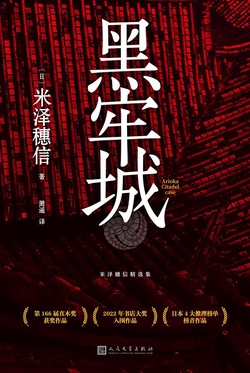
Araki Murashige betrays Oda Nobunaga and holds fast in Arioka Castle. With the Oda army besieging the castle, a series of baffling incidents occur within its walls, shaking morale and spreading fear. At his wit's end, Murashige repeatedly asks the prisoner in the dungeon, Kuroda Kanbei, for a way to solve them. What lies behind these events? What does Kuroda Kanbei, former strategist of the Oda army, intend? As the war and the deductions unfold, Murashige finally understands...
Twenty years into his career, Yonezawa Honobu takes on historical mystery and delivers a bold new masterpiece.
Editor's review
The book's finest achievement is Yonezawa's redefinition of historical mystery. He does not simply drop a modern detective into an ancient setting; he makes the fog and uncertainty of history itself the core of the puzzle. The four bizarre incidents in Arioka Castle—from a locked-room murder in the keep to a battlefield killing foretold by a song—each fit tightly into the historical juncture around the Honnō-ji Incident that decided Japan's fate. The clues are no longer fingerprints or footprints but the personalities of Sengoku daimyo, the wording of letters, the movements of armies, even weather and rumor. As readers follow Kanbei's unraveling, they are in fact pondering the possibilities of history: how much can individual wit accomplish amid the tide of an era? Do the events recorded as accident or heaven's will conceal more elaborate schemes?
Yonezawa's craft reaches new heights here. He captures the desolation and severity of the Sengoku era with precision; dialogue feels period-authentic without being opaque, and battle and castle scenes are vividly immediate. Kuroda Kanbei is especially well drawn: imprisoned yet watching the realm, his wisdom, solitude, struggle, and resolve form the book's emotional core. This is not merely a mystery but a profound parable about conviction in adversity, the price of loyalty, and the limits of intelligence. For readers familiar with Yonezawa's earlier light touch, The Black Dungeon Castle will be a shock; for lovers of history or mystery, it is an unmissable masterpiece of literary texture and intellectual challenge.
Who it's for
A good fit for
- Readers devoted to honkaku mystery, especially those who love history and logical deduction tightly intertwined
- Enthusiasts of Japanese Sengoku history who enjoy glimpsing an era through fictional detail
- Veteran novel readers seeking depth and challenge, not shallow puzzles
- Yonezawa Honobu fans eager to see his breakthrough style and mature craft
Not a good fit for
- Readers expecting light, fast-paced urban mystery or his signature school style
- Readers entirely unfamiliar with Sengoku figures, geography, and background who do not wish to learn more
Reading tips
- Keep a map and chronology of the Japanese Sengoku period at hand to follow the geography and timing of rival forces
- Pay attention to every letter, oral message, and rumor—these are often the key 'historical sources' for solving the puzzles
- While enjoying the mystery, consider the philosophical questions the author raises through Kuroda Kanbei about fate and stratagem
About the publisher
People's Literature Publishing House publishes across classical literature, foreign literature, documentary writing and folk literature, with 492 titles in its catalogue. Representative books range from the Chinese classic Romance of the Three Kingdoms to Lao She's Teahouse and Longxu Ditch in the Selected Works of Lao She, as well as translated foreign literature such as Faulkner's The Sound and the Fury, Dante's Divine Comedy and Elena Ferrante's Neapolitan Novels, alongside documentary and fictional works including Primo Levi's If This Is a Man and João Guimarães Rosa's The Devil to Pay in the Backlands. Its authors include Chinese writers such as Lao She, translators such as Shen Emeri and Li Wenjun, and foreign authors such as James Wood. Overall, the house has a strong record in editing classic works and translating foreign literature, with a publishing character that bridges Chinese and foreign writing and values textual quality.
Contents
- 版权信息
- 序章 因
- 第一章 雪夜灯笼(上)
- 第一章 雪夜灯笼(下)
- 第二章 花影功勋
- 第三章 远雷念佛
- 第四章 落日孤影
- 终章 果
FAQ
Can I understand this book without knowing Japanese Sengoku history?
Is this very different in style from Hyouka?
How much of the book is deduction? Is it pure honkaku puzzle-solving?
Related on WeRead
Comments
Find this book
This site is an index: you start “Search all sources” in your browser, and the entries it lists all point to third-party sites; please judge their availability yourself.
About the author
Honobu Yonezawa is a writer who has drawn considerable attention in the field of Japanese mystery fiction. Publicly available information is limited, and a complete account of his life and educational background is not currently recorded in our database. One work by him is included here: his representative novel The Black Dungeon Castle. Judging from its common classification, his writing centers on mystery and detective fiction. He is skilled at building puzzles within enclosed or restricted spaces, advancing the plot through psychological tension and gaps in information between characters, and interweaving criminal investigation with observations of human nature. The title The Black Dungeon Castle also suggests his ability to create a tense, oppressive atmosphere, drawing readers step by step toward the truth through layered clues. For readers who value logical deduction, atmospheric writing, and character portrayal, Yonezawa's works hold clear appeal within the genre and have therefore attracted a certain following among Chinese-language mystery readers.
Public information about Xiao Yao is limited: only three works are known to be listed under this name, spanning the fields of suspense and mystery fiction and health and wellness. The representative work Black Prison City belongs to the suspense and mystery genre; judging from its title, it likely involves a mystery and investigation within a closed setting, reflecting the author's attempt at this type of narrative. First Time Making Medicinal Liquor and A Beginner's Guide to Medicinal Liquor and Herbal Tea are aimed at everyday wellness, focusing on the basic methods and introductory guidance for making medicinal liquor and herbal tea for ordinary readers with little experience. The clear difference between these two kinds of works suggests that the author's writing covers both plot construction in genre fiction and accessible explanation in practical health books. Since the dates of birth and death, nationality, and writing career cannot be confirmed, the full scope and stylistic development of the author's work await further information.
