

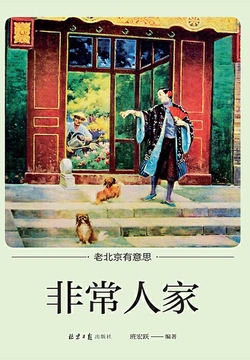
Extraordinary Families
Tags
Summary
Editor's review
Who it's for
A good fit for
- Readers interested in contemporary Chinese rural literature and the theme of social change
- Literary enthusiasts who appreciate delicate, plain writing that attends closely to the details of life
- Thinkers who hope to reflect on generational relationships and personal fate through a family story
- People seeking inner peace and resonance through reading amid a fast-paced life
Not a good fit for
- Readers who prefer strong plots, fast pacing, or fantasy adventure stories
- Readers with little basic interest in rural themes and slow-paced narration
Reading tips
- It is recommended to read during relatively quiet, undisturbed hours so as to better enter the atmosphere the work creates.
- Try slowing your reading pace and savor the author's fine depiction of scenes and characters' psychology.
- After reading, you might make a few simple notes or reflections on family and the times as you understand them, to deepen the reading experience.
About the publisher
Beijing Daily Press takes world history, historical reading and foreign literary translations as important publishing directions, alongside science fiction and prose. Its catalogue includes Edward Gibbon's unabridged The History of the Decline and Fall of the Roman Empire, Gu Cheng's Southern Ming History and his works on Ming history, reflecting a balance between general and dynastic history; in literature there are Fu Lei's translations of Balzac and of world classics, as well as science fiction and prose such as The Universe Omnipotent Detective Agency, A Canticle for Leibowitz and The Peregrine, with authors ranging from Gibbon, Gu Cheng and Balzac to Fu Lei, Romain Rolland and Douglas Adams. Building on current affairs, history and culture, Beijing-flavoured culture and children's books, the press combines classic translation with original historical writing, emphasising complete editions and translation quality. Public information is limited, so other details are omitted.
Contents
- 版权信息
- 前言
- 一城与一河——德胜门西大街甲60号
- 庙里供太监——禄米仓胡同东口
- 北京头号凶宅——大木仓胡同35号
- 有肉才写诗——珠市口大街241号
- 丁香花之恋——上斜街50号
- 李鸿章驻京办——校尉胡同一带
- 保救大清皇帝公司——米市胡同43号
- 侠客官员——北半截胡同41号
- 四合院的西洋楼——菊儿胡同3号
- 未竟总理梦——白米斜街11号
- 慈禧忠仆——棉花胡同83号
- 黎菩萨——王府井大街27号
- 围棋『国手』——仓南胡同5号院
- 秀才将军——帽儿胡同13号
- 洋帝师庄士敦——油漆作胡同1号
- 婉容大婚——帽儿胡同33号
- 爱辞职的校长——东堂子胡同33号
- 辫子国师——织染局胡同10号
- 宅子换帖子——后海南沿26号
- 旧爱终逝去——新街口北大街53号
- 木匠画家——跨车胡同13号
- 老舍父亲之死——小羊圈胡同5号
- 鲁迅阴影里的女人——西三条胡同21号院
- 相隔七百年的握手——细管胡同9号院
- 民国第一畅销书作家——砖塔胡同43号院
- 沈从文的情书——东堂子胡同51号院
- 民国第一文化沙龙——北总布胡同3号
- 毒舌邵飘萍——魏染胡同30号
- 通天教主王瑶卿——培英胡同20号
- 第一部国产电影——铁树斜街大外廊营1号
- 《霸王别姬》杨小楼——笤帚胡同39号
- 错失最爱梅兰芳——无量大人胡同24号
- 新娘被调包——山西街甲13号
- 真假艳秋——西四北三条39号院
- 卖房办学尚小云——椿树下二条1号
FAQ
Is the tone of this book heavy?
Do I need to know a specific historical background to understand it?
Is this book suitable for young readers?
Related on WeRead
 老北京有意思:非常人家
 财富女人非常道:白手起家女富豪的中国奋斗史
 非常之人非常之功(先秦-初唐著名政治家制胜方略)
 宋人轶事彙编
 梅尧臣诗歌研究
 七十二堂写作课:夏丏尊、叶圣陶教你写文章
 七十二堂写作课
 叶圣陶夏丏尊谈阅读与写作(套装共5册)
Comments
Find this book
This site is an index: you start “Search all sources” in your browser, and the entries it lists all point to third-party sites; please judge their availability yourself.
About the author
Ban Hongyue is a Chinese author whose writing centers on Beijing culture. Public information about him is limited, and details such as his nationality, dates of birth and death, and educational background are not clearly recorded. Judging from the three works held in the collection, his writing focuses on the street life, hutong history, and everyday family life of old Beijing. His representative works include the five-volume set The Fun of Old Beijing, Eight Hundred Years of Hutongs, and Extraordinary Families. These works are generally classified as cultural writing, with themes close to urban memory and folk customs. His style tends to be accessible and readable, combining historical context with everyday experience so that readers can learn about the changes and local customs of Beijing in an easy way. Although little is known about the author himself, his works consistently attend to the preservation and dissemination of local culture and hold appeal for readers who enjoy Beijing-style culture.
