

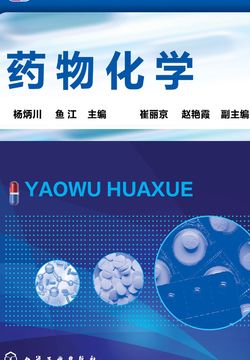
Medicinal Chemistry
Tags
Summary
Editor's review
In terms of content arrangement, the book fully considers the practical needs of teaching: chapters are designed to progress step by step, and theoretical exposition is combined with case analysis. While maintaining academic rigor, the author emphasizes the practicality of knowledge; the explanations of key techniques such as drug molecule design and synthetic route optimization reflect the editor's rich teaching experience and industry understanding.
Notably, building on the traditional knowledge system of pharmaceutical chemistry, the book appropriately introduces modern research methods such as computational chemistry and molecular simulation, reflecting the latest trends in the discipline's development. This balanced treatment of tradition and modernity makes the book suitable both as an introductory textbook and as an advanced reference for readers with some foundation.
As a professional textbook, the book uses accurate and standardized language, provides detailed and reliable charts and data, and includes thoughtfully designed review questions after each chapter that effectively test learning outcomes. For readers seeking to build a systematic understanding of pharmaceutical chemistry, this is a reference work worth repeated study.
Who it's for
A good fit for
- Senior undergraduates and graduate students in pharmacy and related majors
- Technical personnel and researchers engaged in drug research and development
- Candidates preparing for professional qualification examinations such as licensed pharmacist
- Cross-disciplinary learners seeking a systematic understanding of basic knowledge in medicinal chemistry
Not a good fit for
- General readers seeking only popular-science-level drug knowledge
- Beginners without foundational knowledge in organic chemistry, biochemistry, or related prerequisites
Reading tips
- It is recommended to first read the table of contents to understand the overall knowledge structure before reading chapters in detail.
- Use the review questions at the end of each chapter for self-practice to consolidate key concepts.
- Consult relevant drug research and development cases alongside reading to deepen understanding of the theoretical knowledge.
About the publisher
Jinan University Press is a comprehensive university press known for publishing in language and writing, history and culture, and medicine. Judging from the 2,481 titles in the database, its publishing focuses on language and writing research, the compilation of unearthed documents, Chinese culture and Eastern philosophy, traditional Chinese medicine, and grassroots medical standards. Representative books include the Chinese Dictionary (Second Edition), the series on the collected interpretation and modern translation of Warring States documents from the Language Services Series and the series on the language of unearthed documents, Chinese Cultural Psychology (6th Edition), Illustrated Compendium of Traditional Chinese Medicine Processing Techniques, and Construction and Technical Standards for Standardized Bronchoscopy Rooms in Primary-Level Pediatrics. In terms of authors, scholars such as Zhu Cheng, Zhang Yujin, Wang Fengyan, Zheng Hong, Cao Hui and Ma Zhiguo form its author base in language and documents, cultural psychology, and traditional Chinese medicine. In terms of publishing characteristics, the press emphasizes the collected interpretation and modern translation of unearthed documents and language service research, while also systematically organizing cultural psychology and medical techniques. Public information on specific matters such as overseas Chinese-language education is limited and is therefore not elaborated here.
Contents
- 版权信息
- 《药物化学》编委会
- 前言
- 绪论
- 第一章 药物的化学结构与药效的关系
- 第一节 药物的基本结构与药效的关系
- 第二节 药物的理化性质与药效的关系
- 第三节 药物的结构因素与药效的关系
- 第四节 结构改造与药效的关系
- 第二章 中枢神经系统药物
- 第一节 镇静催眠药
- 第二节 抗癫痫药
- 第三节 抗精神失常药
- 第四节 镇痛药
- 第五节 中枢兴奋药
- 第三章 外周神经系统药物
- 第一节 拟胆碱药
- 第二节 抗胆碱药
- 第三节 肾上腺素能受体激动剂
- 第四节 肾上腺素能受体拮抗剂
- 第五节 抗过敏药
- 第六节 局部麻醉药
- 第四章 心血管系统药物
- 第一节 降血脂药
- 第二节 抗心绞痛药
- 第三节 抗心律失常药
- 第四节 抗高血压药
- 第五节 抗血栓药
- 第六节 强心药
- 第五章 消化系统药物
- 第一节 抗溃疡药
- 第二节 止吐药
- 第三节 促动力药
- 第六章 非甾体抗炎药及抗痛风药
- 第一节 解热镇痛药
- 第二节 非甾体抗炎药
- 第三节 抗痛风药
- 第七章 抗肿瘤药物
- 第一节 生物烷化剂
- 第二节 抗代谢药物
- 第三节 抗肿瘤天然药物及其他抗肿瘤药物
- 第八章 抗生素
- 第一节 β-内酰胺类抗生素
- 第二节 大环内酯类抗生素
- 第三节 四环素类抗生素
- 第四节 氨基糖苷类抗生素
- 第五节 氯霉素
- 第九章 化学治疗药
- 第一节 喹诺酮类抗菌药
- 第二节 磺胺类药物及抗菌增效剂
- 第三节 抗结核病药
- 第四节 抗真菌药
- 第五节 抗病毒药
- 第六节 抗寄生虫药
- 第十章 甾体激素
- 第一节 概述
- 第二节 雄性激素和蛋白同化激素
- 第三节 雌激素及抗雌激素
- 第四节 孕激素
- 第五节 肾上腺皮质激素
- 第十一章 降血糖药及利尿药
- 第一节 降血糖药
- 第二节 利尿药
- 第十二章 维生素
- 第一节 脂溶性维生素
- 第二节 水溶性维生素
- 第十三章 呼吸系统药物
- 第一节 镇咳药
- 第二节 祛痰药
- 第十四章 药物的变质反应与代谢反应
- 第一节 药物的变质反应
- 第二节 药物的代谢反应
- 参考文献
FAQ
Is this book suitable for self-study?
Does the book include the latest drug research and development cases?
What are the features of this book compared with other medicinal chemistry textbooks?
Related on WeRead
Comments
Find this book
This site is an index: you start “Search all sources” in your browser, and the entries it lists all point to third-party sites; please judge their availability yourself.
About the author
Wang Xi: public information about this author is limited, and no reliable details on nationality, dates of birth and death, or educational background are available. Judging from the six works held in the catalog, the author's writing spans law, politics, historical reading, world history, and medicine. The representative work, Principles and Compromise: The Spirit and Practice of the American Constitution (Revised and Expanded Edition), examines the spiritual core and practical evolution of the U.S. Constitution, while The Political Legacy of Nineteenth-Century America and Rethinking America: Reflections from the Present survey American politics from both historical and contemporary perspectives. Pioneers: Interviews with Distinguished Historians and Teaching History in America: From Desk to Lectern focus on historical method and history education, and Medicinal Chemistry shows an engagement with the natural sciences. Overall, Wang Xi's writing emphasizes scholarly synthesis and a strong sense of inquiry, addressing both specialist readers and general history enthusiasts.
Chen Yousheng is an author whose work spans the fields of medicine and education. Publicly available information about him is limited, and details such as his nationality, dates of birth and death, and educational background have not been clearly recorded. Judging from the two works held in the collection, his writing extends in two directions: professional textbooks and educational practice. On the one hand, he participated in compiling Pharmaceutical Chemistry, covering the organization and presentation of basic pharmaceutical knowledge; on the other hand, he is the author of Moral Education and Cultural Cultivation: Innovation and Practice in Fostering Virtue in Private Universities, which focuses on combining moral education with cultural cultivation in private higher education. The considerable difference between the two subjects suggests that the author combines disciplinary awareness with a concern for educational management. Because verifiable material is scarce, it is difficult to sketch his academic trajectory and personal experience in full; readers may nevertheless gain a sense of his basic approach and style in pharmaceutical chemistry teaching and in university moral education through these two works.
