

Iacocca
Tags
Summary
Editor's review
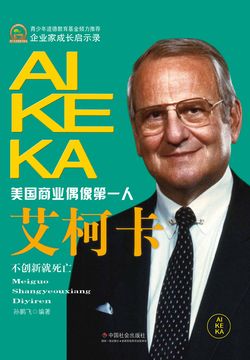
From an editorial perspective, the value of such books often lies in their specificity. As a domestic author, Sun Pengfei's background may be related to economics, social observation, or documentary writing, and his work tends to dig deep into individual stories, industry cases, or fragments of thought from China's period of social transformation. It may not seek broad popularity, but rather provide solid observation and analysis for a specific readership. If the content can stay closely tied to contemporary Chinese reality and give the symbol "Iacocca" a new local meaning—for example, exploring how individuals respond to challenges and realize their value in a rapidly changing Chinese social environment—then the book has a unique value for reading.
For readers, this book suits those who wish to understand the texture of Chinese society through specific cases and who are interested in nonfiction narrative. It may lack dramatic plot, but if the author can present a真实 and complex social picture through careful research and restrained writing, it is worth reading. In an age of information overload, focused and quiet works like this can instead offer space for deep thought. Readers are advised to open the book with an exploratory mindset and may discover its inner insight.
Who it's for
A good fit for
- Readers interested in cases or nonfiction narratives from China's period of social transformation
- Readers who wish to understand economic, management, or social phenomena from the perspective of a local author
- Readers who prefer in-depth, focused reading over highly entertainment-oriented content
- Explorers curious about the local meaning behind the symbolic title
Not a good fit for
- Readers expecting a biography of the internationally famous figure Lee Iacocca
- Readers seeking light entertainment or popular bestseller content
Reading tips
- Read the preface or table of contents first to understand the book's actual theme and framework, and adjust expectations
- Pay attention to how the author combines specific cases with social context and appreciate his angle of observation
- Can be read alongside other works on contemporary Chinese social development for comparative and extended reflection
About the publisher
China Society Press focuses on publishing books in the field of social development, covering categories such as social organizations, social assistance, social work, social welfare, elderly care services, and administrative division and place names. Judging from the books in the database, the press also publishes in history, inspirational growth, and biography. Representative titles include the two-volume Qingming Shanghe Tu: The Palace Museum Collection Edition, Letters from Rockefeller to His Children, biographies of Nietzsche, Leonardo da Vinci, Zhang Daqian, and Wernher von Braun, and How to Win Friends and Influence People. Representative authors include Duan Yongqiang, Wei Mingming, Li Dandan, Miao Jie, Jin Xia, Liu Mingshan, Li Jianxue, and Dale Carnegie. Public information is limited, and the 52 titles in the database are not enough to fully capture the press's entire publishing profile and product lines.
Contents
- 序言
- 第一节 出生在移民家庭
- 第二节 童年经历大萧条
- 第三节 遭受歧视的少年
- 第四节 多才多艺的中学生
- 第五节 就读利哈伊大学
- 第六节 普林斯顿读硕士
- 第一节 进公司选择营销
- 第二节 担任区销售经理
- 第三节 出妙计一举成名
- 第四节 到公司总部任职
- 第五节 任福特部总经理
- 第六节 尽全力研制新车
- 第七节 “野马牌”汽车销售旺
- 第八节 豪车成了摇钱树
- 第九节 任福特公司总裁
- 第十节 玻璃大楼的烦恼
- 第十一节 与亨利产生矛盾
- 第十二节 受到亨利的调查
- 第十三节 被福特公司解雇
- 第十四节 解雇之后的伤痛
- 第一节 五十多岁临危受命
- 第二节 登上将沉的大船
- 第三节 新组建管理团队
- 第四节 遭遇到经济危机
- 第五节 无奈向政府求援
- 第六节 援助案获得通过
- 第七节 身先士卒的统帅
- 第八节 经受炼狱的考验
- 第九节 熬过艰难的岁月
- 第十节 实现了扭亏为盈
- 第十一节 挚爱的妻子病逝
- 第一节 主张使用安全带
- 第二节 关心国家的发展
- 第三节 当了四年志愿者
- 第四节 退而不休的老人
- 附录
FAQ
Is this book about the legendary American automobile figure Lee Iacocca?
Why can't detailed ratings and descriptions of this book be found on platforms like Douban?
What is the background of the author Sun Pengfei?
Related on WeRead


Comments
Find this book
This site is an index: you start “Search all sources” in your browser, and the entries it lists all point to third-party sites; please judge their availability yourself.
About the author
Sun Pengfei is a Chinese author whose works span a notably wide range of subjects. Public information about him is limited, and details of his life, nationality, and dates of birth and death are not available. Judging from the seven titles held in the collection, his writing covers several fields: industry-oriented works such as How 5GtoB Enables Thousands of Industries and A Research Report on the Digital Transformation of Chinese Higher Education, which address the application of technology and educational change; books on traditional culture and classical scholarship, including Temples of Sacrifice: Thriving Shrines Across the Land and The Age of Engraving: The History and Cultural Significance of Ancient Books; and a biography, Iacocca. His common categories include artificial intelligence, social culture, culture, general biography, and inspirational growth, reflecting an approach that combines cutting-edge technology with humanistic interests. Overall, his writing emphasizes knowledge popularization and practical explanation for general readers, in a plain and accessible style.
