

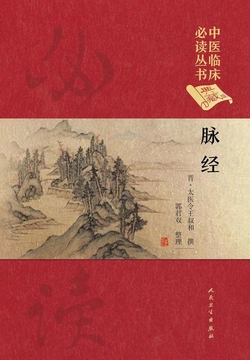
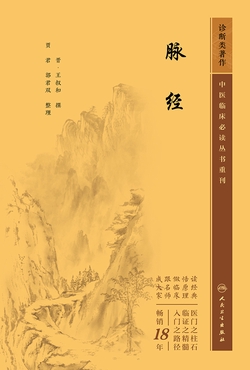
The Pulse Classic
Tags
Summary
Editor's review
From a professional standpoint, the book's value lies in its rigorous textual organization combined with clinical practice. Wang Shuhe not only incorporated pulse discourse from classics such as the Huangdi Neijing and the Nanjing, but also integrated the essence of pulse diagnosis from Zhang Zhongjing's Treatise on Cold Damage and Miscellaneous Diseases, adding his own clinical experience to form a pulse system connecting theory, method, formulas, and materia medica. The descriptions of pulse morphology, disease mechanisms, and diagnostic key points remain an important basis for clinical pulse diagnosis in TCM today.
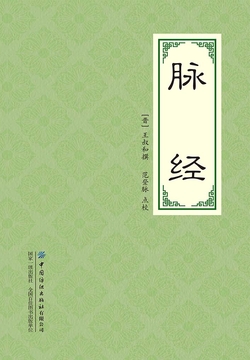
It is worth noting that this edition, published by China Publishing Group Digital Media Co., Ltd., retains the original text while adding necessary annotations and modern interpretation, helping readers bridge the language gap between past and present. It should be noted, however, that pulse diagnosis is a skill requiring extensive practical accumulation, and its essence is difficult to master through text alone. The book is best regarded as an introductory guide to the theoretical framework of pulse study rather than an operational manual.
In terms of reading value, the book is suitable as a reference for research on the theoretical system of TCM, or as a window for TCM enthusiasts to understand traditional diagnostics. Its discussions on the relationship between the movement of qi and blood and disease embody the ancients' profound observation of human life; even non-medical readers can appreciate the appeal of TCM's holistic thinking.
Who it's for
A good fit for
- TCM students and practitioners seeking a systematic foundation in pulse theory
- Researchers of TCM culture focusing on the transmission and evolution of classic texts
- Enthusiasts of traditional medicine hoping to understand the core methods of TCM diagnostics
- Health and wellness practitioners seeking theoretical support to enhance their professional competence
Not a good fit for
- Beginners seeking quick mastery of pulse diagnosis techniques, who will find it difficult without practical guidance
- Readers expecting TCM theory to be fully validated by modern medical standards, whose paradigm differs
Reading tips
- It is recommended to first read the relevant chapters of the Huangdi Neijing to establish a basic theoretical framework of TCM
- Prepare pulse image diagrams to aid understanding while reading, and deepen impressions by combining clinical cases
- Focus on Volume One, 'Secret of Pulse Forms Under the Fingers,' and Volume Five, 'Bian Que's Yin-Yang Pulse Method,' to master the core classification system
About the publisher
China Publishing Group Digital Media Co., Ltd. takes digital publishing as its main business, with titles spanning traditional medical classics and classical literature. Its catalogue includes medical works such as Treatise on Cold Damage, Essential Prescriptions from the Golden Cabinet, and The Pulse Classic, involving writings by Zhang Ji, Wang Shuhe, Lin Yi, and Zhang Jiebin. In literature, it offers Wu Jingzi's The Scholars and Xiao Hong's Tales of Hulan River, as well as foreign literary translations such as Fu Lei's rendering of Voltaire's Candide. Its publishing focus thus falls roughly into medicine, social fiction, foreign literature, and fine fiction, reflecting a balance between collated ancient texts and general reading. As public information is limited, this summary is based only on the books in the catalogue and draws no further inferences.
Contents
- 版权信息
- 序
- 脉形状指下秘诀第一(二十四种)
- 平脉早晏法第二
- 分别三关境界脉候所主第三
- 辨尺寸阴阳荣卫度数第四
- 平脉视人大小长短男女逆顺法第五
- 持脉轻重法第六
- 两手六脉所主五藏六腑阴阳逆顺第七
- 辨藏腑病脉阴阳大法第八
- 辨脉阴阳大法第九
- 平虚实第十
- 从横逆顺伏匿脉第十一
- 辨灾怪恐怖杂脉第十二
- 迟疾短长杂病法第十三
- 平人得病所起第十四
- 诊病将差难已脉第十五
- 平三关阴阳二十四气脉第一
- 平人迎神门气口前后脉第二
- 平三关病候并治宜第三
- 平奇经八脉病第四
- 肝胆部第一
- 心小肠部第二
- 脾胃部第三
- 肺大肠部第四
- 肾膀胱部第五
- 辨三部九候脉证第一
- 平杂病脉第二
- 诊五藏六腑气绝证候第三
- 诊四时相反脉证第四
- 诊损至脉第五
- 诊脉动止投数疏数死期年月第六
- 诊百病死生诀第七
- 诊三部脉虚实决死生第八
- 张仲景论脉第一
- 扁鹊阴阳脉法第二
- 扁鹊脉法第三
- 扁鹊华佗察声色要诀第四
- 扁鹊诊诸反逆死脉要诀第五
- 肝足厥阴经病证第一
- 胆足少阳经病证第二
- 心手少阴经病证第三
- 小肠手太阳经病证第四
- 脾足太阴经病证第五
- 胃足阳明经病证第六
- 肺手太阴经病证第七
- 大肠手阳明经病证第八
- 肾足少阴经病证第九
- 膀胱足太阳经病证第十
- 三焦手少阳经病证第十一
- 病不可发汗证第一
- 病可发汗证第二
- 病发汗以后证第三
- 病不可吐证第四
- 病可吐证第五
- 病不可下证第六
- 病可下证第七
- 病发汗吐下以后证第八
- 病可温证第九
- 病不可灸证第十
- 病可灸证第十一
- 病不可刺证第十二
- 病可刺证第十三
- 病不可水证第十四
- 病可水证第十五
- 病不可火证第十六
- 病可火证第十七
- 热病阴阳交并少阴厥逆阴阳竭尽生死证第十八
- 重实重虚阴阳相附生死证第十九
- 热病生死期日证第二十
- 热病十逆死证第二十一
- 热病五藏气绝死日证第二十二
- 热病至脉死证第二十三
- 热病脉损死证第二十四
- 平卒尸厥脉证第一
- 平痓湿暍脉证第二(痓一作痉)
- 平阳毒阴毒百合狐惑脉证第三
- 平霍乱转筋脉证第四
- 平中风历节脉证第五
- 平血痹虚劳脉证第六
- 平消渴小便利淋脉证第七
- 平水气黄汗气分脉证第八
- 平黄疸寒热疟脉证第九
- 平胸痹心痛短气贲豚脉证第十
- 平腹满寒疝宿食脉证第十一
- 平五藏积聚脉证第十二
- 平惊悸衄吐下血胸满瘀血脉证第十三
- 平呕吐哕下利脉证第十四
- 平肺痿肺痈咳逆上气痰饮脉证第十五
- 平痈肿肠痈金疮侵淫脉证第十六
- 平妊娠分别男女将产诸证第一
- 平妊娠胎动血分水分吐下腹痛证第二
- 平产后诸病郁冒中风发热烦呕下利证第三
- 平带下绝产无子亡血居经证第四
- 平郁冒五崩漏下经闭不利腹中诸病证第五
- 平咽中如有炙脔喜悲热入血室腹满证第六
- 平阴中寒转胞阴吹阴生疮脱下证第七
- 平妇人病生死证第八
- 平小儿杂病证第九
- 手检图三十一部
FAQ
How does the Classic of Pulse differ from other works on pulse study?
How does modern medicine view the pulse diagnosis theory in this book?
Can readers without a TCM background understand the content of this book?
Related on WeRead
Comments
Find this book
This site is an index: you start “Search all sources” in your browser, and the entries it lists all point to third-party sites; please judge their availability yourself.
About the author
Wang Shuhe is an important physician in the history of Chinese medicine, though public information about his life, native place, and dates of birth and death is limited. Judging from the fifteen works held in the collection, his writings focus on the field of medical classics, commonly classified under medicine and classic works. His representative works include Treatise on Cold Damage, The Pulse Classic, and Essentials of the Golden Cabinet; among them, The Pulse Classic and Treatise on Cold Damage are preserved in multiple versions, reflecting later generations' attention to his compilation and transmission of these texts. His writing balances clinical practicality with theoretical synthesis, is rigorous in style, and emphasizes the systematization of pulse diagnosis and pattern differentiation, exerting a profound influence on the transmission of Chinese medical diagnostics and classical literature.
