

Tags
Summary
Editor's review
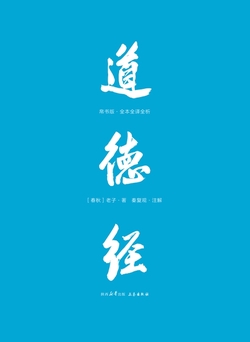
From an editorial point of view, the value of this edition lies first in its role as a bridge. It is not a dense work of academic textual scholarship but focuses on accurate presentation of the text and basic explanation, making it suitable for readers encountering Laozi systematically for the first time. Its interpretations of core ideas such as "the Way that can be spoken is not the constant Way," "the highest good is like water," and "governing a great state is like cooking a small fish" stay close to the original meaning and avoid overreach, helping readers build initial trust in and understanding of the source text.
Second, the core value of reading Laozi lies in the reverse thinking and the wisdom of subtraction it offers. In an age that prizes efficiency and pursues growth, Laozi's repeated emphasis on "non-action," "not contending," "keeping to softness," and "knowing contentment" comes like a sobering tonic. It does not teach passive withdrawal from the world but reveals a deeper philosophy of action: "because he does not contend, no one under heaven can contend with him." It offers a distinctive soothing and illuminating perspective on the anxieties of modern people in management, dealings with others, and personal cultivation.
Finally, the book is like a mirror. Readers of different ages and circumstances can see themselves in it: young people may find a way to temper their sharp edges in dealing with the world; those in midlife may grasp the wisdom of preserving themselves by "retiring when the work is done"; managers may reflect on the ideal of governance in which "I practice non-action and the people transform themselves." This Huacheng edition opens that mirror to you and offers a plain key. The reading experience lies not in "understanding it" once and for all but in returning to it again and again, conversing with it at different stages of life and gaining insights of one's own.
Who it's for
A good fit for
- Beginning readers curious about traditional Chinese philosophy, especially Daoist wisdom
- Modern readers in competitive environments who seek inner calm and an alternative perspective on how to live
- Managers and entrepreneurs who hope to draw unconventional leadership inspiration from classical wisdom
- Lovers of classics who want a reliable, readable basic edition of Laozi for their collection
Not a good fit for
- Advanced researchers seeking detailed academic textual scholarship or comparison of various commentaries
- Readers expecting immediate success formulas or concrete solutions to specific problems
Reading tips
- On a first reading, read through the whole text without straining for full understanding, sensing its rhythm and core images
- Focus on and repeatedly ponder core chapters such as 1, 2, 8, 9, 48, and 81
- Reflect in light of your own life experience, placing ideas such as "the soft overcomes the hard" in concrete situations
About the publisher
Flower City Publishing House focuses on literary publishing, covering categories such as classic works, foreign literature, folk literature, Eastern philosophy, essays and miscellaneous writings, and social novels. Representative books in the library include Lu Xun's Call to Arms, Lao She's Camel Xiangzi and Four Generations Under One Roof, editions related to Confucius's The Analects, and Chinese translations of foreign classics such as Leo Tolstoy's Anna Karenina and Charles Dickens's A Tale of Two Cities. Its author resources include classic writers such as Lu Xun, Lao She, and Confucius, as well as translators and scholars such as Li Gang, Chen Puqing, and Zhang Ling. The publisher's characteristic approach is to organize editions around literary classics and celebrated Chinese and foreign works, while also including folk literature and Eastern philosophy titles. Public information is limited, so this introduction emphasizes the publishing directions reflected in the books held in the library.
Contents
- 版权信息
- 上篇 道经
- 第一章
- 第二章
- 第三章
- 第四章
- 第五章
- 第六章
- 第七章
- 第八章
- 第九章
- 第十章
- 第十一章
- 第十二章
- 第十三章
- 第十四章
- 第十五章
- 第十六章
- 第十七章
- 第十八章
- 第十九章
- 第二十章
- 第二十一章
- 第二十二章
- 第二十三章
- 第二十四章
- 第二十五章
- 第二十六章
- 第二十七章
- 第二十八章
- 第二十九章
- 第三十章
- 第三十一章
- 第三十二章
- 第三十三章
- 第三十四章
- 第三十五章
- 第三十六章
- 第三十七章
- 下篇 德经
- 第三十八章
- 第三十九章
- 第四十章
- 第四十一章
- 第四十二章
- 第四十三章
- 第四十四章
- 第四十五章
- 第四十六章
- 第四十七章
- 第四十八章
- 第四十九章
- 第五十章
- 第五十一章
- 第五十二章
- 第五十三章
- 第五十四章
- 第五十五章
- 第五十六章
- 第五十七章
- 第五十八章
- 第五十九章
- 第六十章
- 第六十一章
- 第六十二章
- 第六十三章
- 第六十四章
- 第六十五章
- 第六十六章
- 第六十七章
- 第六十八章
- 第六十九章
- 第七十章
- 第七十一章
- 第七十二章
- 第七十三章
- 第七十四章
- 第七十五章
- 第七十六章
- 第七十七章
- 第七十八章
- 第七十九章
- 第八十章
- 第八十一章
- 内容简介
FAQ
Does this edition include a modern Chinese translation?
What distinguishes this edition from others?
Can I understand it with no background at all?
Related on WeRead


Comments
Find this book
This site is an index: you start “Search all sources” in your browser, and the entries it lists all point to third-party sites; please judge their availability yourself.
About the author
Laozi, whose personal name was Li Er and courtesy name Dan, was a native of Ku County in the State of Chu during the late Spring and Autumn period and served as keeper of the royal archives of the Zhou court. Tradition holds that Confucius once consulted him on ritual, and that later, on his way west through Hangu Pass, he composed the five-thousand-character Daodejing at the request of Yin Xi, the pass keeper. His dates and life are known mainly from the Records of the Grand Historian and contain much legendary material; reliable public information is limited. As the founder of Daoism, Laozi is revered in religious Daoism as Taishang Laojun. His thought centers on the Dao and advocates accordance with nature and quiet non-action, expressed in spare language with profound meaning. The Daodejing has circulated for over two thousand years, has many commentaries, and has been translated into numerous languages, exerting a deep influence on Eastern philosophy, culture, literary appreciation, and religion.
Sun Yongchang is an author about whom limited public information is available; little has been confirmed regarding his life, nationality, or academic background. Two of his works are held in the collection, Zhuangzi and Laozi, both of which involve the organization or interpretation of classical Daoist texts from ancient China. His writing centers on pre-Qin philosophy, especially the thought of Laozi and Zhuangzi, and is commonly classified under Eastern philosophy and philosophical readings. Works of this kind are usually aimed at general readers, emphasizing clarification of the original text and explanation of its meaning, and seeking to build a bridge of understanding between classical Chinese and modern language. Although the author's own experience and identity are difficult to verify, through these two works readers can still encounter the core themes of Daoism—nature, non-action, and the realm of life—and thereby appreciate the enduring value of traditional classics in contemporary reading.
