

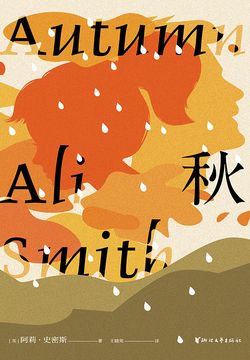
Autumn
Tags
Summary
Editor's review
Who it's for
A good fit for
- Veteran literary readers who love experimental writing and stream of consciousness and savor the beauty of language itself
- Readers interested in observing and reflecting on contemporary European social and political realities (such as Brexit) and their cultural impact
- Contemplative readers who appreciate fragmented narrative and are adept at constructing meaning from metaphor and imagery
- Readers seeking a serious novel that explores timeless themes of time, memory, art and death
Not a good fit for
- Entertainment-oriented readers who want strong plotting, fast pacing and traditional story structure
- Readers completely unfamiliar with British cultural and political contexts who are unwilling to make connections
Reading tips
- Do not rush to sort out every thread on a first reading; feel the rhythm of the language and the flow of emotion first, and allow yourself to get lost in the imagery.
- It helps to learn a little about the social background of the 2016 Brexit referendum and about the artist Pauline Boty mentioned in the book (modeled on the real pop art pioneer Pauline Boty), which will deepen your understanding.
- After reading, continue with Ali Smith's Winter, Spring and Summer to appreciate the overall design and evolution of the Seasonal Quartet.
About the publisher
Zhejiang Literature and Art Publishing House is a Chinese publisher specializing in literary publishing. Judging from the 808 titles in the database, its publishing areas cover world classics, foreign literature, social novels, folk literature and classic works, as well as modern and contemporary literature and prose. Representative titles include foreign literary translations such as Anna Karenina, The Temple of the Golden Pavilion, In Praise of Shadows and The Complete Tragedies and Comedies of Shakespeare, alongside classic works by Lao She and Lu Xun such as Camel Xiangzi, Teahouse and Wandering. Its authors and translators include Leo Tolstoy, Cao Ying, Lao She, Yukio Mishima, Jun'ichirō Tanizaki and Zhu Shenghao. The press emphasizes the translation and introduction of classic texts and the compilation of native literary works, giving equal weight to Chinese and foreign literature. Owing to limited public information, its specific series and editorial policies are not elaborated here.
Contents
- 版权信息
- Ⅰ(上)
- Ⅰ(下)
- Ⅱ
- Ⅲ
- 后记
FAQ
Is this book difficult to read?
Do I need to understand Brexit beforehand?
Is this the first book in a series? What comes next?
Related on WeRead

Comments
Find this book
This site is an index: you start “Search all sources” in your browser, and the entries it lists all point to third-party sites; please judge their availability yourself.
About the author
Ali Smith is an author of foreign literature with a relatively large number of works in this database; eight titles are currently included, with representative works such as Spring, Summer, Autumn, and Winter—known as the "Seasonal Quartet"—as well as How to Be Both and The Accidental. Judging from the titles and the common categories, her writing often revolves around individual circumstances and emotional shifts amid the changing seasons, and appeals to readers of both youth literature and foreign literature. In the database her works are classified under foreign literature and youth literature, suggesting that her narratives are both literary and close to ordinary readers' emotional experience. It should be noted that the database does not provide information on her nationality, dates of birth and death, or English name, and public information is limited; this introduction therefore avoids biographical details and focuses on the themes and reading position of her works, so that readers may gain an overall picture of the author.
Publicly available information about Wang Xiaoying is limited, and the existing sources are not enough to confirm her nationality, dates of birth and death, or personal background. Judging from the eight titles held in the collection, her editorial and translation work mainly covers two areas: foreign literature and modern poetry. Representative works include the complete four-volume set of Ali Smith's Seasonal Quartet, as well as individual volumes such as Autumn, Winter, and White Sand, which shows a sustained interest in contemporary English-language literature, especially narrative works organized around seasons and nature. In addition, the reading assessment guide to Ai Qing's poetry belongs to the category of modern-poetry reading and evaluation materials, while The God of War and The Mistress of the Ritz touch on other foreign-literary subjects. Overall, her work leans toward title selection, translation and introduction, and reading promotion rather than personal creative writing.
