

Vision
Tags
Summary
Editor's review
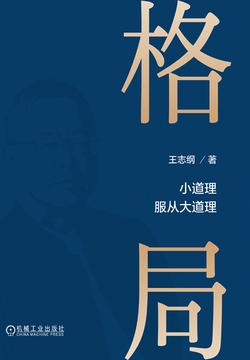
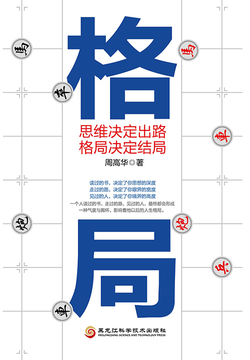
As a work on personal development, the book's value lies in its effort to integrate fragmented knowledge into systematic understanding. It covers a wide range of topics—from emotion management to career planning, from interpersonal relationships to self-realization—addressing common growth confusions of modern people. The author's style is relatively plain and tries to explain abstract concepts in accessible language, lowering the reading barrier and making the book more suitable as an introduction for general readers.
However, as an editor, I find the book's depth and originality debatable. There are already many classics on similar themes, and the book shows no significant breakthrough or distinctive insight in its core views; some content is rather general. Its structure is somewhat loose, and the logical progression between chapters is not tight enough, making it read more like a collection of related articles. Readers with substantial reading experience who seek profound theory or empirical support may be somewhat disappointed.
Overall, Pattern suits as an introductory guide in personal growth or casual inspirational reading. It can offer preliminary thinking clues and comfort to readers in a confused period who need some directional guidance. But those expecting disruptive cognitive upgrades or rigorous methodology may find it not the best choice. Read it with critical thinking, internalize what is useful and do not accept everything wholesale.
Who it's for
A good fit for
- Young readers at a career or life crossroads seeking direction and inspiration
- General readers interested in popular personal-growth and psychology books
- Beginners hoping to build an initial systematic framework of self-understanding
- Casual readers who prefer a light, plain style and do not seek theoretical depth
Not a good fit for
- Research-oriented readers seeking rigorous academic argument or deep philosophical reflection
- Readers who have widely read personal-development classics and demand highly novel viewpoints
Reading tips
- Treat the book as a collection of thought-provoking material; there is no need to read it linearly from start to finish
- Reflect in light of your own experience and mark views that resonate or raise questions
- After each chapter, try summarizing the core advice in your own words and consider its feasibility
About the publisher
Founded in 1984, Heilongjiang Fine Arts Publishing House is a professional art publisher in Heilongjiang Province. Its publishing scope covers art theory, technique textbooks, calligraphy and seal carving, art albums, photography, as well as comic books and children's cartoon readers, with books on art college entrance examination techniques as its signature brand. Its library contains 75 titles, which, in addition to art, also involve applied psychology, foreign literature, modern romance, youth literature, and time-travel fantasy. Representative books include Children's Educational Psychology, Have You Seen a Dragon? The Talking Kind, Maugham's Writing Notes, You're Sweet Even When Silent, Smitten with Him Millions of Times a Day, and White Snow and Green Lotus, while its authors include Alfred Adler, W. Somerset Maugham, Chen Guoxing, Zhang Junxian, Su Xing'an, Senmu Daoyu, Chunbai, and Shiwan Yueguang. Public information is limited, and the above is summarized mainly from the books in the library.
Contents
- 版权信息
- 前言
- 第一章 有视野才有格局
- 做一个具有长远目光的领导者
- 比别人能多看到一步
- 看得远更要走得远
- 第二章 有所失才有所得
- 从全局出发,看淡得失
- 牺牲个人利益,保全企业利益
- 把公司利益放在第一位
- 有舍弃才能获得更大利益
- 第三章 轻次要才重主要
- 抓住问题的主要矛盾
- 轻重缓急的决策和团队生死攸关
- 从全局出发,把劲用在关键处
- 不能忽视任何能影响全局的细节
- 第四章 有规划才有发展
- 用战略的视角去规划人生
- 深刻把握“战略”的含义
- 让人生有定位和目标
- 战略人生思考的重大价值
- 第五章 能放下才能拿起
- 对压力进行有效运用
- 永远没有彻底的失败
- 乐观和梦想缺一不可
- 不放弃,才能从绝望走向希望
- 放下负担,进退有度
- 困境是另一种希望的开始
- 具备判断事情并付诸行动的自律性
- 第六章 敢打破才敢创新
- 摆脱束缚,发现新的机会
- 游戏是孩子的,也是大人的
- 毅力开创奇迹
- 盲目服从比违背规定更有害
- 善于改变众人所循的规则
- 不做谨小慎微的“安全专家”
- 第七章 能突破才能成长
- 突破惯性思维的局限性
- 艺术的幽默对提升生活质量至关重要
- 留白是生动的个性诠释
- 对自然保持必要的“敬畏”
- 能力的价值在于有机会配享信任
- 在变化中思考未知世界
- 把时间安排在擅长的领域
- 在朴实的生活境界中接近自我
- 借助哲学思考使智慧灵动起来
- 第八章 有阻力才有动力
- 决定并没有对或错
- 苦难是为提升才智
- 你是否有足够的自律
- 这就是你需要的
- 将“转念”发挥得淋漓尽致
- 只要心怀希望,就能坚持下去
- 第九章 有梦想才有希望
- 让“愿望”比“欲望”更强
- 区分紧急与重要的事
- 小事成就大事,细节成就完美
- 不要随便挥霍人生的颜料
- 让努力变得具有价值
- 不去尝试,怎知结果
FAQ
What is the book's main core idea?
What are the book's features compared with similar books?
How long does it take to read this book?
Related on WeRead



Comments
Find this book
This site is an index: you start “Search all sources” in your browser, and the entries it lists all point to third-party sites; please judge their availability yourself.
About the author
Guo Ting is a Chinese author of nonfiction books, though publicly available information about her remains limited: her nationality, dates of birth and death, and educational background cannot be confirmed. Judging from the ten works held in the collection, her writing spans several fields. She has written on art history and aesthetics, as in Aesthetics as Belief: Ten Moments in the British Art Movement, and on military themes, as represented by Interpreters in War. She has been especially active in applied psychology and self-help, with titles such as The Psychology of Procrastination, Psychology and Communication Skills, The Art of High Emotional Intelligence Communication, Anti-Anxiety Thinking, Super Psychology, and The Power of Personality. Overall, her books lean toward popular knowledge and practical guidance, turning psychological concepts into workable communication methods and self-regulation strategies. Written in accessible language for general readers, they offer reference points for daily life, interpersonal relationships, and emotional management.
