

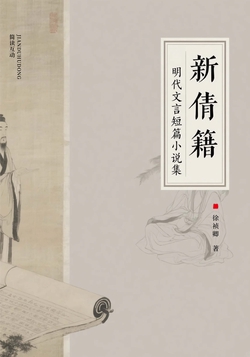
A New Register of Beauties
Tags
Summary
Editor's review
Who it's for
A good fit for
- Specialist readers researching Ming literature and Wuzhong literati circles
- Readers who enjoy Ming notes, poetry talks, and literati anecdotes
- Readers interested in the cultural history of Jiangnan and the lives of scholars
- University students needing material on Xu Zhenqing for papers
Not a good fit for
- Readers expecting a complete plot or novel-like narrative
- Beginners unfamiliar with the classical Chinese note genre who prefer vernacular writing
- Readers who want only Xu Zhenqing's poetry and are not interested in note material
Reading tips
- Learn first about Xu Zhenqing's life and the "Four Talents of Wuzhong" background; the main text is then easier to enter.
- Jot down the relationships among the people in the book; afterward you can arrange them into a simple network map of acquaintances.
- Read alongside Xu Zhenqing's poems and note how the notes echo his literary views.
- The book is short; read it in several sittings, annotating each entry briefly so it is not forgotten as soon as it is read.
About the publisher
Nanhai Publication Company is a comprehensive publisher known for its literature and arts titles, covering fields such as classical poetry, martial arts fiction, and folk literature. Judging from the more than 1,600 books in the database, the company has released classical poetic works including the Nineteen Old Poems and the Nine Songs, as well as multiple volumes of Huanzhulouzhu's series The Swordsmen of Mount Shu, along with related writings by authors such as Guan Hanqing, Qu Yuan, Zuo Si, and Wang Zhihuan. Its publishing character lies in balancing the organization of classic texts with the dissemination of popular literature, placing poetry anthologies alongside long martial arts novels and presenting a relatively diverse literary profile. Public information is limited, and further details about its editorial practices and series planning remain to be supplemented.
Contents
- 版权信息
- 新倩籍
FAQ
Is this book a collection of Xu Zhenqing's poems?
What level of classical Chinese is needed to read this book?
Is it suitable for learning about Jiangnan literati in the Ming?
Related on WeRead



Comments
Find this book
This site is an index: you start “Search all sources” in your browser, and the entries it lists all point to third-party sites; please judge their availability yourself.
About the author
Xu Zhenqing is a distinctive author in the history of Ming dynasty literature. Publicly available information about his life and official career is limited, and his dates of birth and death as well as his nationality remain unverified. Nevertheless, the eight works included in the library offer a general picture of his writing. His output spans poetics, notebooks, and collected poetry and prose, with representative works including Tan Yi Lu, Jian Sheng Ye Wen, Di Gong Ji, and Xin Qian Ji; Tan Yi Lu survives in several editions. In terms of subject matter, these works discuss the principles of poetic creation and methods of appreciation, record miscellaneous observations and anecdotes, and gather his own poems and prose. Overall, they show an orientation toward literary reflection and the recording of historical anecdotes. The library classifies them under Eastern philosophy, literary appreciation, classical poetry, historical reading, and classical literature, indicating that his writing has value both as literary criticism and as historical material. Xu Zhenqing's style is concise and thoughtful rather than expansive, and his work offers a useful reference for understanding Ming-era poetic ideas and the tradition of literati notebooks.
