

Song of the Inner Chamber
Tags
Summary
Editor's review
Who it's for
A good fit for
- Li Shangyin enthusiasts who want to explore his mourning works
- Tang poetry researchers and classical literature students for close reading
- General literary readers who enjoy restrained, deeply delicate lyric poetry
- Teachers needing short classical poems for teaching or recitation
Not a good fit for
- Readers who prefer long narrative or plot-driven works
- Beginners seeking systematic knowledge of Tang poetry history from a book
Reading tips
- Read the whole poem twice first, not seeking word-by-word mastery, but feeling the overall emotional tone
- Look up Li Shangyin's marriage and life background, then return line by line to feel the sorrow in the images
- Read alongside famous mourning works by Yuan Zhen and Su Shi, comparing how different forms express emotion
- Read aloud, noting the rhythm and pauses of the five-character ancient style to feel how sound and feeling reinforce each other
About the publisher
Jinzhang Book Company (Jinzhang Shuju) was a private publishing and distribution house in Shanghai during the late Qing and early Republican periods, issuing traditional works by lithographic printing. Judging from the 1,194 titles in the collection, its publishing focused on classical poetry, Eastern philosophy, historical reading, traditional Chinese medical texts, and canonical works, along with books on literary appreciation. Representative titles include the poetry and prose collections of Du Fu and Ouyang Xiu; historical works such as the Book of Han and Zizhi Tongjian; classical texts such as the Book of Documents and Mencius; and specialized and literary classics such as Treatise on Cold Damage and Li Sao. Its author resources cover major figures across the ages, including Du Fu, Ban Gu, Sima Guang, Zhang Zhongjing, Qu Yuan, Ouyang Xiu, and Tang Shenwei, reflecting the house's characteristic reliance on traditional scholarship and medical literature while serving general readers. Public information on its early history and operational details is limited, so no conjecture is offered here.
Contents
- 版权信息
- 卷540_81【七月二十九日崇让宅宴作】李商隐
- 卷540_82【赠从兄阆之】李商隐
- 卷540_83【吴宫】李商隐
- 卷540_84【常娥】李商隐
- 卷540_85【残花】李商隐
- 卷540_86【天津西望】李商隐
- 卷540_87【西亭】李商隐
- 卷540_88【忆住一师】李商隐
- 卷540_89【昨夜】李商隐
- 卷540_90【海客】李商隐
- 卷540_91【初食笋呈座中】李商隐
- 卷540_92【早起】李商隐
- 卷540_93【寄蜀客】李商隐
- 卷540_94【行至金牛驿寄兴元渤海尚书】李商隐
- 卷540_95【深树见一颗樱桃尚在】李商隐
- 卷540_96【细雨】李商隐
- 卷540_97【歌舞】李商隐
- 卷540_98【海上】李商隐
- 卷540_99【魏侯第东北楼堂郢叔言别,聊用书所见成篇】李商隐
- 卷540_100【白云夫旧居】李商隐
- 卷540_101【同学彭道士参寥】李商隐
- 卷540_102【到秋】李商隐
- 卷540_103【华师】李商隐
- 卷540_104【华岳下题西王母庙】李商隐
- 卷540_105【过华清内厩门】李商隐
- 卷540_106【乐游原】李商隐
- 卷540_107【赠荷花】李商隐
- 卷540_108【丹丘】李商隐
- 卷540_109【房君珊瑚散】李商隐
- 卷540_110【小桃园】李商隐
- 卷540_111【嘲樱桃】李商隐
- 卷540_112【和张秀才落花有感】李商隐
- 卷540_113【代越公房妓嘲徐公主(一作代公主答)】李商隐
- 卷540_114【代贵公主】李商隐
- 卷540_115【凤】李商隐
- 卷540_116【昭肃皇帝挽歌辞三首】李商隐
- 卷540_117【梓州罢吟寄同舍】李商隐
- 卷540_118【无题二首】李商隐
- 卷540_119【病中早访招国李十将军遇挈家游曲江】李商隐
- 卷540_120【昨日】李商隐
- 卷540_121【樱桃花下】李商隐
- 卷540_122【故驿迎吊故桂府常侍有感】李商隐
- 卷540_123【槿花】李商隐
- 卷540_124【暮秋独游曲江】李商隐
- 卷540_125【任弘农尉献州刺史乞假还京】李商隐
- 卷540_126【赠句芒神】李商隐
- 卷540_127【无愁果有愁曲北齐歌】李商隐
FAQ
Why is the poem called "Song of the Chamber"?
Can I read this without having read other Li Shangyin poems?
What should I note when reading a five-character ancient-style poem?
Related on WeRead
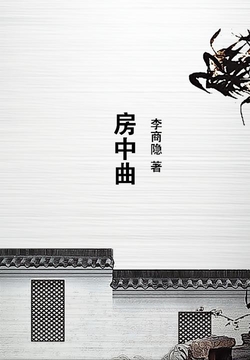 房中曲
 金融街+换位游戏+楼王之谜(套装共3册 矫健三部曲 在这里,读懂中国金融市场、股市、房地产!)
 乐府学(第十一辑)
 李商隐选集(中国古典文学名家选集丛书)
 宋元文章总集分体与分类研究(精)--陕西师范大学中国语言文学“世界一流学科建设”成果
 中国竹笛演奏艺术的美学传统研究
 佩文韵府
Comments
Find this book
This site is an index: you start “Search all sources” in your browser, and the entries it lists all point to third-party sites; please judge their availability yourself.
About the author
Li Shangyin (c. 813–858), courtesy name Yishan and style name Yuxisheng, was a renowned poet of the late Tang dynasty whose ancestral home was in Huaizhou Henei (present-day Qinyang, Henan). He is often grouped with Du Mu as the “Little Li-Du.” His poems are notable for their novel conceits and rich, ornate style, and his untitled and love poems in particular are deeply tender and lingering. Representative works include “The Jeweled Zither” and the “Untitled” poems, and the Ming dynasty compiled his Li Yishan Poetry Collection. This library holds 24 of his works, including poetry anthologies and selections, as well as pieces such as “The Han Stele,” “Spring Rain,” “The Shrine of the Holy Maid,” “The Peonies of Huizhong Ruined by Rain II,” and “At a Drinking Feast, on Behalf of an Official Courtesan, Presented to Two Attendants,” along with a related collection in the series Classic Works of Ancient Chinese Literature: The Intoxicating Rhythms of Tang Poetry. Public information on the specific events of his life is limited, so this introduction focuses on the themes, style, and literary influence of his works.
