

Demian
Tags
Summary
Editor's review
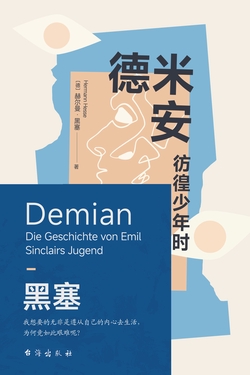
In literary terms, Demian inherits the spiritual lineage of German Romanticism while incorporating archetypal theory from Jungian analytical psychology, building a rich symbolic system within the narrative. Hesse's poetic rendering of the flow of consciousness lifts the novel beyond the framework of the traditional bildungsroman, making it a prophetic text that probes the spiritual predicaments of modern humanity. When Hesse was awarded the Nobel Prize in Literature in 1946, the committee specifically cited this work as "displaying profound insight into the individual's spiritual quest."
For contemporary readers, Demian offers not only Hesse's distinctive style, which fuses Eastern and Western philosophy, but also enduring lessons about self-identity, rebellion and return, and the balance between spirituality and the worldly. Its reinterpretation of the "mark of Cain" and its exploration of the collective unconscious and individual destiny remain powerfully relevant in today's pluralistic age.
Who it's for
A good fit for
- Young readers undergoing an identity crisis or a life transition
- Deep readers interested in psychology, philosophy, and psychoanalysis
- Literature lovers drawn to symbolist writing and poetic narrative style
- Spiritual seekers pursuing personal breakthrough and inner growth
Not a good fit for
- Entertainment-oriented readers who want fast-paced plots and strong conflict
- Readers of practical guides who expect clear conclusions and actionable advice
Reading tips
- Read alongside Hesse's contemporaneous Steppenwolf to trace the evolution of his spiritual exploration
- Pay attention to the symbolic system of recurring images (the bird, Cain, Abraxas)
- Read in installments in a quiet setting, allowing time for reflection and internalization
About the publisher
Yilin Press focuses mainly on translated foreign literature. Its current catalogue of 318 titles covers common categories such as mystery and detective fiction, foreign literature, world classics, biography, and social novels. Representative books include The Complete Sherlock Holmes 2: The Adventures of Sherlock Holmes, Pride and Prejudice, To the Lighthouse, The Great Gatsby, The Grapes of Wrath, and Lives of the Artists: Michelangelo, often presented in bilingual or English-language editions that serve both original-text reading and language learning. Its author resources include foreign writers such as Arthur Conan Doyle, Jane Austen, Virginia Woolf, and Romain Rolland, as well as translators including Li Jiazhen, Gao Fen, and Ma Ye. The catalogue also includes Chinese works such as Li Jieren's Ripples Across Stagnant Water. The press shows a concentrated publishing strength in foreign classics and bilingual readers; given limited public information, this overview is based only on catalogue data.
Contents
- 版权信息
- 序言
- 第一章 两个世界
- 第二章 该隐
- 第三章 强盗
- 第四章 贝阿特丽采
- 第五章 鸟儿奋力出壳
- 第六章 雅各的搏斗
- 第七章 夏娃夫人
- 第八章 末日的开始
- 黑塞年谱
FAQ
Why is Demian considered a novel of formation?
Is the character Demian real?
What special meaning does "Abraxas" have in the book?
Related on WeRead


Comments
Find this book
This site is an index: you start “Search all sources” in your browser, and the entries it lists all point to third-party sites; please judge their availability yourself.
About the author
Hermann Hesse (1877–1962) was a German-language novelist and poet, born in Calw, Germany. He became a Swiss citizen in 1923 and received the Nobel Prize in Literature in 1946. His major works include Steppenwolf, Siddhartha, Demian, and The Glass Bead Game. His writing centers on individual spiritual self-examination and the fusion of Eastern and Western thought. Lonely seekers on inner journeys often drive his narratives, which blend storytelling, symbolism, and philosophical reflection in clear, lyrical prose. He explored self-knowledge, spiritual growth, and the meaning of life, drawing on Eastern philosophy to expand the expressive range of German literature, and he continues to influence readers worldwide.
Public information about Luo Wei is limited, and details of the author's identity and career remain unclear. Still, the four works held in the catalog offer a rough picture of this author's interests. Three of them are translations of foreign literature: Hesse's Demian, Robert Musil's The Confusions of Young Törless, and Döblin's Berlin Alexanderplatz. The fourth, A Basic Course in German History, is a test-preparation title. It is therefore reasonable to infer that Luo Wei's work centers on translating German-language literature and compiling German-related teaching materials, with a selection that balances classic fiction and the popularization of historical knowledge. The translations are intended for Chinese readers, with subjects weighted toward modern German literature, history, and culture; they can serve both as literary reading and as supplementary material for learning German. On the basis of the available material, little more can be said about the author's life, nationality, or academic background.
