

The Jungle
Tags
Summary
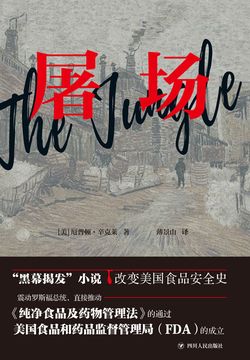
The book chronicles the tragic fate of a Lithuanian immigrant family, the Rudkuses. They come to America full of hope, find work in the Chicago stockyards, and believe a better life is beginning. Instead, disaster follows disaster: Jurgis is injured and loses his job, his wife Ona is raped by a foreman, Jurgis beats the man and is imprisoned, then his wife dies in childbirth and his young son drowns. Of their relatives and friends, the men end up on the streets and the women are forced into prostitution; the American dream turns into a terrifying nightmare. More sadly still, the vicious capitalist machine not only destroys his family but poisons his soul. He gives up on himself, turns to mugging with accomplices, and even works as a strikebreaker during a stockyard strike. Fortunately, amid the surging socialist movement, Jurgis finally finds a goal worth fighting for, and his class consciousness awakens. By the novel's end he is convinced that socialism is the only way out, which was Sinclair's own creed.
Editor's review
From a literary standpoint, Sinclair's writing combines the calm of reportage with the power of fiction. Centering on the tragic fate of the Lithuanian immigrant Jurgis family, it depicts the full process by which lower-class laborers were exploited and alienated during industrialization. Jurgis, who begins as a hopeful young man and is ultimately destroyed by the system, became a classic metaphor for the capitalist machine devouring the individual. Notably, Sinclair's original aim was to expose the plight of laborers and promote socialist ideas, yet what triggered the greatest public response was the food safety issue—an unintended effect described as "striking the public's heart rather than its head."
For today's readers, The Jungle offers at least three kinds of value: first, historical value, offering a direct look at the pains of America's social transformation in the early 20th century; second, social observation value, as the problems of capital's pursuit of profit and the alienation of human nature it reveals remain cautionary today; third, literary value, as a representative work of "muckraking literature" it demonstrates the powerful combination of investigative writing and novelistic art. This edition from Sichuan Literature and Art Publishing House preserves the style of the original fairly completely, and the annotations help readers understand the historical background.
Who it's for
A good fit for
- Researchers and readers interested in the history of the American Progressive Era
- Thoughtful readers concerned with labor rights and social justice
- Writing enthusiasts who want to understand the origins and development of investigative journalism literature
- Literary readers who enjoy realist subjects and have a preference for social-problem novels
Not a good fit for
- Readers seeking light, entertaining reading experiences
- Readers who are sensitive to graphic scenes and heavy social description
Reading tips
- Read alongside the historical background of the 1906 Pure Food and Drug Act to understand how literature can influence legislation
- Note the depiction of immigrant communities' living conditions, an important perspective for understanding the formation of American multiculturalism
- Treat Jurgis's personal fate and the meatpacking system as dual main threads to appreciate the complex relationship between the individual and the system
About the publisher
Sichuan Literature and Art Publishing House is a professional literary and art publishing institution. It mainly publishes books on contemporary and modern literature, foreign literature, poetry and prose, music and art, and literary theory. Judging from the books in the database, the house places considerable emphasis on classic works and foreign literature. Representative titles include Lu Xun's Call to Arms and Dawn Blossoms Plucked at Dusk, Lao She's Camel Xiangzi, Xiao Hong's The Story of Hulan River, J.R.R. Tolkien's The Hobbit, William Shakespeare's Hamlet, and Hermann Hesse's Siddhartha. Its translator resources include Deng Jiawan, Shi Zhongge, Du Yunci, and Zhu Shenghao. Common categories include social fiction, classic works, foreign literature, world classics, literary appreciation, and classical poetry, reflecting a publishing profile that balances Chinese and foreign literary classics with literary appreciation.
Contents
- 版权信息
- 关于作家作品
- 第一章
- 第二章
- 第三章
- 第四章
- 第五章
- 第六章
- 第七章
- 第八章
- 第九章
- 第十章
- 第十一章
- 第十二章
- 第十三章
- 第十四章
- 第十五章
- 第十六章
- 第十七章
- 第十八章
- 第十九章
- 第二十章
- 第二十一章
- 第二十二章
- 第二十三章
- 第二十四章
- 第二十五章
- 第二十六章
- 第二十七章
- 第二十八章
- 第二十九章
- 第三十章
- 第三十一章
FAQ
What is the relationship between this book and real historical events?
Why is it said that this book "struck the public's heart rather than its head"?
What can today's readers still gain from this book?
Related on WeRead



Comments
Find this book
This site is an index: you start “Search all sources” in your browser, and the entries it lists all point to third-party sites; please judge their availability yourself.
About the author
Upton Sinclair was an American writer known for his socially critical novels, which are often regarded as important texts exposing social realities. This library holds two of his works: the representative novel The Jungle and an English-language original edition of The Slaughterhouse, both classified under foreign literature. Public information about his birth year, confirmed nationality details, and full biography is limited, so no speculation is made here. Judging from his subjects, Sinclair was skilled at using fictional stories to carry real social issues, depicting the hardships and helplessness of lower-class groups through detailed descriptions of working conditions and living circumstances. The issues of immigrant labor and the food-processing industry touched on in The Jungle had a broad impact in literary history and social discussion, establishing the serious and powerful critical style of his work.
Bo Jingshan is an author about whom very little public information is available; the only verifiable detail is a single work, The Slaughterhouse. In library classification the book falls under foreign literature, which suggests that his writing is directed toward this field rather than toward local original writing or academic monographs. The title The Slaughterhouse itself carries a strong realistic and critical flavor, readily evoking themes such as the lower strata of society, labor conditions, and human predicament. Limited by the available material, however, it is impossible to confirm the specific plot, characters, or background of the work, and its content should not be over-interpreted. On the present evidence, Bo Jingshan's creative profile remains unclear, with few works and scarce introductory or research materials. Readers seeking to understand his style and literary influence must still rely mainly on the text of The Slaughterhouse, together with the edition information provided by the publisher.
