

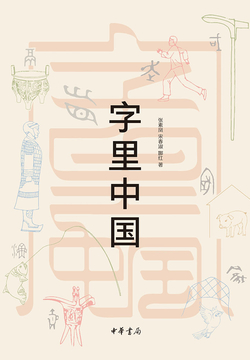
China in Characters
Tags
Summary
Editor's review
Who it's for
A good fit for
- Traditional culture enthusiasts with a strong interest in the origins and cultural connotations of Chinese characters
- Readers seeking to broaden their humanistic knowledge and pursue interdisciplinary reading experiences
- Students at the secondary or tertiary level who need supplementary background in Chinese language, literature, history, and culture
- Reflective readers who enjoy examining the macro patterns of civilization through small details
Not a good fit for
- Pragmatists seeking quick mastery of character-writing skills or crash courses in literacy
- Readers expecting novel-like strong plotting or light entertainment
Reading tips
- Read chapter by chapter, or start with a single character that interests you and enjoy the pleasure of "small entry point, deep analysis"
- Keep paper and pen at hand while reading and try tracing the ancient character forms mentioned in the book to deepen your understanding of their formal evolution
- Use the interpretations to reflect on how these key characters are used and how their meanings have shifted in contemporary contexts, as further contemplation
About the publisher
Zhonghua Book Company is a publisher known for collating ancient texts and academic publishing, with its output centered on Eastern philosophy, culture, classic works, art, and historical reading. Its library contains 532 titles, including Chen Shou's Records of the Three Kingdoms, Guo Qingfan's Collected Commentaries on Zhuangzi, the four-volume Chinese Literature: Four Great Classical Novels, and the two-volume Table of Seal and Clerical Script Forms from Qin, Han, Wei, and Jin. These titles span historical classics, commentaries on the philosophers, classical novels, and philological reference works. Representative authors include Chen Shou, Guo Qingfan, Wu Cheng'en, Shi Nai'an, Cao Xueqin, Luo Guanzhong, Xu Wenwu, and the Hanyu Dazidian character-form group, reflecting a focus on primary sources and scholarly editors. Its publishing character lies in combining authoritative editions and annotated texts with both accessible classics and specialized research. Public information on its fuller catalog is limited; this note describes only the directions evident in the library's holdings.
Contents
- 版权信息
- 第一章 从汉字看中国古代社会等级
- 一 最高统治者
- 二 贵族、官员与平民
- 三 奴隶
- 第二章 从汉字看中国古代行政区划
- 一 邦国封地
- 二 区划层级
- 第三章 从汉字看古人的信仰世界
- 一 判断吉凶的依据
- 二 自然神崇拜
- 三 祖先神崇拜
- 四 祭品种类
- 五 祭祀方式
- 六 对鬼和妖的态度
- 七 人们心目中的圣人
- 第四章 从汉字看中国古代礼俗
- 一 古代婚俗
- 二 古代丧葬习俗
- 三 其他礼俗
- 第五章 从汉字看中国古代生产生活
- 一 古代狩猎
- 二 古代畜牧
- 三 远古农业
- 四 汉字与医疗
- 五 玉石加工
- 六 天灾人祸
- 第六章 从汉字看中国古代衣食住行
- 一 古代服饰
- 二 古代饮食烹饪
- 三 古代建筑
- 四 古代交通
- 第七章 从汉字看中国古代兵器刑法
- 一 古代兵器
- 二 古代刑法
- 第八章 从汉字看单位名词
- 一 纪年名词
- 二 季节名词
- 三 时间名词
- 四 长度名词
- 五 重量和容积名词
- 第九章 从字到人:古人如何认识自己
- 一 汉字与人体
- 二 疾病
- 参考书目
FAQ
Does this book require a foundation in ancient Chinese paleography?
How is this book different from the <i>Shuowen Jiezi</i> or ordinary books of Chinese character stories?
Does the book cover a large number of Chinese characters?
Related on WeRead


Comments
Find this book
This site is an index: you start “Search all sources” in your browser, and the entries it lists all point to third-party sites; please judge their availability yourself.
About the author
Public information about Zhang Sufeng is limited; it is known only that she has two works in print, both in the field of language and writing. One, Chinese in Characters, starts from the forms and meanings of Chinese characters and links character knowledge with cultural commonplaces, using words to glimpse the evolution of Chinese society and ideas. The other, Ancient Chinese Script and Language Education, brings findings from ancient script studies into Chinese teaching and discusses the relationship between character forms, meanings and literacy education. Related in topic but not repetitive, the two books—one a cultural introduction for general readers, the other focused on teaching practice—both emphasize the organization of knowledge and analysis of examples rather than vague discussion. Judging from the works available here, her writing balances scholarship with readability and suits readers interested in the origins of Chinese characters and language education. Lacking biographical and academic background information, no further details are added here.
Song Chunshu is an author about whom limited public information is available. Only one work by this author is included in the collection, namely Zili Zhongguo (China in Characters). Judging from the title and its usual classification, the book falls under language and writing and deals with Chinese characters and the cultural meanings they carry, making it a book on character culture intended for general readers. Writing of this kind typically begins with character forms, meanings, and usage, and combines knowledge of language and writing with history, society, and folk customs, so that readers can appreciate the cultural significance of Chinese characters while learning about them. As the author's biography, nationality, and educational background are not clearly documented, the writing style and influence can only be described briefly on the basis of the existing work: the book emphasizes both informative content and readability and is suitable for readers interested in Chinese characters and the Chinese language. More complete information about the author awaits further public sources.
