

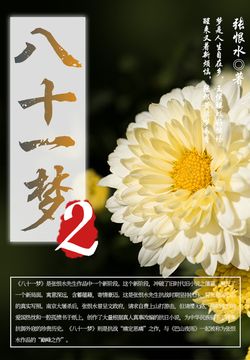
Eighty-One Dreams (2)
Tags
Summary
Editor's review
Who it's for
A good fit for
- Readers interested in Zhang Henshui's creative transformation and modern literary history
- Readers studying wartime literature and the mentality of intellectuals
- Literature lovers who enjoy allegorical, dream-based narrative techniques
- General readers hoping to understand modern national sentiment through fiction
Not a good fit for
- Readers who prefer tightly plotted, realistic popular fiction
- Those seeking light entertainment and reluctant to engage with heavy themes
- Beginning readers with little patience for allegorical and metaphorical writing
Reading tips
- It helps to first learn about Zhang Henshui's creative context during the War of Resistance before entering the text, making it easier to grasp the real-world references behind the dreams.
- While reading, note the structural relationships among the dream episodes and try to trace the emotional threads the author entrusts to them.
- Read alongside Night Rain over Mount Ba to appreciate the shared concerns expressed through different styles in the same period.
- After every few dreams, pause to savor the satire and allegory; there is no need to finish in one sitting.
Contents
- 版权信息
- 第七章 第三十二梦星期日
- 第八章 第三十六梦天堂之游
- 第九章 第四十八梦在钟馗帐下
- 第十章 第五十五梦忠实分子
- 第十一章 第五十八梦上下古今
FAQ
Does the title Eight-One Dreams mean the book contains eighty-one dreams?
How does this book differ from Zhang Henshui's earlier works?
Can I read this directly without having read other works by Zhang Henshui?
Related on WeRead
Comments
Find this book
This site is an index: you start “Search all sources” in your browser, and the entries it lists all point to third-party sites; please judge their availability yourself.
About the author
Zhang Henshui (1895–1967), originally named Xinyuan, was a native of Anhui and a writer of serialized chapter fiction, recognized as a representative author of the Mandarin Ducks and Butterflies school. Over his lifetime he wrote more than a hundred novels, and this library holds as many as 436 of his works. His writing uses the traditional chapter form as its framework, with intricate plots and large casts of characters; he excels at portraying social manners and human feelings amid social change and romantic entanglements, in language that is accessible and fluent, earning him a broad readership. His representative works include Ti Xiao Yin Yuan (A Smile of Woe), Jin Fen Shi Jia (The Golden Family), Chun Ming Wai Shi, and Ba Shi Yi Meng (Eighty-One Dreams), among which the first two have circulated especially widely in many editions. His subjects center on social novels and modern romance, with some allegorical and satirical works, giving him an important place in the history of modern popular literature.
