

Record of the Defense of Yue
Tags
Summary
Editor's review
Who it's for
A good fit for
- General readers interested in ancient customs, geography, and miscellaneous notes
- Enthusiasts of Chinese learning who wish to encounter original ancient texts without relying on vernacular rewrites
- Writers and researchers in literature and history who need traditional textual material
- Readers who prefer browsing and accumulating literary and historical knowledge in fragments
Not a good fit for
- Readers expecting a complete storyline or a strongly plotted reading experience
- Those who need modern vernacular translation and annotations or an introductory guide to read ancient texts
- Readers who only want quick knowledge points and are unwilling to face the obstacles of original texts
Reading tips
- Read the table of contents and prefaces first to understand the types of entries, then jump to categories of interest.
- Keep a dictionary of common ancient Chinese characters on hand and look up rare words as you go rather than forcing yourself to read straight through.
- Take categorized excerpts from entries on customs, geography, and tales to build your own reference cards.
- Read only three to five entries at a time, then retell the content in your own words to check comprehension.
Contents
- 版权信息
- 一
- 二
- 三
FAQ
Is this book suitable for readers with no foundation in classical Chinese?
What does the title "Baoyue lu" mean?
Do I need to read this book in order from beginning to end?
Related on WeRead
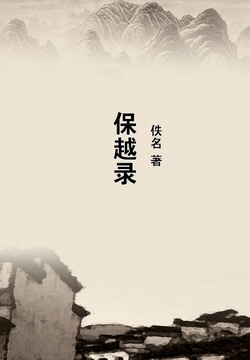 保越录
 经典名作这样读才有趣——玩转古典文学中奇趣冷知识(套装12册)(知趣丛书)
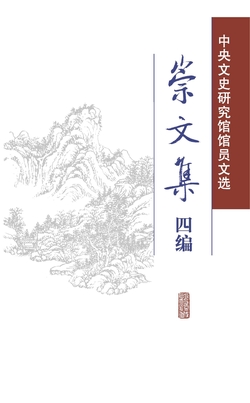 崇文集四编:中央文史研究馆馆员文选(全二册)(精装)
 周作人散文全集(修订版)(全十五卷)
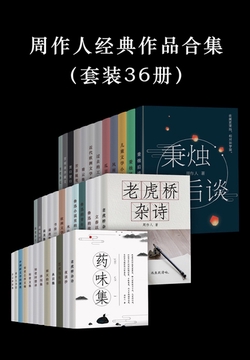 周作人经典作品合集(全集)
 中国经典文学书系(套装共66册)
Comments
Find this book
This site is an index: you start “Search all sources” in your browser, and the entries it lists all point to third-party sites; please judge their availability yourself.
About the author
Anonymous is not a real personal name but a general Chinese designation for authors whose names are unknown, lost, or unsigned. Neither nationality nor dates of birth and death can be verified, and available public information is limited, so the works attributed to this name are the only basis for description. The collection holds 2,078 works under Anonymous, spanning medicine, classics, historical readings, ancient poetry, classical literature, and philosophy. Representative works include The Yellow Emperor's Inner Canon: Lingshu, Mencius, The Book of Documents, Nineteen Old Poems, Complete Song Ci, and The Peacock Flies Southeast. Most of these works took shape through long transmission and editing, emerging either from collective folk creation or from authors whose names were lost over time. In ancient China, the Book of Songs, the Great Learning, and many popular storybooks and plays were signed Anonymous because their authors could not be traced. Anonymous works cross the classics, histories, philosophical writings, medical texts, and poetry; their subjects are broad, and their styles vary from archaic simplicity to clear naturalness, making them important and influential sources for understanding ancient Chinese thought, medicine, and literature.
