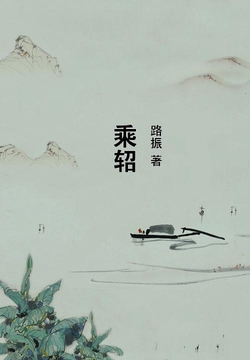
Riding the Light Carriage cover

Riding the Light Carriage

Rating 3.5
Word count
1.8K words
Chapters
5

Tags

Summary

Chinese traditional culture has a long intellectual history, marked by a high degree of originality, inventiveness, and literary quality. Early modes of thought are highly distinctive: religious theology, classical texts of Chinese medicine, ancient military strategy, Confucian, Daoist, Buddhist, and Hundred Schools thought, feng shui and metaphysical learning, the Twenty-Four Histories, and customs and topographical records—all are profound and extensive. This "Essence of Classical Chinese Culture: Original Texts" series preserves the appearance of the original books, with emphasis on conserving and transmitting traditional Chinese thought and culture. By reading the literary essence left by ancient sages, readers cultivate temperament and subtly come to know the classics of Chinese learning.

Editor's review

Cheng yao (Riding the Light Carriage) is included in the "Essence of Classical Chinese Culture: Original Texts" series, presented in a form that preserves the original text's appearance, and is suitable as one of the entry points for contact with ancient documents. Its value lies not in providing modern interpretation but in letting readers face the original aspect of traditional text directly and experience how the ancients wrote and expressed thought. The contents align with the series' overall orientation, pointing toward the preservation and transmission of traditional thought and culture; readers can feel the texture of the literary essence left by ancient sages. Reading such originals, the point is not to obtain conclusions quickly but to slow down and steep oneself repeatedly, using the text's own language and structure to understand tradition. For readers who wish to bypass later processing of the original and approach classical texts directly, this book offers a plain and reliable path. It is better suited as a volume kept on the desk for dipping into than as a popular book to finish in one sitting.

Who it's for

A good fit for

  • General readers interested in traditional thought and culture who wish to come directly into contact with the original text's appearance.
  • Readers who need a classical Chinese original kept on the desk for daily dipping and steeping.
  • Cautious readers who prefer preservation of the original appearance and do not wish to rely on modern rewrites.
  • Beginners who want to use original texts as an entry point and gradually cultivate patience in reading classical Chinese.

Not a good fit for

  • Beginners expecting modern vernacular translation or detailed annotated explanation.
  • Readers who want to acquire a systematic knowledge framework and clear conclusions quickly.
  • People lacking patience for classical Chinese reading who prefer light entertainment.

Reading tips

  1. First read the table of contents and opening sections to understand the book's structure, then choose parts of interest for close reading.
  2. Read a fixed short passage each day; mark what you do not understand and sort it out after finishing.
  3. Keep a notebook and jot down key terms from the original and your own questions.
  4. Read alongside other originals in the same series to feel the resonances among traditional texts.

Contents

  1. 版权信息
  2. 正文一
  3. 正文二
  4. 正文三
  5. 正文四

FAQ

Is this book suitable for readers with no foundation in classical Chinese at all?
The book preserves the original appearance and is not primarily explained in modern vernacular, so readers with no classical Chinese foundation will face a certain threshold. It is advisable to start with short passages in simple language, using reference works to understand sentence by sentence, and to treat it as a text for long-term steeping rather than requiring full comprehension at once.
What does "preserving the original text's appearance" specifically mean?
According to the series description, the book emphasizes preserving and transmitting traditional Chinese thought and culture, presenting the original book's original aspect as far as possible rather than undertaking major rewriting or popularization. Readers can therefore face the language and structure of traditional text directly, but must also take on some of the work of understanding themselves.
Do I need to use other materials alongside this book?
You can use it together with a dictionary of classical Chinese, related reference works, and other originals in the same series. Where institutions, names of things, or allusions are unclear, consulting basic materials helps understanding; do not seek to understand everything at once—the point is to become gradually familiar with traditional expression through sustained reading.

Related on WeRead

Comments

Find this book

This site is an index: you start “Search all sources” in your browser, and the entries it lists all point to third-party sites; please judge their availability yourself.

About the author

路振 Author

Lu Zhen: available public information about this author is very limited. Neither the years of birth and death, nor the native place, nor the details of his life are clearly recorded, and no conventional English rendering of his name is known. What can be confirmed is that the collection holds one work by him, titled Cheng Yao, commonly classified under Eastern philosophy. Judging from the title, cheng yao refers to traveling in a light carriage, often associated with being sent on a mission, making an inspection tour, or recording observations from a journey. The book may therefore combine travel records and miscellaneous observations with reflections on moral and philosophical principles, which broadly accords with its classification. Because no full biography or publication details are available, his teachers, official career, and the circumstances of composition cannot be verified, and readers should not infer too much about the contents from the title alone. On present evidence, Lu Zhen may be regarded as an author with very few surviving works whose life has all but faded from record; Cheng Yao is the sole clue to his thought and style, and a reference text for studying the interplay of travel writing and philosophical expression.